Kiwifruit Growers Prepare for El Niño, Stay Optimistic
Kiwifruit growers are watchful but remain optimistic as concerns around the potential effects of the El Niño weather pattern this season.
 increase font size

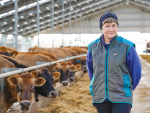
PAHIATUA DAIRY farmer David Swansson says farmers need to be better prepared to deal with events such as droughts, floods and storms. After getting caught a few years ago he vowed never to let it happen again.
Primary Industries Minister Nathan Guy recently visited David and Janine Swansson’s farm while touring drought affected regions.
Now in their eighth season on the farm, they milk 240 cows and produce 100,000kgMS/year. They won the local sharemilker of the year competition and are involved in the rural support trust.
They live in a high rainfall area – about 1800mm a year which enables them to recover from drought a lot easier than others. Swansson says they suffer from a ‘green drought’ and don’t ‘white out’ like parts of Wairarapa and Hawke’s Bay. So far he’s spent about $4500 on additional feed for his young stock.
“I’d rate my position as comfortable and improving; I’m probably a lot better off than others. We are now on 16 hour rotation with our milking and we’ll be able to carry on now to the end of the season thanks to the followup rain we had a few days ago. Now we can start putting on some nitrogen and building up covers. After being badly burned several years ago I vowed I would never leave myself short of supplements.”
Swansson says he’s got 14ha of maize to come back and says he’s not intending to buy in supplements; rather he wants “to live within the boundaries of the farm”. To help make this possible he has two support blocks.
While many farmers in his area are facing major problems with Horizons Regional Council’s One Plan, Swansson has proactively dealt with potential issues. His catchment is not classed as ‘sensitive’; his nutrient leaching is a mere 14 units/ha. The target for his farm is 24 units/ha so he’s well in the clear. Certainly the run-off helps him achieve that number.
Swanssons have invested in technology as part of their ‘future proofing’ of the farm. For example, they have just built a lined effluent pond “bigger than required to future proof the business”. “We also run GPS units on the tractors used for spreading fertiliser. While I can’t put an exact dollar figure on it, I know I am now using 15% to 20% less fertiliser than I was.” They have also put in a feed pad and pay close attention to feeding their cows well.
Swanssons pay a lot of attention to risk management and planning. When they look at any new venture they try to identify the negative as well as positive outcomes and have planned options to deal with these.
“I’ve gone away from the sacrifice paddocks we used to use; they were going to be turnips because environmentally pugging the paddocks is not a very good, so hence the feed pad.”
Swansson says a common sense and practical approach is required. He’s seen plenty of theoretical models from ag students and consultants, but these have to be adaptable on the farm. In farming one has to plan but at the same time be flexible and above all be prepared for any eventuality.
Kiwifruit growers are watchful but remain optimistic as concerns around the potential effects of the El Niño weather pattern this season.

With forecasters advising El Niño conditions will develop through winter and strengthen into spring and summer, Ballance Agri-Nutrients is encouraging farmers and growers to think ahead about nutrient planning and be prepared to work around challenging weather conditions.
Recent weather events in the Bay of Plenty, Gisborne/Tairawhiti, and Canterbury have been declared a medium-scale adverse event.
Agriculture and Forestry Minister Todd McClay is encouraging farmers and growers to stay up to date with weather warnings and seek support should they need it.
With adverse weather set to rain down on the Top of the South, the Bay of Plenty and parts of Northland, Agriculture Minister Todd McClay says farmers, foresters, and growers need to prepare for possible challenges.



New Zealand's 2026-27 freshwater fishing season has opened, with anglers encouraged to head to rivers and lakes over the coming days as conditions look favourable across much of the country.
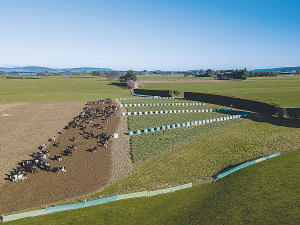
Central Otago District Council (CODC) has voted against a plan to spread treated sewage sludge from Cromwell and Alexandra on farmland near Lauder, a decision Federated Farmers says reflects strong opposition from rural residents.
Pāmu has released its FY26 Integrated Annual Report, reporting a Net Operating Profit of $113 million, more than double the $49 million recorded in FY25.
Meat Industry Association data, released alongside the Red Meat Sector conference in Wellington, shows export value climbing across the US, China, UK and Canada.
Applications are set to open for the 2027 Zanda McDonald Award, a trans-Tasman award recognised for identifying and fast-tracking talented young leaders in agriculture and agribusiness.
The Royal New Zealand College of General Practitioners (the College) and Hauora Taiwhenua Rural Health Network are calling for investment in a proposed new training pathway for rural GPs, warning that many rural practices are struggling to recruit while a large share of the existing workforce nears retirement.