Federated Farmers Welcomes ACT’s New Farming Policies
Federated Farmers has welcomed new rural policies released by ACT, saying they align closely with its own election priorities.
 increase font size
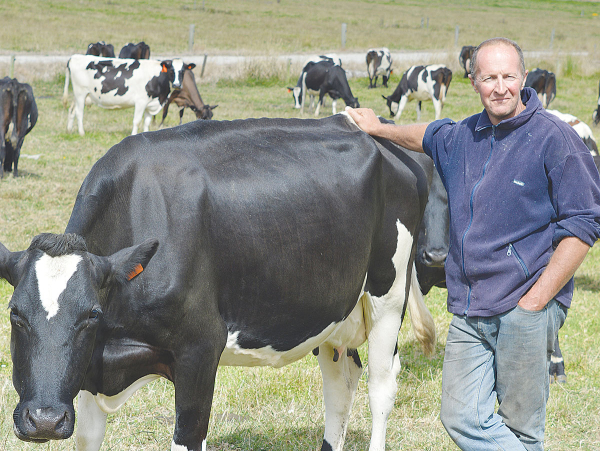 ACT MP Mark Cameron says while Damien O’Connor has done a good job with trade, he has failed as the Agriculture Minister.
ACT Party agriculture spokesman Mark Cameron claims that current Agriculture Minister, Damien O’Connor doesn’t understand farmers.
In a recent interview with Country TV, Cameron, a Ruawai dairy farmer, said that while O’Connor has done well for the country in his Trade Minister role, the same could not be said for his role as Agriculture Minister.
“Damien’s done a pretty good job with trade… arguably, he could have done better for the protein side of the sectors, that is the red meat sector and the dairy, with some of the FTAs [Free Trade Agreements] he’s sort of got in the pipeline and worked towards,” Cameron says.
However, Cameron is quick to note that the speed and rate of regulatory change on farm is something O’Connor and the political left wing have “got wrong”.
“When it comes to domestic regulatory settings, he [O’Connor] doesn’t understand us. He really doesn’t.”
Cameron claims that despite O’Connor’s background in farming it was clear that he was “at the behest of [Environment Minister] David Parker” on certain environmental issues including winter grazing.
In his interview with Country TV last month, O’Connor claimed that much of the rhetoric surrounding the practice of Intensive Winter Grazing (IWG) was inaccurate and inaccurate commentary, which he claimed came from former Federated Farmers president turned ACT Party candidate Andrew Hoggard.
“It’s a lot of rhetoric and it’s been run up by organisations like Fed Farmers under Andrew Hoggard; now Andrew’s stepped up and he’s going to stand for ACT which is fine, but some of the messages that they were sending to farmers were quite inaccurate,” O’Connor claims.
However, Cameron complains that the conversation around IWG “wasn’t nuanced enough”.
“People weren’t being consulted on causality, cause and effect,” he says. “If it’s not implementable on farm, the fact that those on the left, our mates in Labour, were talking about prosecuting farmers for pugging depths of animals… it was never going to work.”
Cameron claims that what he calls the more practical language coming from the political right shows a disconnect between O’Connor and Parker and what farmers could achieve.
He says that he has spent much of the past three years he’s been in Parliament explaining the impact of certain policies on farmers.
“But when you’re explaining it, you’re not debating the issues,” he says.
Cameron says that, with the upcoming election, there will be more farmers around Parliament to debate the issues.
“I think the fact that going forward the language on the right is really going to get into the weeds of what causality looks like.”
Federated Farmers has welcomed new rural policies released by ACT, saying they align closely with its own election priorities.
When Northland farmer Mark Cameron entered parliament six years ago, the Beehive was a lonely place.
OPINION: As the general election approaches, political parties are churning out policies in the hope of attracting more votes.
OPINION: Farmers are being put on notice by the Green Party.
Associate Agriculture Minister Mark Patterson says his party – NZ First - isn’t opposed to the “trade element” of a free trade deal with India.


Federated Farmers has welcomed new rural policies released by ACT, saying they align closely with its own election priorities.
Rural Contractors NZ says proposed changes to land transport rules for agricultural vehicles are a welcome response by the Government to out of date regulations which have seen members hit with huge fines.
Alliance is calling for final applications for its 2027 Graduate Programme, with applications closing on Sunday 25 October.
Decades piloting planes has ensured vet and farmer David Hayes is focused on safety. So, after a serious accident while welding on farm, he is sharing his experience so others can learn from it.
Canterbury milk processor, Synlait Milk has confirmed Leon Fung as its chief executive officer.
OPINION: Making it easier to collect rainwater and use it to grow crops and livestock is a no brainer.