Peters Targets Fonterra
OPINION: Get offside with New Zealand First leader Winston Peters at your own peril.
 increase font size
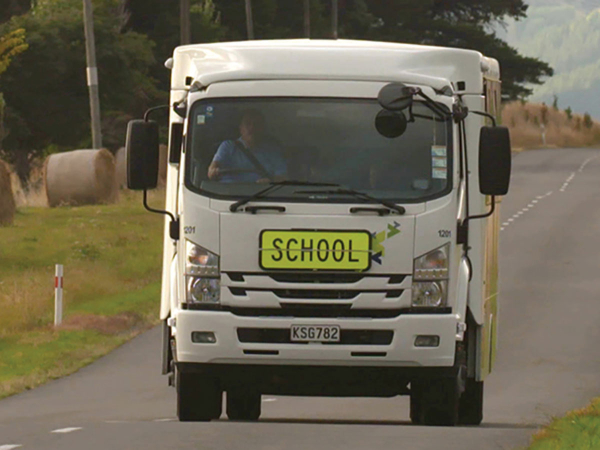 ACT’s “Open Seat Rule” policy will mean that no bus passes a waiting child while there’s any empty seat available.
ACT MP and Minister for Biosecurity Andrew Hoggard says he's hearing a common story about school buses, with empty seats, driving past pick-up points, while a parent follows behind in a farm ute, burning fuel and taking up time to get their children to school.
Following changes in 2024, the Ministry of Education firmed up on its rules, stating that to qualify for rural transport, students must attend the nearest school, but at the same time, live more than 3.2 kilometres, in the case of primary or intermediate pupils, and 4.8km for secondary, from their school.
Hoggard last week announced an election commitment to fix the inefficiencies of the current system, that will include an "Open Seat Rule" so no bus passes a waiting child while there's an empty seat available.
The proposed policy would mean that any child living along an existing school bus route can use it, if there is space available, regardless of which school they attend.
"The bus is already running; the seat is already paid for: so let's let the child get on," he told Dairy News.
"We should be using what we've got, not putting more pressure on families, who have paid taxes, for a bus that leaves their children stranded."
The policy will not require any additional spending in most cases, as it will serve to make better use of existing capacity.
Where demand on a route increases, additional buses can be provided.
The current 'nearest school' rule is out of step with how rural communities live and work, says Hoggard.
"Families choose schools for all sorts of reasons, where siblings go, where there's better support, or what fits around work and farm life.
"Of course, in some sectors, particularly dairying, staff will move around to differing locations, meaning that the numbers of children can also change. If a prospective employee learns there is a problem with getting children to school, it might have a negative impact on them following through with a job application," says Hoggard.
Hoggard says there should be more flexibility around how the rural bus routes are approached, requiring a need for flexibility as circumstances change.
Money should be used to get the children to school, not be tied up in Wellington bureaucracy.
"We've seen a huge range of examples near home here in the Manawatū, where parents in places like Opiki, Tokomaru and Ashhurst are being told that unless their child is going to a particular college in Palmerston North, then they are not allowed to get on the bus. Previously, all the kids, regardless of what college they were attending, would all get on the bus to Palmy, then get themselves to the final location," says Hoggard.
"The 2024 revision seems to have removed that flexibility."
"Taking a closer look doesn't need another review or working group - just a bit of common sense. Kids get to school, families save money, and farmers can get on with the job. We want diesel in tractors, not wasted on school runs that shouldn't be needed. This is a straightforward change that will take pressure off rural communities at a time when every dollar counts," Hoggard says.
OPINION: Get offside with New Zealand First leader Winston Peters at your own peril.
Election years are always a concerning time for farmers, according to DairyNZ chair Tracy Brown.
Opportunity says its land value tax (LVT) is unlikely to force farmers into a position where asset sales or increased debt are required.
There's been widespread support from the primary sector for the Government's announcement on changes to freshwater farm plans that come under the Natural Environment Bill, which is now set to replace the existing RMA.


Now in its fourth year, the 2026 Fencing Industry Awards, formed part of the proceedings of the FCANZ Conference, held in Nelson during August.
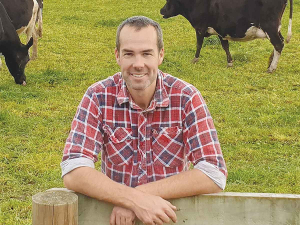
DairyNZ deputy chair Cameron Henderson has been re-appointed unopposed for another term.
OPINION: The stats speak for themselves.
Farms across the upper North Island are trialling different pasture mixes as part of a research programme that aims to build greater resilience into farming systems.
Election years are always a concerning time for farmers, according to DairyNZ chair Tracy Brown.
The Ballance Farm Environment Awards are coming to the West Coast of the South Island.