A million native plants have been distributed to Taranaki farmers by Taranaki Regional Council.
The distribution is part of the council’s Riparian Management Programme which has 99.7% of the region’s dairy farmers voluntarily commit to fencing and planting their waterways.
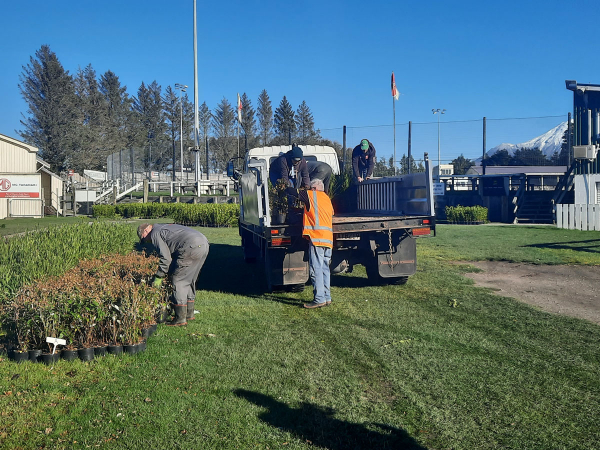
As part of the programme, almost a thousand farmers descended on five depots across Taranaki last week for the annual plant pick-up.
At each depot a steady stream of farmers and landowners backed up utes and trailers load up from approximately 40 species of native plants.
“I’m pretty excited and I am looking forward to the next part,” says dairy farmer David Werder, who milks 530 cows across two South Taranaki farms.
Werder gained 2,600 new plants, ready to go in the ground, which will almost complete his riparian plan.
He says the next couple of years will be spent filling in any gaps.
Council land services manager Don Shearman says last week marked an opportunity to reflect on how far the programme had come from its beginnings 25 years ago.
“Back then, we handed out 15,000 plants from a lock-up at the Council – a farmer would turn up and we’d drop our pens and head outside to load them up. Now we have this huge logistical operation, growing a million plants to order.”
Shearman says he is proud that Taranaki’s dairy farmers have achieved good results with the programme.
“The Council works alongside farmers to prepare riparian plans for their properties and we support them with wholesale plants. But in the end they do it because they are committed to improving freshwater quality and biodiversity on their land, leaving it healthier for future generations.”
Shearman reminded farmers to get their orders in for next winter by 1 July 2021 to ensure they get wholesale rates.