There are eight different worm species that have varying effects on the health of our sheep – excluding liver fluke and lung worm.
Some species are more problematic in the environments that suit them. For example, Nematodirus is a problem in the south of the South Island, but of no real threat in other regions. We all know the deadly Barbers’ Pole worm is present, but not a problem in southern areas.
In the spring, worm levels are generally low, but will build up to peak over the February/March period.
However, Barbers’ Pole – Haemonchus contortus – can be an exception. It has been generally accepted by scientists and vets that this ‘killer worm’ is only a problem in the late summer to early winter period.
Seventy years ago, I cannot remember this worm being a problem in other months. However, about 50 years ago, it became an increasing problem over the whole year.
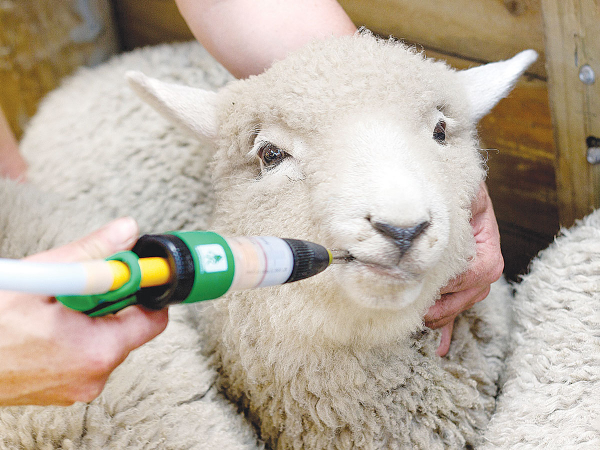
With our susceptible Down breeds, we drench the ewes prior to lambing and again at docking. In spite of this, we have lost ewes six weeks after the second drench – in late October. The worst affected ewes are those raising twins.
I believe that this worm has become more lethal in recent years, probably due to increasing survival of the larvae due to climate change with a more favourable environment.
As worm eggs hatch, they go through five stages of development before reaching adulthood. These are known as L1 to L5. The first three, L1 to L3, develop outside the host, enter the host at L3 where they live off the animal and develop to maturity. Development from hatching to maturity normally takes about three weeks.
Unlike toxic FE spores, microscopic worm larvae move on grass and through soil particles; they need to remain moist to survive.
Australian scientists have found Haemonchus larvae 2m below the surface, descending to remain moist in years of drought. When rains come, they ascend with the water levels to emerge on the newly sprouted grass in huge numbers. As I understand, this poses a far bigger threat than we see in New Zealand.
Scientists have estimated that larvae numbers in grass can exceed 10,000 in a kilo of grass. These larvae are mostly found 5cm above ground surface - about 80% - the rest either above that level or below ground level.
More than a decade ago, most of the North Island had a severe drought that lasted for many months. Thousands of ewes were lost to the Barbers’ Pole worm.
There were two contributing causes. First, their immune systems were weak because there was little nutrition in the stubble they were forced to eat. Secondly, they were ingesting high numbers of Haemonchus larvae at ground level. Sheep over the summer months can survive very well – so long as they have water and parasites are kept at low levels.
The following point should be kept in mind and possibly considered in your management of the internal parasite problem.
Ensure that the animals’ immune system is in the best possible condition, with good nutrition to combat worm challenges.
If rotation grazing is not possible, frequent shifting to fresh paddocks will prevent stock grazing low where the majority of worm larvae are present. This is particularly the case with lambs when their immune systems are still developing.
Saving areas of the farm for the lambs by grazing with only cattle over the previous 12-months will ensure that the worm larvae are at low levels which the developing immune system can mainly control, maybe with the help of an occasional drench.
Crops are always a good option, as worm larvae levels will be low, and the good nutrition will stoke the animals’ defence mechanisms in peak condition.
Low lying sheltered areas that remain moist are the best areas for worm larvae to survive. The same applies to fungi that produce toxic spores and cause the likes of FE, grass staggers etc.
Conversely, areas that are exposed and are dry will see fewer larvae survive.
Remember, drenching dose not only kills worms, it also gives the immune system ‘a breather’ and time to recover.
This is my take on minimising worm challenges by management, but there are still aspects that puzzle me that I do not know or understand.
- Gordon Levet is a long-time Northland sheep farmer and ram breeder