BVD Control Begins Long Before You See A Problem
Bovine Viral Diarrhoea (BVD) is sometimes viewed as a dairy industry issue, but the reality is that the disease can have serious consequences for beef breeding herds as well.
 increase font size
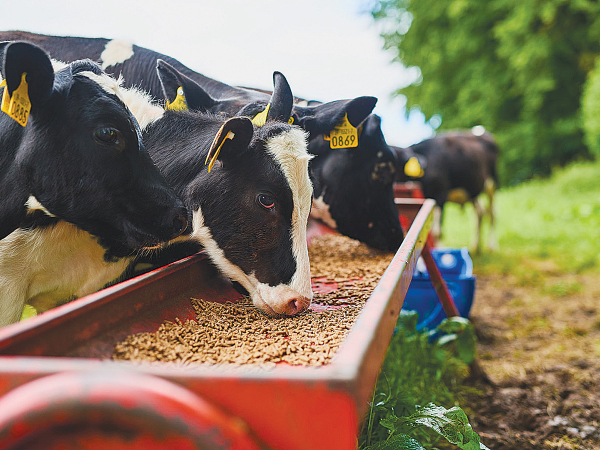 Reducing your herd size and cutting out supplementary feed may not be the best option and could affect the profitability of some farm businesses over the next few years.
As the new dairy season gets underway and farmers tackle ongoing financial challenges, they are being urged not to make hasty decisions about selling cows and cutting back on supplementary feed.
GrainCorp Feeds NZ general manager Daniel Calcinai claims that there is conflicting advice out there.
“While some dairy industry commentators are advocating for farmers to reduce costs by selling cows and not buying in supplementary feed, I believe this is a short-sighted approach,” says Calcinai.
“Reducing your herd size and cutting out supplementary feed may not be the best option and could affect the profitability of some farm businesses over the next few years, not just this season.
He says farmers need to take a long-term approach to their decision- making, to minimise risk and give themselves the best chance of success.
“While prioritising the use of homegrown feed, the best thing farmers can do is review inputs, including their herd’s total diet, and create a base feed plan, including costs and income. This will help them see what margins might be achievable in various scenarios.”
Tracking production in real time can help them make more informed feed and herd management decisions, he says. “Based on our calculations, in most cases, feeding the right feed at the right time will continue to pay off financially.”
He says farmers can elect to have their milk data sent to his company from their milk companies daily, which they upload into Tracker.
“We can then use that information to help them monitor outcomes of decisions made, plan, budget and evaluate different scenarios.
“We then combine real time information with other data to measure things like feed conversion efficiency, milk urea nitrogen, milk quality and composition, Fat Evaluation Indexes (FEIs) and margin. This can help farmers make better, fact-based, proactive decisions.
“It’s about maximising the utilisation of homegrown feeds and then adding the right supplement to complement the seasonal pasture conditions and the cow’s diet. Our goal is to improve rumen function and feed conversion efficiency in a cost-effective way.”
Making sure cows are efficiently turning feed into milk will be crucial as farmers start exploring ways to reduce their on-farm emissions.
Dairy companies are rallying to support farmers to reduce on farm emissions and protect the industry’s global competitive advantage. Fonterra recently released information to help its suppliers reduce emissions and their farm’s carbon footprint by recommending specific actions they can take.
Three key areas in which Fonterra encourages farmers to act are through improved animal efficiency, better nutrition and understanding the implications of supplementary feed.
“While on-farm emissions targets don’t come into effect until 2025, our team is equipped to help farmers get ready and get some runs on the board now. It’s a busy and challenging time for dairy farmers. We have a responsibility to step up and do what we can to help ease the load,” says Calcinai.
“For example, we can help measure, monitor and alter milk urea nitrogen levels excreted by improving a herd’s nutrition, optimising rumen function and feed utilisation.
“Not only can this help reduce the levels of nitrogen excreted on pasture and reduce the risk of waterway leaching, if managed and implemented correctly, but it can also improve productivity and margins. It’s all about efficiently turning feed into milk, minimising waste, and maximising milk output.”
Calcinai says farmers are being told to reduce their her size but this shouldn’t come at the expense of production.
Bovine Viral Diarrhoea (BVD) is sometimes viewed as a dairy industry issue, but the reality is that the disease can have serious consequences for beef breeding herds as well.

Animal health company Bovonic is gearing up for its next stage of growth after increasing New Zealand sales of QuadSense by more than 50% in the last 12 months, including a record quarter for the business this year.
With lambing underway in many regions, Beef + Lamb New Zealand is encouraging farmers to put together a wellequipped lambing kit to help minimise lamb losses, particularly in bad weather.
Bovine Viral Diarrhoea (BVD) remains one of the most significant infectious diseases affecting New Zealand dairy herds.
Bovine Viral Diarrhoea (BVD) is sometimes viewed as a dairy industry issue, but the reality is that the disease can have serious consequences for beef breeding herds as well.


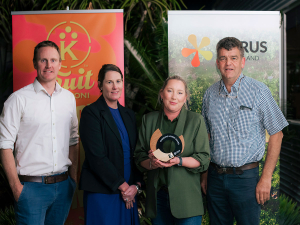
New Zealand's citrus growers were challenged to build their future on the value embedded in their fruit rather than the volume they produce, at Citrus New Zealand's annual gathering in Gisborne on 17 September.
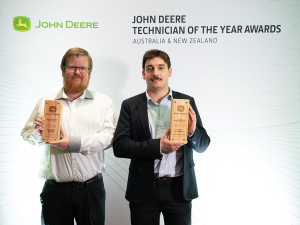
Leading John Deere technicians and apprentices from New Zealand and Australians were recognised at the recent sixth annual JD Technician of the Year Awards, held in Brisbane.
In Dacre, near Invercargill in New Zealand’s South Island, Bruce Dinnington is running a dairy operation unlike any other.
A free online platform aggregating governance vacancies across rural and regional New Zealand has been launched.
Environment Minister Nicola Grigg has announced details of a new rural plastics recycling scheme.
Agricultural drone operators say that a government decision to allow lower-risk drone work without certification won’t lower standards but drive innovation and efficiency.