Milk Powder Prices Prop Up Farmgate Milk Price
Milk powder prices are keeping farmgate prices up, helping processors offset the dip in milk fat prices.
 increase font size
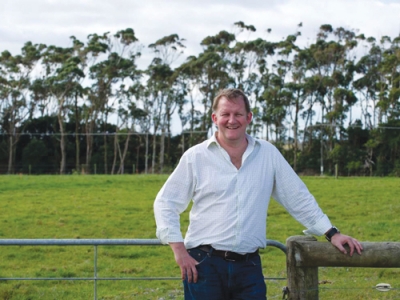 Professor Hamish Gow, Massey University.
The rural sector will need a major financial re-set as a result of the current low dairy prices, says the director of business, innovation and strategy at Massey University, Professor Hamish Gow.
He told Dairy News that the present cost structure of the New Zealand dairy industry is totally out of whack with the rest of the world and the reset will be painful but a reality check. By the time this happens the dairy industry will look very different.
“There are lot of people who haven’t been looking closely enough at their costs because Fonterra has been the ‘sugar daddy’ that has kept on delivering excessive returns. Everyone has been really really happy and carried on, but now they are all looking hard at what they can do to change their business model.
“It’s not going to mean we stop doing dairy, but at present land is overvalued and the services and inputs coming into that industry are overpriced and now it’s time for the industry to reset itself at an appropriate level.”
Gow says with Fonterra cutting jobs and farmers putting away their chequebooks and looking closely at prices they pay suppliers of goods and services, the cost structure of the industry will drop.
Gow was in Michigan, US, in 2010 when the global financial crisis (GFC) hit that state’s automobile industry very hard. He says there are similarities between what happened in Michigan and what is happening now to the NZ dairy industry. The US auto industry was built on high returns and wages in boom times.
“Auto workers there had huge pension plans and in many ways it’s not different in some ways from sharemilkers and lower order sharemilkers and investors in the NZ dairy industry. We’ve had massive price inflation on all the inputs coming into the industry for five-ten years. Here [we can have] a 26-year-old who can make $200,000 a year as a lower order sharemilker doing a manual job. These expectations are totally out of whack with what that [worker] should be [paid] on a global basis. All those expectations have to come back and be reset.”
Gow says New Zealand is lucky to have come through two GFC’s relatively unscathed, but this has now changed and everyone is going to have to reset their expectations and develop business models more appropriate to their likely income. US and European dairy competitors have seen the high prices New Zealand has been getting for its dairy exports and have responded accordingly.
The high cull of poor producing cows will offer some relief, says Gow. But while the prices look great for beef now, this as a short term opportunity and others will cash in on it.
Fonterra may need to change to compete more efficiently. Zespri has weathered the storm of PSa and is now getting greater returns for its producers than three years ago.
Milk powder prices are keeping farmgate prices up, helping processors offset the dip in milk fat prices.
Researchers at Massey University are using a special piece of scientific equipment to improve the measurement of greenhouse gas emissions from pasture soils.
Interest in agritech and production animal systems has prompted Massey University's School of Agriculture and the Environment to new majors to its popular animal science degree.
The industry is crying out for graduates with agricultural related degrees.
A four year trial has reaffirmed that mixing plantain into dairy pastures can help reduce nitrogen losses to freshwater while maintaining milk production and profitability, say researchers.


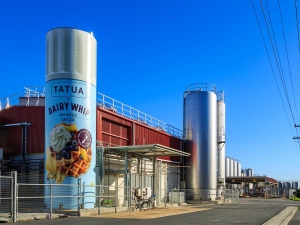
Waikato milk processor Tatua has again declared a record milk payout to farmer shareholders, leaving other processors in the dust.

A Labour-led Government won’t be bringing back the controversial freshwater rules of 2020.
National’s much-touted free trade deal with India featured in the Rural Issues Debate at Mystery Creek, Hamilton on Wednesday night.
New Zealand's 2026-27 freshwater fishing season has opened, with anglers encouraged to head to rivers and lakes over the coming days as conditions look favourable across much of the country.
Central Otago District Council (CODC) has voted against a plan to spread treated sewage sludge from Cromwell and Alexandra on farmland near Lauder, a decision Federated Farmers says reflects strong opposition from rural residents.
Pāmu has released its FY26 Integrated Annual Report, reporting a Net Operating Profit of $113 million, more than double the $49 million recorded in FY25.