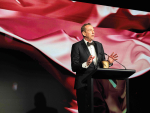
Fonterra CFO Andrew Murray Resigns
Fonterra Co-operative Group chief financial officer Andrew Murray has resigned to take up a role outside the dairy giant.
 increase font size
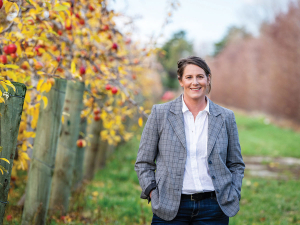
 Craig Macalister, Findex.
Fonterra farmers are set for a multi-billion-dollar payout this week.
Fonterra is returning $2/share to shareholders and unit holders, after the divestment of Mainland Group to Lactalis, which was completed two weeks ago.
The capital return has been achieved by way of a pro rata share buyback from shareholders.
The co-operative is believed to have obtained a binding ruling from Inland Revenue that the amount paid to shareholders under a share buyback arrangement will be treated as a return of capital and not as a dividend for income tax purposes. This means the proceeds will not be taxable in shareholder's hands.
Since the announcement of the sale of the consumer brands businesses, there has been speculation about how the return to shareholders might be used. Suggestions have included retiring debt, addressing deferred farm maintenanced, upgrading farm plant and equipment, expanding the farm or herd size, putting funds into investment products, or even enjoying a good old "knees up" at the local bar and grill - or all of the above.
However, Craig Macalister, a partner with Findex, has raised concerns that no discussion on this, that he is aware of, references the structure of the shareholder ownership and the implications using the funds for things other than reinvesting into the farm business. In this regard, Macalister notes that if the Fonterra shareholding is held by a company, taking the funds out of the company without tax implications is not likely to be possible.
Macalister explains: "With a company structure, if shareholders want to take any capital gain amounts out tax-free, the company has to be wound up." While New Zealand does not have a capital gains tax, as a general rule, capital gain amounts cannot flow through a company tax-free.
Instead, any distribution from the company, unless it is wound up, will be treated as a taxable dividend. Shareholders can take drawings out of a company, but if this overdraws the current amount, interest at FBT rates must be paid to avoid a deemed dividend. While this may be manageable short term, it essentially amounts to paying taxable interest to oneself and is not a sustainable position over the long term.
Thus, if the shareholding is held by a company, spending funds on things that are not assets of the company, such as holidays or a new car, cannot be done without triggering tax consequences.
Macalister urges shareholders to consult with their accountant before finalising decisions on how the capital return is to be spent.
Fonterra Co-operative Group chief financial officer Andrew Murray has resigned to take up a role outside the dairy giant.

Global dairy giant Lactalis has integrated its Australian operations with the Mainland Dairy consumer business it acquired from Fonterra earlier this year.
Four candidates have been confirmed for two director positions on Fonterra’s board.
A record farmgate milk price and strong global demand is laying the foundation for continued growth of organic dairy farming in New Zealand.
Waikato milk processor Tatua has again declared a record milk payout to farmer shareholders, leaving other processors in the dust.


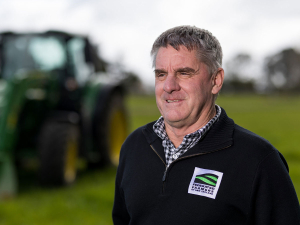
National’s pledge to introduce 19 new national standards shows the party is serious about getting Wellington out of farming, Federated Farmers says.
The National Party’s policies to make it easier to grow fresh vegetables, secure reliable water and energy and simplify farm planning are practical changes that will give growers the confidence to invest, according to Horticulture New Zealand (HortNZ).
Fonterra Co-operative Group chief financial officer Andrew Murray has resigned to take up a role outside the dairy giant.
A major move is about to get underway to improve the quality and viability of dairy beef and cattle in NZ.
Veterinarians say changes to the code of welfare for dairy cattle provides a positive foundation for improved cattle welfare across the country.
Today, 15 October, is the International Day of Rural Women, which recognises rural women’s contribution to farming, communities and the environment.