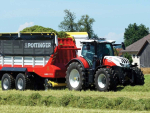
Pöttinger Lifts Revenue 5% to EUR 485m in 2025/26
Austrian manufacturer Pöttinger has completed its fiscal year 2025/26 (ending 31 July) with what it suggests is a satisfactory overall result, with revenues of EUR 485 million, an increase of 5%.



 increase font size
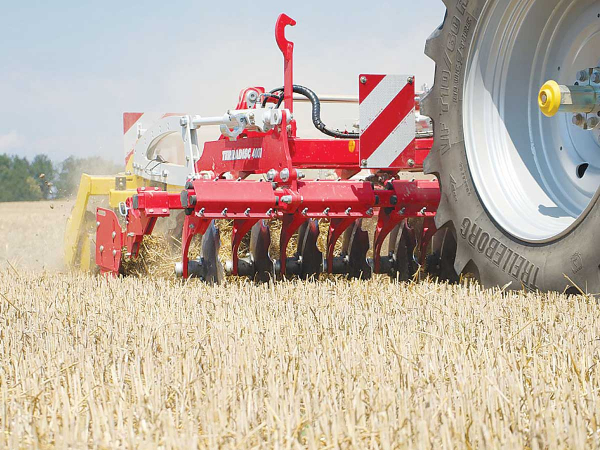 The Pöttinger Terradisc compact disc harrow.
The Pöttinger Terradisc compact disc harrow lends itself to a wide range of applications throughout the arable season.
It is said to be a versatile machine, whether incorporating cover crops in spring, stubble cultivation in summer and seedbed preparation in autumn.
Available with working widths between 3 and 10 metres, the key design feature is a twin arm system that has twin disc carriers and a wide clamping bracket.
This has the effect of holding the 580mm discs at a precise, stable angle, that in turn means the soil profile is moved effectively. The set up also prevents lateral movement making the machine very effective in heavy soils or dry conditions.
The disc carriers are manufactured from high strength cast iron, creating resistance to stress and a long service life, while rubber elements act as overload protection and allow an upward movement is hidden objects are encountered.
Said to be able to deal with high volumes of organic matter thanks to a large under- frame clearance and the aggressive angle of the discs, Terradisc creates an homogeneous mixing of soil and plant residues at working depths of 5 to 15 cm, regulated by springs clips at the front of the machine.
Austrian manufacturer Pöttinger has completed its fiscal year 2025/26 (ending 31 July) with what it suggests is a satisfactory overall result, with revenues of EUR 485 million, an increase of 5%.
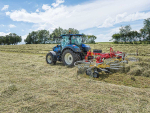
Austrian manufacturer Pottinger has released details of a new compact, linkage-mounted compact twin rotor rake, without a chassis, that is said to deliver impressive manoeuvrability.
In an era where data offers key information for effective farm management, Pottinger’s Harvest Assist App is a valuable tool for punctual, successful grassland management to support farm operations during harvesting and beyond.
Well known for its innovative seeding solutions, Pöttinger’s new Aerosem M implement-mounted pneumatic seed drill offers a precision metering and rugged coulter system for exact seed placement and prompt and uniform emergence.
Austrian manufacturer Pöttinger gave a sneak peek of a new automatic swath placement system for the Novacat V 10000 ED/RC Collector mowers at Agritechnica 2025, and recently confirmed that the upgrade will be available for the upcoming European mowing season.


Alliance is calling for final applications for its 2027 Graduate Programme, with applications closing on Sunday 25 October.
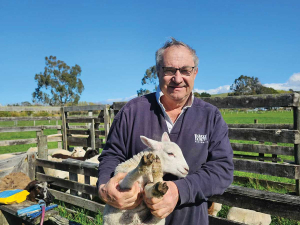
Decades piloting planes has ensured vet and farmer David Hayes is focused on safety. So, after a serious accident while welding on farm, he is sharing his experience so others can learn from it.
Canterbury milk processor, Synlait Milk has confirmed Leon Fung as its chief executive officer.
OPINION: Making it easier to collect rainwater and use it to grow crops and livestock is a no brainer.
As part of its Election 2026 coverage, Rural News asked political parties how they would help pull the arable sector out of the doldrums. Here's what they said:
Farmers are being encouraged to rethink how they manage waste on farm with the launch of ruralwastesorted.co.nz, a new website bringing together practical tips, real farmer experiences and resources.




