Rural Vote Debate on Q&A: Substance or Just Platitudes?
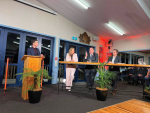
It was billed as a chance for all the political parties to woo the rural vote, but question marks hang over just how effective this was.
 increase font size
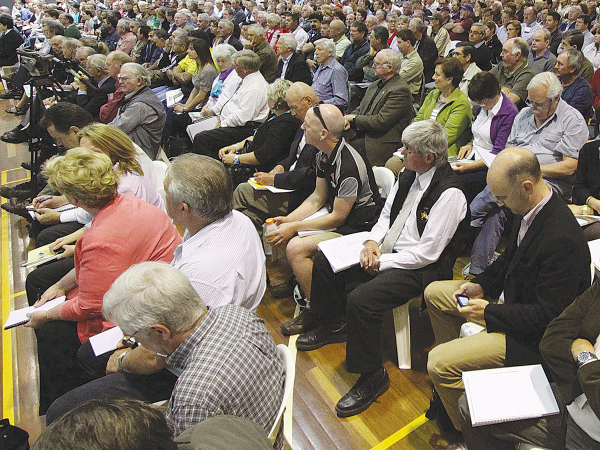 Farm industry bodies claim they exist to act in the best interests of their farmers.
OPINION: Agricultural organisations are often at the pointy end of criticism.
We exist to act in the best interests of our farmers – as individuals and the sector’s future as a collective. That can be a hard balancing act. To secure a future where the sector thrives and supports our communities and the New Zealand economy, we have to advocate with government.
We all know dairy, sheep and beef sectors have seen their fair share of regulatory changes in recent times. That’s tough and we all know it brings challenges which are confronting and not always welcome.
In the face of significant proposed change, we have advocated clearly for policies that work on the farm. Are we going to win them all? No. And have the outcomes been perfect? No.
But we have achieved better outcomes than what might have been foisted upon us. We have successfully removed rules and enabled farmers more time to adapt or provided greater flexibility.
Our teams do advocate hard for rules that are practical for farmers. It takes a range of tactics – firm conversations, aligning our positions so we are also fighting for the same thing, working constructively behind the scenes, and thumping the table when needed.
We are aligned on nearly all things. Sometimes we do have a different point of view, but these situations are rare and we work hard to get on the same page.
We all pushed hard on the freshwater regulations – and we haven’t finished, there is a long way to go, including fixing the low slope map for stock exclusion.
Action for Healthy Waterways was DairyNZ’s largest submission – contributing economic modelling and scientific analysis to push back on the rule changes. The proposed DIN measure was parked, fencing rules removed and the 190kg nitrogen cap timeframes shifted out.
More recently, Federated Farmers, DairyNZ and Beef + Lamb NZ were part of the Southland Advisory Group which delivered a one-year delay in the wintering regs. We continue to work on having impractical rules adjusted – pugging rules and sowing dates are firmly in our sights.
Climate change advocacy also successfully landed the science-based split gas approach which means methane doesn’t have a net zero target. This is a huge win for farmers, as a net zero target would have had real ramifications.
Preventing agriculture from going into the Emissions Trading Scheme was a win thanks to a joint industry-led initiative, He Waka Eke Noa. Otherwise, the sector faced a $70 million per year tax at processor level. This involved huge work between our three organisations.
Currently, we are constructing an alternative framework to measure, manage, reduce and price emissions whereby any money raised by farmers goes back to farmers and farming communities.
Yes, we do work with government by being at the table – constructive conversations, backed by credible science and expertise, deliver results.
Change is constant in farming and it’s what we do. However, we don’t support change for the sake of it, or when it doesn’t make practical sense.
To help support you through these changes, we’re working hard to get farmers tools and guidance.
For example, DairyNZ’s Step Change is geared at helping support farmers to be more profitable, reduce emissions and improve water quality.
Over the next four years, Beef + Lamb NZ will roll out a new free farm plan to help farmers easily and cost effectively meet their business, consumer, environmental and regulatory needs.
We know not every farmer will agree with us on everything, but it’s vital we all work together at such a critical time.
It was billed as a chance for all the political parties to woo the rural vote, but question marks hang over just how effective this was.
There's been widespread support from the primary sector for the Government's announcement on changes to freshwater farm plans that come under the Natural Environment Bill, which is now set to replace the existing RMA.
A pause on Waikato Regional Council's (WRC) plan change that sets new freshwater rules for farming could be announced in the coming weeks.
New Zealanders are being urged to be alert following a confirmed positive case of H5 bird flu this week.
OPINION: Farmers are being put on notice by the Green Party.


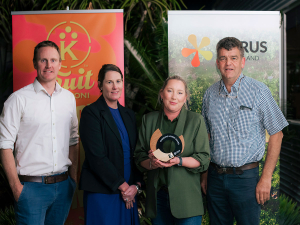
New Zealand's citrus growers were challenged to build their future on the value embedded in their fruit rather than the volume they produce, at Citrus New Zealand's annual gathering in Gisborne on 17 September.
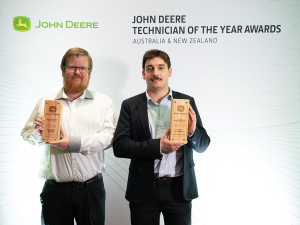
Leading John Deere technicians and apprentices from New Zealand and Australians were recognised at the recent sixth annual JD Technician of the Year Awards, held in Brisbane.
In Dacre, near Invercargill in New Zealand’s South Island, Bruce Dinnington is running a dairy operation unlike any other.
A free online platform aggregating governance vacancies across rural and regional New Zealand has been launched.
Environment Minister Nicola Grigg has announced details of a new rural plastics recycling scheme.
Agricultural drone operators say that a government decision to allow lower-risk drone work without certification won’t lower standards but drive innovation and efficiency.