Massey Uses Portable Analyser to Measure Pasture Soil GHGs
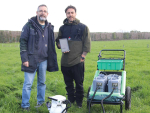
Researchers at Massey University are using a special piece of scientific equipment to improve the measurement of greenhouse gas emissions from pasture soils.
 increase font size
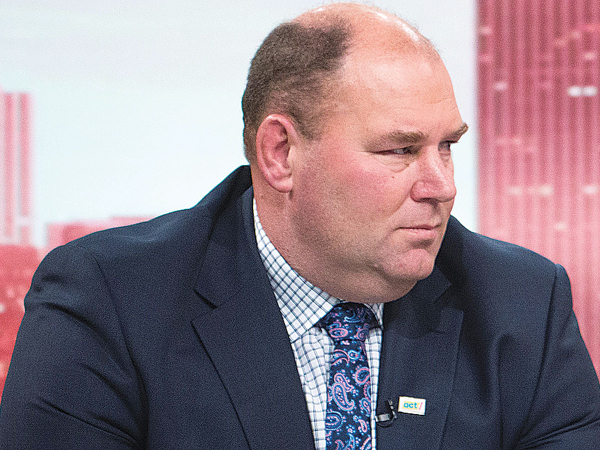 Andrew Hoggard
OPINION: In the last few weeks of 2024 there was a lot of noise in the UK and Europe about the methane inhibitor, Bovaer, and concerns raised as to its safety.
I have received several emails and lots of questions on social media. For two reasons, I guess: Firstly and most importantly because I’m the Minister of Food Safety and it is my job to ensure that anything that goes into our food system is safe in terms of ensuring that there are no residues left in products that are above safe levels. Secondly, I think people know I’m a farmer myself, so will undoubtedly have an opinion.
So, regarding food safety, I can tell you we have a very robust system under the Agricultural Compounds and Veterinary Medicines Act that regulates and ensures compounds used in our farming systems will not leave residues in our finished products that could, in turn, cause issues in the marketplace. Many manufacturers would probably argue that they are too robust, as evidenced by the recent Ministry for Regulation review into the agchem regulatory system.
The use of methane inhibitors will fall under this system. Before a methane inhibitor can be sold, it must be approved under the ACVM Act. Its key function is to ensure that any residues that appear are below the acceptable limits set in international standards, or by the importing country if they have stricter limits. Then as we found out with DCD, even when something can be proven safe, if it has a residue. If there is no residue amount stipulated, then the accepted amount is zero. As far as I’m aware, Bovaer is focused on housed livestock systems and isn’t currently in a form that would be practical for use in New Zealand, given we are mostly pasture based (grass fed) systems. So, it isn’t currently seeking approval for use here in New Zealand.
It shouldn’t be the role of the Food Safety Minister to make value judgements, or marketing decisions. I get the sense from some of the questions directed my way, and some of the debate on this subject, that people would like this to be the role. I think that would be an incredibly bad precedent on several fronts, and I think the same would apply to the GE debate.
I fundamentally believe that government should restrict its role to the minimum required. In this case there is a simple role government plays in ensuring that food is safe, and we have international standards that are set.
The Government’s role is to certify that those standards are met to ensure food is safe and trade can go ahead. The discussion about whether or not food should be marketed in a certain way, or certain products shouldn’t be used due to issues around perception, is a decision for food companies, and ultimately farmers to decide.
The companies are the ones who have the relationship with customers and can differentiate between serious customer resistance and a noisy, irrelevant minority. You should not want government to be involved in that, because if government has a say in this one, then on a principal basis how could we argue against government having a say in what other sort of things we use or do on farm, based on what they think a consumer wants, like nitrogen fertiliser, or herbicides? Just look at the EU green deal as an example of when politicians think they should tell farmers how to farm.
The second reason why government inserting itself into this is a bad idea, is that it would send a chilling effect to those companies wanting to bring products to New Zealand. This could see our government making emotion based instead of science-based decisions on what to allow and what not to allow.
I believe this would lead to companies questioning whether to bring products of any type to NZ. We are a tiny little market, and it’s already questionable on whether to invest in new products for our market. Government intervention based on emotion would make it more questionable, and farmers and growers could well miss out on the latest tech.
Finally, as a farmer, what’s my view on methane inhibitors? Personally, I want to be assured that they will not have any unintended consequences, on either food safety or animal welfare. I want to know that they work, and they would need to fit in with my farming system with minimal extra hassle. They would also need to stack up financially. If the market doesn’t really value it, then what’s the point?
So, I would like the option to be available for me to use a methane inhibitor on farm and if I can see a benefit in using them and they meet those assurances set by science, then as far as I’m concerned, it’s clearly an option for me. Now some may get upset by me saying this, but at end of the day, in this paragraph I’m talking about my farm not anyone else’s, and I’m pretty sure we can all agree that we would all like a little less of other people telling us what to do on our own farms.
Andrew Hoggard is the Assistant Minister for Agriculture and Minister for Food Safety.
Researchers at Massey University are using a special piece of scientific equipment to improve the measurement of greenhouse gas emissions from pasture soils.
There's been widespread support from the primary sector for the Government's announcement on changes to freshwater farm plans that come under the Natural Environment Bill, which is now set to replace the existing RMA.
A pause on Waikato Regional Council's (WRC) plan change that sets new freshwater rules for farming could be announced in the coming weeks.
New Zealanders are being urged to be alert following a confirmed positive case of H5 bird flu this week.
OPINION: Farmers are being put on notice by the Green Party.


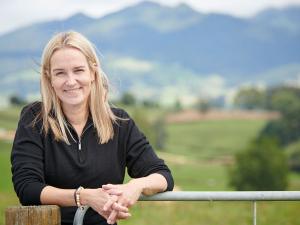
Minister of Conservation Hon Tama Potaka has appointed Susan O'Regan as Chair of the Queen Elizabeth II National Trust (QEII) for a three-year term.
Red meat farmers are welcoming Labour’s plan to review the Emissions Trading Scheme and not to campaign on pricing agricultural emissions.
Where any worker in the kiwifruit industry is mistreated, we expect the authorities to take action.
Mid Canterbury Federated Farmers arable chair, Bevan Lill, said Beef + Lamb NZ data indicated that for the last six years, the average arable return on investment was about 0.8% while inflation ran about 4% - so the average arable farm was going backwards at about 3% a year.
Seed and grain companies share the concerns of arable farmers about the viability of their sector, says Seed and Grain New Zealand chief executive Dr Sarah Clark.
The New Zealand Institute of Forestry (NZIF) says unnecessary changes to New Zealand’s Emissions Trading Scheme (NZ ETS) will seriously erode investor confidence and result in significant reductions in forest planting rates.