It's The Margins That Matter
OPINION: It appears to be difficult for people who haven’t tried to run a business to understand the difference between assets and cash.
 increase font size
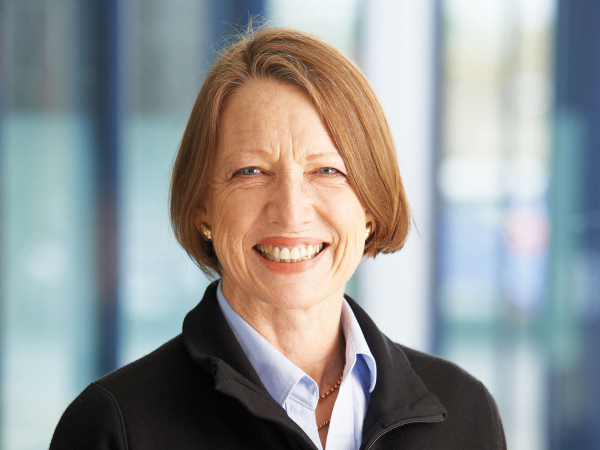 Dr Jacqueline Rowarth
OPINION: Farmers are the biggest investors in research in New Zealand. Whether through taxes, rates, co-operative company retentions, or industry-body levies… or the time they spend ‘in kind’ working with researchers, or the dollars they invest in start-up companies or their own ideas, the financial commitment is considerable.
Naturally they want to know that there is a return on that investment – that the money foregone will give a boost in the future.
Return on investment (RoI) is important. It helps with evaluation of investment profitability, comparison of different opportunities, effective allocation of resources, and making decisions for sustainable growth and improved efficiency based on data.
The problem with taxes, rates, retentions and levies is that the farmers paying them aren’t in control of the decisions – the government, councils, co-operatives and levy-body organisations to make the investments on their behalf… and then justify the investments.
Doing so can be difficult in research because of time lags, the presence (or not) of intangible benefits (for example to do with the environment or simply the acquisition of knowledge), difficulty attributing gains to specific research, and the inherent uncertainty and risk in research outcomes. Tracking becomes even harder with the biological complication of agriculture; weather, pests and market shifts all affect the outcome. Further complicating the calculation is that benefits are likely to diffuse widely and then decay as new technologies emerge.
Given the difficulties, it isn’t surprising that results from attempts at RoI calculations are greeted with scepticism, with the ongoing question of ‘could I have used that money better myself?’
The answer is ‘probably not’, at least in terms of advancing sector knowledge.
Reliable research results are underpinned by team expertise, infrastructure and scientific understanding. Individual farmers might have a new idea but developing and rolling that idea into the wider community is a different matter.
Almost everything done on farm has been the subject of research at some time or another, from soil and pasture management, to milking/shearing frequency and precision topdressing. Ideas have come from everywhere, and been integrated, developed and refined in a way that tangles any calculation of RoI.
In 2009, AGMARDT funded a book conceived by Agricultural Journalist Alan Emerson. Future Food Farming contained short pieces by academics, scientists, researchers and businesspeople. All gave their words freely because they wanted to contribute to agricultural development in New Zealand. Professor Richard Archer, then Head of the Institute of Food, Nutrition and Human Health (now retired) wrote a section on fenceless farming: “Each cow wears a device – perhaps an ear-tag, perhaps a cowbell. The device measures the cow’s activity level and orientation and perhaps some health indices. It might even sniff for methane. Most importantly the device emits sounds to guide a cow forward, right, left; perhaps guide a cow to drink, to urinate, to defecate, or to rest.”
The concept hit the media and scepticism was rife.
Cow Manager, the ear tag, had its genesis in 2004 in the USA. Halter, Craig Piggot’s version of Fenceless Farming, was launched in 2016. Ideas circulate between people. A change in thinking and advances in technology allow development of a concept that was previously not possible. RoI depends on the starting point chosen… 2004? 2009? 2016?
Further, the calculated value is different in a plot from on farm, from a region and for the country. Extrapolation from plot results is affected by farm management, weather and adoption. Adoption depends upon how the new research can be integrated into a farm system… and whether it solves a problem that is actually being experienced or makes things easier in some way without affecting the bottom line negatively.
Despite the difficulties, attempts have been made to calculate RoI. In Treasury’s 2006 report, the economists concluded that “there is typically a significant positive relation between domestic knowledge and the growth of productivity” and estimated (based on their preferred model) an annual rate of return of 17%.
All models depend on constraints and assumptions. Starting points are important, as is the time frame considered and the end point.
Whatever the actual figure is, we are on the right side of the ledger – farmers do together what no farmer can do alone. Farmer investment means that the ‘sunset industry’ of the 1990s has continued to supply a bigger portion of an inflation-adjusted bigger economic pie in New Zealand. There’s research on that, too.
OPINION: It appears to be difficult for people who haven’t tried to run a business to understand the difference between assets and cash.
OPINION: In the 1980s, concern was expressed in West Germany about the falling birth rate. Some simple analysis was performed by Professor Helmut Sies, physician and biochemist at Dusseldorf University. His letter ‘A new parameter for sex education’ was published in Nature in 1988:
OPINION: Humans are resilient. We are part of nature and have evolved for survival.
OPINION: Is New Zealand ‘Godzown’ or the ‘Last bus stop on the planet’?
OPINION: "The worst thing that agriculture does is take land from nature."


When Northland leather worker Vernon Suckling started making horse saddles 50 years ago, quad bikes and side-by-side vehicles were unheard of.
Alliance Group has confirmed that eligible farmer-shareholders who supply and continue to back the business will receive up to $20 million later this year, following the strategic investment partnership with Dawn Meats.
With a general election under five weeks away, Rural News is asking major political parties about their policies and positions on key issues facing the primary sector. We will run their responses to each question over the next four weeks. The ACT Party and the Greens didn't respond in time.
The red meat sector is in great heart.
Dr Scott Champion, Foundation for Arable Research chief executive, says that everyone in the supply chain had a role to play in driving the sector's long-term success.
Entries opened on Monday, 5 October 2026 for the 2027 New Zealand Dairy Industry Awards (NZDIA), which organisers describe as the nation's biggest celebration of excellence in the dairy sector.