DairyNZ chair wants cross-party deal
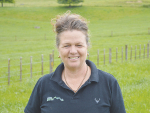
New DairyNZ chair Tracy Brown says bipartisan agreement among political parties on emissions pricing and freshwater regulations would greatly help farmers.
 increase font size
 Steven Cranston
OPINION: The piece by Dr Jacqueline Rowarth ‘Time to do the math’ contained one point which I totally agree with, misinformation is rife within the emissions debate.
What is ‘information’ or ‘disinformation’ is often in the eye of the beholder. He Waka Eke Noa (HWEN) is a major policy, which will have long lasting implications on the profitability of our industry.
The entire DairyNZ and Beef & Lamb marketing campaign is premised on the HWEN options being less damaging than the ETS. The threat of a worse option seems to be the main redeeming feature from two years’ worth of negotiations and Jacqueline was quick to remind us of this.
Even this assessment requires closer analysis; the ETS option is not a credible long-term alternative. It is a broad-based tax on agriculture, which offers no mechanism to encourage emissions reductions. For example, with milk prices often fluctuating $1 per kgMS between seasons, how many dairy farmers will base their management decisions on a 4c/kgMS levy? It is an utterly pointless concept.
That has not stopped Jacqueline and other industry leaders using the ETS threat to coerce farmers into accepting one of their poorly negotiated HWEN options. Whether it was intentional or just an oversight, Jacqueline forgot to include the 95% discount in her ETS pricing equation. When this is added, the ETS is no more costly than the other HWEN options.
With elections in 2024 and 2027, the worst-case scenario for farmers over two further election cycles are two years in the ETS. This fallback option, at least, gives farmers the ability to continue negotiating a long-term solution to emissions management. There is nothing to be gained by prematurely agreeing a HWEN option that still requires major changes.
Currently, all options only result in a 1% emissions reduction by 2030. The Government has set a methane reduction target of 10% by 2030 – so the cost analysis of achieving this target is what farmers should pay close attention too. The Climate Change Minister has already indicated he would like to see a stronger ‘price signal’ from HWEN — so expect prices to rapidly increase once farmers are locked in.
The reduction targets are not explicitly part of HWEN’s scope, the accounting metrics and reporting are. Demonstrating agriculture can easily manage our warming impact with only minor reductions in methane emissions helps build our case to review the targets.
The current methane target is based on ‘value judgements’ rather than science – even the Climate Change Commission concedes this point. If farmers ever want fairer reduction targets, then we must insert science into that process. Science is not negotiable. This makes Jacqueline’s and DairyNZ’s support of the arbitrary 10% target even more curious.
The split-gas approach was again touted as the white knight galloping to our rescue. It’s not. Jacqueline could not explain how simply separating out the gases will stop excessive reduction targets being applied to methane. Agreeing to the split-gas approach was a shrewd move by this government. It was sold as a concession but is ultimately meaningless without the inclusion of warming-based accounting.
The Zero Carbon Act does stipulate emissions be reported in GWP100, but that does not exclude the use of GWP* as well. A recent meeting between Groundswell NZ and HWEN has established there are no specific objections to the use of GWP* for industry level reporting. Duel reporting would be a significant first step towards correcting the misinformation associated with agricultural emissions.
Contrary to what Jacqueline implied, there has been no suggestion GWP* should be used at farm level. It can and should be used at industry level. This new metric’s detractors often use its limitations at farm level to discredit it. What is behind rural advocacy’s ongoing aversion to better understanding our true impact on climate?
Jacqueline’s defence of the HWEN missed out another key point, which brings us back to trust. DairyNZ and Beef + Lamb will receive a significant amount of funding from the giant slush fund set to be created.
We must be the only industry that allows our policy negotiators to have competing financial interests to those they represent. Any major changes to HWEN that reduce the financial burden on farmers would also see less money directed towards the levy bodies for research and extension.
If farmers can no longer trust their representatives, they will find new ones. That may be the enduring legacy of this poorly executed HWEN process.
Steven Cranston is a Waikato-based agricultural and environmental consultant
New DairyNZ chair Tracy Brown says bipartisan agreement among political parties on emissions pricing and freshwater regulations would greatly help farmers.

First up to the podium at the recent Tractor and Machinery Association (TAMA) Conference in Wellington, Minster for Agriculture, Todd McClay, reflected on a difficult 12 months, but hinted at signs that things were turning the corner, saying “when ag does well, New Zealand does well”.
A horror story - that’s how Federated Farmers describes new research looking at forestry conversions’ impact on water quality.
OPINION: When Groundswell showed up in the 'advocacy hub' at Fieldays alongside the same groups that brought you He Waka Eke Noa, the Hound feared the ginger group had been brought into the woke fold and given the old rubber ring.
OPINION: Industry-good bodies have had a torrid time recently, with some facing backlash from farmers particularly over their stance on emissions pricing and He Waka Eke Noa.

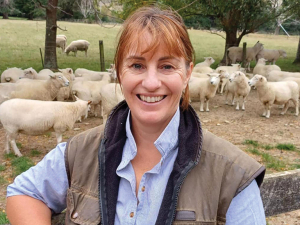
B+LNZ's Wormwise veterinarian Mary Bowron has won the Best Sheep and Beef Vet of the Year Award in recognition of her outstanding contribution to New Zealand’s sheep and beef sector.
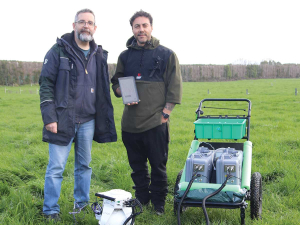
Researchers at Massey University are using a special piece of scientific equipment to improve the measurement of greenhouse gas emissions from pasture soils.
More signs of a booming kiwifruit sector.
OPINION: David Seymour and James Meager's plan to make it easier for farmers and orchardists to operate drones can best be described a 'courageous' move.
New Zealand wool is reaching new heights as air filtration companies move away from synthetic products to biodegradable alternatives.
Opuha Dam's ability to protect South Canterbury communities from major flooding has taken a significant step forward, with Opuha Water Limited (OWL) successfully commissioning a new outlet valve capable of releasing record volumes of water from the dam ahead of a weather event.