Beef + Lamb New Zealand Awards 2026 Winners Announced in Christchurch
Last night saw the winners of the 2026 Beef + Lamb New Zealand (B+LNZ) Awards named at a gala dinner at Te Pae Christchurch Convention Centre.
 increase font size
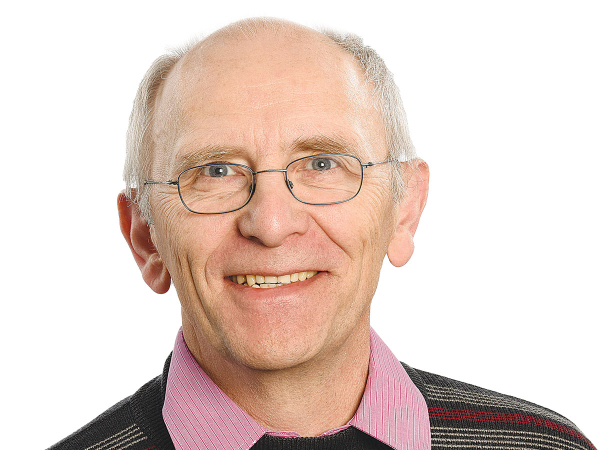 Armin Werner, Lincoln Agritech
New Zealand farmers can already subscribe to satellite-based services assessing their pasture levels; now scientists hope they can take satellite imaging to the next step and unlock information about its nutritional value.
Lincoln Agritech has partnered with AgResearch to investigate the possibility, in a six-month feasibility study funded by MBIE's Space Agency.
"It's already possible to assess the amount of feed available for livestock through satellite imagery, but we don't know the quality of that feed," says Lincoln Agritech's group manager, Armin Werner.
"Just because it's greener doesn't mean it's more nutritious or more easily digestible for the livestock - it just means it has more nitrogen.
"The quality of the feed - what proportion can the animal use, how digestible it is, or how much energy can the animal access from the pasture - can vary even within the same paddock.
"Currently the only way to test the nutritional value is by getting it analysed in a laboratory, and not many farmers do that."
Werner told Rural News that assessing quality was very difficult from satellite data because the nutritional value of pasture depends on the biochemical composition within the plant, which is not externally visible.
However, work over the last 10 years by both New Zealand and overseas scientists meant there were models now available of the physical and biological processes within the plant that they would marry with satellite data to hopefully identify signals of the underlying processes.
Werner said they had a concept in mind which they hoped they could show is doable and workable.
"These models are available, they are not new but we need now to adjust them to the quality variables that farmers are interested in. It could be metabolized energy, it could be fibre, it could be digestibility, all this is not assessed with remote sensing."
Werner said hyperspectral imaging can lead to measuring quality, but it required a lot of calibration effort and was very difficult to scale up to farm level.
That was why they were trying a different approach using a physical model related to the physiology of the plant.
"This is a different approach to just standard reflectance," he said.
"We want to have a tool for the farmers. But please accept that we need to go through this journey first and then we can say 'yes it's promising', or not."
He hoped the current study would justify funding for a larger project that could eventually lead to practical tools for growers and farmers.
The project is one of 12 chosen by MBIE's Space Agency under a programme called Catalyst: Strategic - New Zealand - NASA Research Partnerships, which aims to identify ways to improve out knowledge of the environment, Earth systems and climate through observation from space. NASA's contribution is in kind, making its experts available for consultation and advice.
Each six-month project began in April, with funding of up to $75,000 each.
The other 11 funded projects are of less immediate relevance to agriculture but cross a variety of subjects including forest mapping, atmospheric CO2, fire and drought risk, atmospheric river forecasting, and precipitation.
Last night saw the winners of the 2026 Beef + Lamb New Zealand (B+LNZ) Awards named at a gala dinner at Te Pae Christchurch Convention Centre.
A significant breakthrough in understanding facial eczema (FE) in livestock brings New Zealand closer to reducing the disease’s devastating impact on farmers, animals, and rural communities.
A breakthrough in the understanding of Facial Eczema (FE) in livestock could bring New Zealand closer to reducing the disease’s impact.
An innovative idea for transforming mechanically deboned meat (MDM) into a meat flake for seasoning has taken top honours in the Meat Industry Association’s (MIA) first-ever Dragon’s Den competition.
The Government's plan to merge the seven crown institutes presents exciting possibilities for plant technology company Grasslanz Technology, says chief executive Megan Skiffington.



Three men have been sentenced in District Courts after Ministry for Primary Industries prosecutions over animal welfare, food safety and cattle tracing offences.
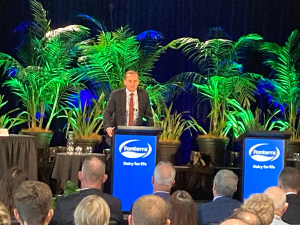
Fonterra’s 2026 financial year was a year of delivery, with record volumes of milk collected, processed and shipped by the co-op.
OPINION: The Government's decision to reinstate agriculture and horticultural science as a standalone subject from Year 11 is the right one.
Dairy farmers, still holding onto their Fonterra shares despite switching milk supply elsewhere or exiting the industry, now face a stricter share sell-down requirement.
Hamilton-based agritech company Aimer Farming has completed a $3 million capital raise to support its next stage of growth, including a beef farming product due to launch in 2027.
When dairy manager Miriam Lauridsen learned the farm, she was joining held weekly health and safety meetings, she initially thought that was “a bit over the top”. Experiencing that culture changed her mind.