Beef + Lamb New Zealand Awards 2026 Winners Announced in Christchurch
Last night saw the winners of the 2026 Beef + Lamb New Zealand (B+LNZ) Awards named at a gala dinner at Te Pae Christchurch Convention Centre.
 increase font size
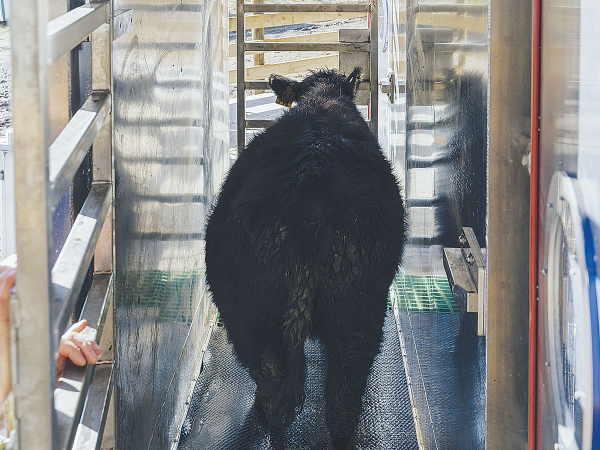 Portable Accumulation Chambers (PAC) are designed to be transported to farms or central locations, where the cattle can be quickly and efficiently tested to see how much methane they emit.
AgResearch is claiming that new technology to measure bovine methane emissions will bolster efforts to reduce the climate change impact from livestock.
Portable Accumulation Chambers (PAC) developed by the Crown Research Institute are designed to be transported by road to farms or central locations, where the cattle can be quickly and efficiently tested to see how much methane they emit. AgResearch claims these measures will help farmers understand what the climate change impact is from their herd and individual animals and assist in breeding lower emitting animals.
Having used systems like this for sheep since 2015 to great effect, AgResearch senior scientist Dr Suzanne Rowe says this is the first time using PACs to measure emissions from cattle.
"The cow walks into the chamber and we capture all of the gas that's emitted from that animal for one hour. We then use this data to rank animals according to their emissions."
Methane is a short-lived (12 years vs. 300-1,000 years CO2) but potent (25-30 times more so than CO2) greenhouse gas emitted by ruminant animals such as cattle. StatsNZ end of year report for 2022 showed that methane emissions had dropped in 10 out of 16 regions between 2021-2022.
With methane reduction targets included in climate change legislation, breeding low methane emitting animals is one way of achieving reductions without cutting stock numbers or impacting production. Already proven in sheep, low-methane dairy cow genetics are expected to be in the market in the next few years.
The portable cattle chambers will provide further options on top of testing methods already in use, such as fixed "respiration chambers" located in a facility in Palmerston North and require the animals to be transported there and spend extended periods in the fixed chambers.
Welfare of the animals is carefully monitored and in the rare event they become stressed they are removed from the chambers.
The use of PAC's and development of low methane genetics is part of a wider nationwide effort with partners such as LIC, CRV, Pāmu, Beef + Lamb New Zealand and the Ministry for Primary Industries to support farmers to reduce their emissions.
Rowe says the chambers offer benefits not just for New Zealand, but other nations as well.
"We will use the portable chambers alongside the feed efficiency monitoring we already do, but there is also preliminary evidence in sheep that the measures taken in the cattle chambers may provide important insights on feed intake and efficiency as well as methane emissions."
She adds that NZ portable sheep chambers are now in use in other countries such as the UK and Norway, supporting their efforts to reduce farm emissions.
"We are looking forward to trialling the portable cattle chambers overseas, particularly in countries where they have extensive grazing systems and don't have the infrastructure such as fixed respiration chambers that we are fortunate to have in New Zealand."
Last night saw the winners of the 2026 Beef + Lamb New Zealand (B+LNZ) Awards named at a gala dinner at Te Pae Christchurch Convention Centre.
A significant breakthrough in understanding facial eczema (FE) in livestock brings New Zealand closer to reducing the disease’s devastating impact on farmers, animals, and rural communities.
A breakthrough in the understanding of Facial Eczema (FE) in livestock could bring New Zealand closer to reducing the disease’s impact.
An innovative idea for transforming mechanically deboned meat (MDM) into a meat flake for seasoning has taken top honours in the Meat Industry Association’s (MIA) first-ever Dragon’s Den competition.
The Government's plan to merge the seven crown institutes presents exciting possibilities for plant technology company Grasslanz Technology, says chief executive Megan Skiffington.


Converting a longstanding cropping farm to dairy was the only way to ensure the land stayed in the family long term, says new dairy farmer Rod May.
As the election heats up, Organics Aotearoa New Zealand (OANZ) has launched its election scorecard designed to help voters wanting to support policies that grow organic and New Zealand's organic sector.
A 'tsunami' of milk from key exporting countries is winding down and this may be good news for New Zealand dairy farmers.
Will the good times last? That's one of the key issues to come out of the latest Federated Farmers confidence survey.
Outgoing Fonterra Co-operative Council chair John Stevenson says that it has been a privilege to represent the co-op's farmer shareholders.
Have a plan in place for your cows and staff.