
Pāmu FY26 Report: Profit More Than Doubles to $113m
Pāmu has released its FY26 Integrated Annual Report, reporting a Net Operating Profit of $113 million, more than double the $49 million recorded in FY25.
 increase font size
 Rob Ford.
Landcorp is ramping up its use of technology in its strategy to improve overall performance. It's even issuing smartphones to all its staff to maximise the collection of data.
Landcorp's general manager of innovation and technology, Rob Ford, is leading the SOE's charge to more productive use of technology.
He says long ago in the days of the Department of Lands and Survey the company had a philosophy of collecting data; today it is building on that rich data.
On every Landcorp farm visitors soon notice weather stations, but that is just the obvious. Now data collection also includes animal health and treatments, animal performance and nutritional and pasture data. Landcorp is also working with other entities that have data to mesh with its own.
Ford says the primary reason for collecting data is to provide an information source for the SOE's farm managers throughout New Zealand, to make their operations more profitable, productive and sustainable.
"But that data then rolls up to a platform level on a number of farms in a given region and then up to a national picture and finally to key performance indicators for the company," he told Rural News. "At that level it provides a more holistic view of the business and helps drive strategy for the future."
The data underpins Landcorp's Pamu brand with its commitments to treat its people and stock well, and to environmentally sustainable management practices. The data effectively provides traceability.
At individual farm level the data collection is enabling farm managers to learn what does and doesn't work on other properties, avoiding duplication of effort, says Ford. It shows soil profiles on all the farms, the cultivars grown on those farms, how much pasture is being grown and consumed on all land, soil temperature and moisture and weather information.
"If you find a farm in that data set which matches another one but which isn't performing as well, then you can look at the reasons, which may involve something like changing a cultivar. This is where the value of that big data source comes in," Ford explains.
The scale matters, and the learnings can be taken for other farmers to leverage off.
Teaching staff to deal with new technology presents itself as a bit of a bell curve, especially given that it's spread across 140 farms. Landcorp is developing automatic data capture regimes which are simple and intuitive and is working with staff to explain the reasons and value in gathering data.
Ford says it's important that staff have a say in the design of data capture programmes, for example, capturing information from the beginning to the end of calving.
"If we don't have this data being captured we don't know what our calving process or calving spread are looking like across all our farms. That in the end translates into days in milk which staff can understand," he says.
Screens in sheds
Landcorp is installing touch screens in all its dairy and wool sheds to give all staff access to information about the company.
Rob Ford says this allows staff at any time to view talks by the chief executive or get updates on what's happening in the business.
"They can go in and enter their timesheets and access the portal for other areas of the Landcorp business," he explains. "They can see performance information on their farm and communicate with others via the touch screen, so it's creating a connection for our farm teams.
"It's more than just a cellphone -- much more into the corporate environment and the performance of our organisation."
Ford says given the digital age, this system better meets the needs of the younger demographic of the company's staff.
Pāmu has released its FY26 Integrated Annual Report, reporting a Net Operating Profit of $113 million, more than double the $49 million recorded in FY25.

A partnership between state-owned enterprise Pāmu (Landcorp Farming Limited) and charity Meet the Need is putting more than quality New Zealand beef into food bank parcels this year.
State farmer Pamu has delivered its strongest operating result on record.
State farmer Pāmu (Landcorp) has announced it will pay a $10 million special dividend to the Crown off the back of a strong outlook for the business and a capital repayment of $9.5 million following Fonterra's consumer business sale.
The Government has appointed three new members to the board of state farmer Landcorp Farming Ltd, trading as Pāmu.



Three men have been sentenced in District Courts after Ministry for Primary Industries prosecutions over animal welfare, food safety and cattle tracing offences.
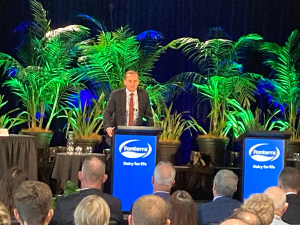
Fonterra’s 2026 financial year was a year of delivery, with record volumes of milk collected, processed and shipped by the co-op.
OPINION: The Government's decision to reinstate agriculture and horticultural science as a standalone subject from Year 11 is the right one.
Dairy farmers, still holding onto their Fonterra shares despite switching milk supply elsewhere or exiting the industry, now face a stricter share sell-down requirement.
Hamilton-based agritech company Aimer Farming has completed a $3 million capital raise to support its next stage of growth, including a beef farming product due to launch in 2027.
When dairy manager Miriam Lauridsen learned the farm, she was joining held weekly health and safety meetings, she initially thought that was “a bit over the top”. Experiencing that culture changed her mind.