#BootsOfShame: Safer Farms Urges Farmers to Check Footwear
Safer Farms is urging farmers to make sure everyone working on farm has safe, suitable footwear for the job.
 increase font size
 WorkSafe inspectors completed 680 assessments across the country.
A safety push across New Zealand has revealed significant gaps in hazardous substances management, farm vehicles, tractors, quad bikes and side-by-sides.
WorkSafe inspectors completed 680 assessments across the country between October and December 2025, visiting sheep, beef and dairy farms.
The recently published findings are aimed at offering farmers practical insights into where the sector needs to improve, and how WorkSafe can help.
WorkSafe's project lead Carl Baker says the assessments were designed to understand what's happening on farms, not to catch people out.
"We went in to have honest conversations with farmers and figure out where we can help them lift their game. The response from the sector has been overwhelmingly positive," says Baker.
He acknowledged the farmers who participated in the assessments, along with industry partners Safer Farms, Federated Farmers and DairyNZ.
The inspections revealed that hazardous substances emerged as the highest-risk area, with 39% of assessments requiring improvement.
94% of improvement notices issued related to missing safety data sheets or chemical inventories, meaning a relatively straightforward fix with significant safety benefits.
Machinery and vehicle safety also raised concerns, with inadequate guarding of PTO shafts a common issues, with 16% of assessments requiring improvement, rising to 25% in the South Island.
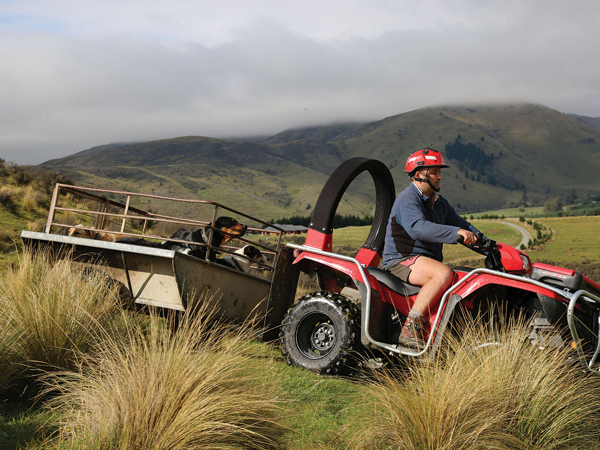
Farm vehicles, tractors, side-by-sides and quad bikes all featured, with 14% of assessments requiring improvement in this area.
Looking at the mix of businesses assessed, 81% had fewer than five employees, a reminder that even small operations carry real risk.
Carl Baker says many of the improvements identified are straightforward and low-cost.
"Keeping complete and up-to-date records of hazardous substances, can prevent serious and often long-term harm. Safety data sheets and inventories are vital. They offer best practice advice of how to manage chemicals and help emergency services respond, as without them, we don't know the risks."
Baker went on to explain that taking basic steps such as keeping vehicles serviced, regularly checking brakes and tyres, ensuring workers wear seatbelts and helmets, and making sure PTOs are properly guarded are all relatively simple measures that can save lives.
WorkSafe has a range of resources to help farmers act on these findings, including new online learning modules on hazardous substances covering inventory management, risk assessment, and emergency planning.
"We know farmers take the safety of everyone on their properties seriously," says Baker. "We're here to support that - and we're all working toward the same goal, for everyone who works on a farm to get home safely at the end of the day."
Safer Farms is urging farmers to make sure everyone working on farm has safe, suitable footwear for the job.
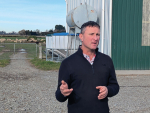
Improving health and safety is about incremental gain rather than a sudden decision, says Leeston farmer and Federated Farmers health and safety spokesman David Birkett.
A huge reduction in ACC claims from on-farm accidents over the last five years is due to thousands of small, practical decisions being made in sheds, yards, paddocks and around kitchen tables across the country, says Safer Farms ambassador Lindy Nelson.
Lindy Nelson, Safety Farms ambassador, has been named the winner of the Leadership category at the 2026 New Zealand Workplace Health and Safety Awards in Auckland.
Safer Farms ambassador Lindy Nelson's dedication to "rethinking how the primary sector works together to reduce harm on farm" has been recognised with a finalist place in the New Zealand Workplace Health and Safety Awards for 2026.


Farmers are being encouraged to rethink how they manage waste on farm with the launch of ruralwastesorted.co.nz, a new website bringing together practical tips, real farmer experiences and resources.

New Zealand Winegrowers (NZW) is celebrating the India-New Zealand Free Trade Agreement (FTA) coming into force today, bringing New Zealand wine improved access to one of the world’s fastest-growing economies.
New Zealand’s red meat sector has welcomed the India-New Zealand Free Trade Agreement taking effect, which removes India’s 33% tariff on New Zealand sheepmeat.
More than 95 per cent of New Zealand’s forestry and wood exports to India can now enter tariff free as the New Zealand-India Free Trade Agreement comes into force today.
Federated Farmers is backing Feilding High School’s call to keep Agriculture and Horticultural Science as a standalone subject in Year 11.
Food and fibre exports have returned a billion- dollar bonus to the country.