Beef + Lamb NZ's Lambing Kit Checklist for a Tough Season
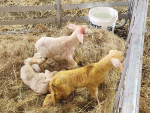
With lambing underway in many regions, Beef + Lamb New Zealand is encouraging farmers to put together a wellequipped lambing kit to help minimise lamb losses, particularly in bad weather.
 increase font size
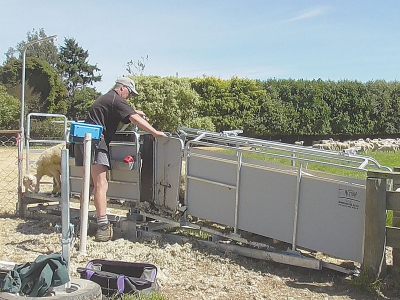 The Hecton Mobile Stock Worker.
Hecton Products, whose name is familiar to many New Zealand sheep farmers, has a new product — Mobile Stock Worker.
This versatile handling unit is designed for easy transport around the farm or between properties, helping to make short work of sheep handling jobs.
Set up or take down is easily achieved in 15 minutes. This is done by simply reversing up to the yard or holding pen, removing the transport wheels and then getting on with the job at hand.
It has a reversible clamp frame to suit left or right handed users. Once the sheep are clamped, the operator is hands free to go about the work.
The dagging race is available left or right handed, and has two anti-backing wings to increase stock flow.
Ideal for drafting, weighing, dagging, mouthing, tagging and inoculations, the units can handle ewes and lambs at the same time without any adjustment.
With the addition of weighing equipment the unit becomes indispensible for monitoring lamb weights then drafting off finished animals.
Southland farmer Nigel King has used a Stock Worker for 12 months and says he is very impressed.
“It’s easy to use, stress free for ewes and lambs and importantly people,” he explains.
“You name it, we’ve done it. Weighing, mouthing, uddering, drenching, ear tagging and even a cheeky wee crutching at the same time.”
With lambing underway in many regions, Beef + Lamb New Zealand is encouraging farmers to put together a wellequipped lambing kit to help minimise lamb losses, particularly in bad weather.
Will a stronger, more coordinated voice help rebuild confidence and improve returns in the wool sector?
The vineyards at Pyramid Farm in Marlborough’s Avon Valley have never been run of the mill, with plantings that follow the natural contours of the land, 250 metres above sea level.
Sheep and cattle numbers continue to decline, and this year's drought hasn't helped, according to Beef + Lamb New Zealand (B+LNZ).
High quality feed, reduced stocking rates and shelter will all help enhance triplet lamb survival and ultimately benefit the bottom line.


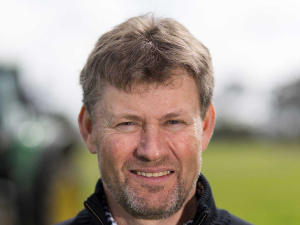
Mark Hooper has been appointed the new chair of NZPork, the industry organisation representing New Zealand pig farmers.
As the India-New Zealand free trade agreement enters into force, New Zealand’s apple industry has reaffirmed its commitment to the long-term development of India’s apple sector.
Fonterra shareholders can begin voting on Tuesday 20 October in the 2026 Board of Directors’ election, a Co-operative Council election in one Ward, and seven Annual Meeting resolutions.
National’s pledge to introduce 19 new national standards shows the party is serious about getting Wellington out of farming, Federated Farmers says.
The National Party’s policies to make it easier to grow fresh vegetables, secure reliable water and energy and simplify farm planning are practical changes that will give growers the confidence to invest, according to Horticulture New Zealand (HortNZ).