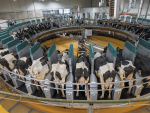
Robotic Rotary Milking: Inside a $6M Investment Paying Off Faster Than Expected
The Dairy ProQ robotic rotary, the first of its kind in the Southern Hemisphere, has proven to be an impressive addition for Victorian farmers Paul and Marsha Smith.
 increase font size
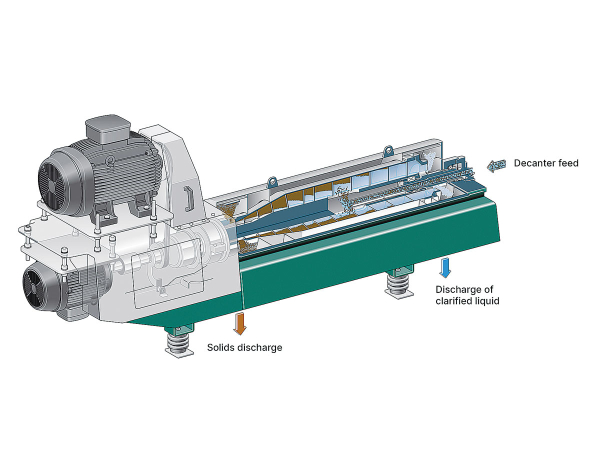 The manure decanter separates solids from liquids, creating nutrient-rich fertiliser and irrigation water.
In a groundbreaking move for dairy farming in New Zealand, Craig Copland has become the first farmer in the country to use GEA’s Manure Decanter system, traditionally used in wastewater and wineries, to enhance environmental sustainability on his Canterbury farm.
Copland and his brother Wayne have successfully integrated GEA’s Manure Decanter system into their farming operations in Chertsey, Canterbury.
“This system has significantly improved pasture irrigation on the farm,” says Craig.
The dairy farm which has been in their family for over 140 years, includes dairy, Black Origin Wagyu beef, cropping, and an apple orchard. With 1500 cows milked through a 60-bail GEA rotary, the system five dairy farm houses 600 cows and 1000 Wagyu beef animals indoors, producing a large volume of effluent.
Before implementing the GEA Manure Decanter, Craig was using a GEA Screw Press separator but faced challenges with irrigation nozzle blockages and high levels of potassium and phosphate in his paddocks.
Daniel Geldenhuys, sales engineer and business development for GEA’s Separator & Flow Technologies, says the company is committed to providing innovative solutions that support sustainable farming practices.
“The GEA Manure Decanter, adapted for use on Craig’s farm, separates solids from liquids, creating nutrient-rich fertiliser and irrigation water. The clarified liquid is fed to a nearby irrigation pond and the solids are dropped underneath the decanter into a concrete bunker,” he says.
The GEA system has reduced irrigation nozzle blockages and allowed for more efficient use of natural fertilisers.
This is the first system of its type in New Zealand.
“Since installing the decanter, we have seen a dramatic increase in irrigation run time from blocking nozzles in less than 8 hours to now endless running times, along with improved pasture growth and reduced synthetic fertiliser use,” says Craig.
“The decanter system has saved time and money on the farm, the other option we looked at was a slurry truck system, which would have involved transporting 24 million litres of effluent in 30,000-litre loads.
“I can operate the system myself, whereas slurry trucks require a driver to transport and spread slurry over fields, and regular maintenance”, says Craig.
The Dairy ProQ robotic rotary, the first of its kind in the Southern Hemisphere, has proven to be an impressive addition for Victorian farmers Paul and Marsha Smith.
GEA says that its latest walkover teat sprayer is helping farmers save time and boost udder health.
New Zealand farmers get their first opportunity to experience the future of pasture-based dairy automation in action this week at the National Fieldays.
Milking technology provider GEA Farm Technologies is introducing its first automatic milking system (AMS) in New Zealand.
Milking technology specialists GEA, in partnership with agricultural AI start-up AgriAI, have announced the launch of their walkover teat sprayer, designed to reduce mastitis cases and labour requirements, while optimising animal welfare.


Federated Farmers has welcomed new rural policies released by ACT, saying they align closely with its own election priorities.

Rural Contractors NZ says proposed changes to land transport rules for agricultural vehicles are a welcome response by the Government to out of date regulations which have seen members hit with huge fines.
Alliance is calling for final applications for its 2027 Graduate Programme, with applications closing on Sunday 25 October.
Decades piloting planes has ensured vet and farmer David Hayes is focused on safety. So, after a serious accident while welding on farm, he is sharing his experience so others can learn from it.
Canterbury milk processor, Synlait Milk has confirmed Leon Fung as its chief executive officer.
OPINION: Making it easier to collect rainwater and use it to grow crops and livestock is a no brainer.