Farmers across New Zealand are renowned for their productivity and efficiency, always wanting to do more with less, while getting the most from each pass of the paddock.
But there remains significant untapped potential to positively impact farm businesses through greater utilisation of technology.
Until recently, only farmers who purchased new equipment were able to access the latest precision agriculture (PA) innovations to maximise efficiency and productivity. The goal of precision agriculture is to maximise margins via a wide range of actions, from seed placement at the right depth, spacing and volume, through to targeted and efficient fertiliser and pesticides applications.
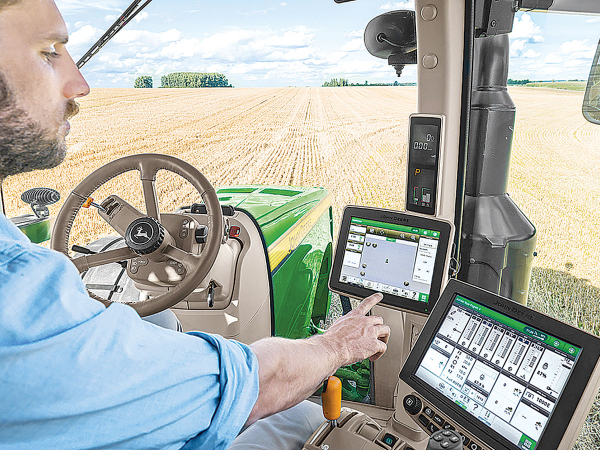
John Deere says achieving full potential in precision agriculture has now changed with its Precision Essentials packages, which can bring the latest technology to all ages and makes of machinery. Precision Essentials allows farmers to tailor the latest hardware and software to the specific needs of a farm business, by making it affordable, accessible and adaptable to all. Traditionally farmers bought their technology upfront, which of course, is still an option. The company says Precision Essentials options will facilitate a lower upfront cost for a display, receiver and modem, alongside selecting a pre-packaged licence for required elements, such as AutoTrac, Section Control and RTK.
Importantly, Precision Essentials equipment can also be retrofitted to aging equipment, and mixed fleets. As farming operations evolve, users can upgrade licences to suit their needs to ensure they have the greatest impact on farm. By being continually connected, farmers will be able to benefit from software updates.