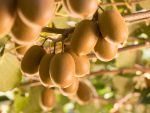
NZKGI Responds to Migrant Worker Exploitation Reports
Where any worker in the kiwifruit industry is mistreated, we expect the authorities to take action.
 increase font size
 Zespri’s Simon Limmer says the company expects a $500m increase in Chinese business this year.
Three or four years ago Zespri found the business environment in China challenging.
But this year it expects $500 million increased growth in business there, says chief operating officer Simon Limmer.
And for the first time Zespri will this year become an importer of its own product in China on a much bigger scale than any other New Zealand company, Limmer claims. The kiwifruit company is tripling staff in China to about 90, pushing into the western area and investing heavily in the brand.
"China is changing: the complexity is becoming clearer; that is a function of the time we have spent there," Limmer says. "But the Chinese are definitely on a pathway of cutting down on corruption and [increasing] simplicity in business processes; and the New Zealand free trade agreement (FTA) has impacted heavily and is paying dividends: we have no duty into China this year for the first time.
"We have deeper relationships, we have stronger contacts with the Chinese Government and we know what the expectations are; we have changed our whole approach – pouring more resources into that market and making sure we understand it. We are also shaping it."
Until recently, the product to China was sold by the time it arrived at Tauranga wharf: Zespri had nothing more to do with it other than marketing. This year Zespri becomes the importer of record.
"Now we own the fruit, we transfer it across the border, we move it through customs, we do the documentation, we do the inventory in market; it gives us much greater responsibility and accountability for quality," Limmer says.
"But most importantly it gives us agility: we are now able to respond to market more quickly. We can make price changes, make allocation changes more quickly and really take control of our own destination. We have a closer relationship with retail; ultimately we capture more value for growers."
Limmer says this is a significant shift: not many NZ businesses have gone this far in China.
"Fonterra does a little bit on certain products, but not across their whole range is my understanding."
Zespri is still selling to former distributors but with natural evolution they will know more about the point of sale and support it with the right marketing. Social media and new ways of branding are important in China. Zespri has spent about $40 million this year on branding in China alone.
Advertising is expensive in China and across $1.6 billion people you don't quite know what you are getting for your spending, Limmer says.
"We are over-investing in China but the growth potential is so significant it is worth it."
Zespri traditionally has relied on Japan and Europe, but a significant shift has been made to China with 17% of sales there last year. South East Asia and Korea are now big markets and the Middle East and North America are growing. India offers opportunities but also challenges in the supply chain. Twenty-seven of Zespri's 53 markets have been identified as one million trays plus.
The strategy to 2020 sees a spreading of the exposure away from any one market or currency. The euro has been a "basket case" compared to the NZ dollar for a long time and Europe has been a challenging place to do business.
"That's why the story is so compelling for China; there is such a strong opportunity in China and other Asian markets. That is a really good position for growers to be in, to have their exposure to market spread."
Where any worker in the kiwifruit industry is mistreated, we expect the authorities to take action.

Kiwifruit growers are watchful but remain optimistic as concerns around the potential effects of the El Niño weather pattern this season.
More signs of a booming kiwifruit sector.
After delivering a strong financial year, rural trader PGG Wrightson says the coming months will depend on customer confidence and weather.
New Zealand growers have always adapted to changing conditions, but one challenge is steadily gaining ground across the horticulture sector: resistance.


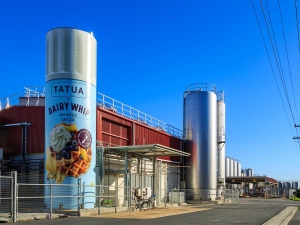
Waikato milk processor Tatua has again declared a record milk payout to farmer shareholders, leaving other processors in the dust.

A Labour-led Government won’t be bringing back the controversial freshwater rules of 2020.
National’s much-touted free trade deal with India featured in the Rural Issues Debate at Mystery Creek, Hamilton on Wednesday night.
New Zealand's 2026-27 freshwater fishing season has opened, with anglers encouraged to head to rivers and lakes over the coming days as conditions look favourable across much of the country.
Central Otago District Council (CODC) has voted against a plan to spread treated sewage sludge from Cromwell and Alexandra on farmland near Lauder, a decision Federated Farmers says reflects strong opposition from rural residents.
Pāmu has released its FY26 Integrated Annual Report, reporting a Net Operating Profit of $113 million, more than double the $49 million recorded in FY25.