
BNZ Launches First Farm Funding Boost Scheme
Bank of New Zealand (BNZ)will expand its First Farm support with a new funding boost designed to help more farmers and growers take their next step into farm ownership.
 increase font size
 In any downturn, banks will always be very supportive of farmers through the first year, but come the second year, things may start to change.
Farmers are at the mercy of Australian banks as they navigate through low prices and high input costs, says accountant Pita Alexander.
He points out that the first thing to remember when talking about banks is that Australian banks control about 85% of New Zealand's total bank lending.
"In other words, we are at the mercy of the people on the 36th floor of a building in Melbourne," he told Rural News.
In any downturn, Alexander says the banks will always be very supportive of farmers through the first year, but he says come the second year, things may start to change.
He says a lot will depend on the existing financial circumstances of individual farmers or horticulturists. In some cases, he says banks will help those who have been to hell and back, but others may not be so lucky.
He points out that banks' first priority is always their shareholders. He says there has been some criticism about what is seen as the huge profits that banks are making but he argues that the country needs strong, profitable banks.
"The last time I looked at the ANZ accounts in 2022, they were making about 11% on shareholders' funds which wasn't out of line," he says.
The other issue hanging over NZ, says Alexander, is the tax take from the agri sector.
He says Treasury has over estimated this over the last two years and this may have implications for government spending.
A Few Tips
Bank of New Zealand (BNZ)will expand its First Farm support with a new funding boost designed to help more farmers and growers take their next step into farm ownership.

OPINION: As the fuel crisis hits the country and rural New Zealand in particular, perhaps it's time to turn to one of the kaumatua of the rural sector, Pita Alexander - farm accountant, advisor and a source of knowledge and insightfulness.
Respected farm accountant Pita Alexander says with the present fuel crisis there are many ways farmers can reduce their consumption of petrol and diesel.
Specialist agriculture lender Oxbury has entered the New Zealand market, offering livestock finance to farmers.
A leading financial and banking advisor says he doubts if most dairy farmers fully understand the dynamics of banking.



Three men have been sentenced in District Courts after Ministry for Primary Industries prosecutions over animal welfare, food safety and cattle tracing offences.
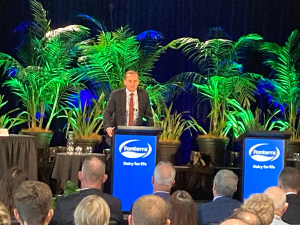
Fonterra’s 2026 financial year was a year of delivery, with record volumes of milk collected, processed and shipped by the co-op.
OPINION: The Government's decision to reinstate agriculture and horticultural science as a standalone subject from Year 11 is the right one.
Dairy farmers, still holding onto their Fonterra shares despite switching milk supply elsewhere or exiting the industry, now face a stricter share sell-down requirement.
Hamilton-based agritech company Aimer Farming has completed a $3 million capital raise to support its next stage of growth, including a beef farming product due to launch in 2027.
When dairy manager Miriam Lauridsen learned the farm, she was joining held weekly health and safety meetings, she initially thought that was “a bit over the top”. Experiencing that culture changed her mind.