Federated Farmers Urges Farmers to Vote on November 7
With less than a week to go before voters choose the next government, Federated Farmers has a simple message to its members - get out and vote.
 increase font size
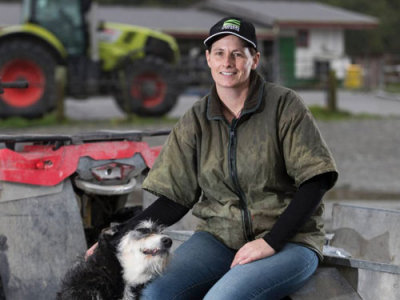 Federated Farmers president Katie Milne.
Farmers are fed up with councils treating them as cash cows.
A new Federated Farmers survey shows less than 4% farmers believe they get good value for money from their rates.
"It’s local government election year and those chasing our votes can expect some very pointy questions on why average council rates in New Zealand jumped 79.7% between June 2007 and June 2017 when inflation (CPI) for the same period was only 23.1%," Federated Farmers president Katie Milne says.
On Tuesday this week, Federated Farmers launched a survey of its members to get a handle on farm rates to help inform our advocacy to the Productivity Commission’s Inquiry into Local Government Funding and Financing.
"By Friday morning, we’d already had 647 responses, with 440 of them landing on the first day. I think that speaks volumes about the level of concern about council costs," Milne says.
"As an ironical nod to the fact many farmers’ rates bills top $10,000, we said the first 200 respondents to our survey would get a ‘Federated Farmers $10K Rates Mug’. These were exhausted barely three hours after the survey opened.
"The sad fact is, based on the rising costs, we’re probably going to have to change to $20K Rates Mugs."
Of the 647 responses received so far:
544 provided Feds with an amount of rates they pay, with an average of $26,949 and median of $21,388. 46 pay less than $10,000. 199 pay between $10,000 and $20,000. 247 pay between $20,000 and $50,000 43 pay between $50,000 and $100,000 9 pay more than $100,000, with the highest amount $176,533 Only 3.7% of respondents agree that they get good value for money from their rates, with 96.3% disagreeing 87% of respondents consider roading to be the council activity mattering most to them.
This was followed by planning and regulation (41.7%), land drainage (23.6%), water and wastewater (23.4%) and governance (23%).
"Federated Farmers recognises the cost pressures on Councils and we’ve said before we’re delighted that the Productivity Commission is now investigating how local authorities might fund infrastructure in the future, as well as looking into regulatory creep and cost-shifting by central government," Milne says.
"Bills calculated on the current antiquated system of capital or land value-based rates often have little or no relationship with what a family, a business or a farm actually uses by way of council services.
"And here’s another message in this election year - we need people who have a sound understanding of rural and agricultural issues to stand, and get that perspective heard in Council chambers."
With less than a week to go before voters choose the next government, Federated Farmers has a simple message to its members - get out and vote.

Federated Farmers has welcomed new rural policies released by ACT, saying they align closely with its own election priorities.
A farmgate milk price of $10/kgMS this season is firming up as milk powder prices soar and the New Zealand dollar weakens.
Federated Farmers is backing Feilding High School’s call to keep Agriculture and Horticultural Science as a standalone subject in Year 11.
National’s pledge to introduce 19 new national standards shows the party is serious about getting Wellington out of farming, Federated Farmers says.


OPINION: As election day looms, rural NZ seems to have pressed the pause button – held somewhat in limbo on an orange light.

Will drones be the answer to tackling the problem of wasp and hornet nests high up in trees and other inaccessible places?
Canterbury milk processor Synlait has come through tough times and is now ready to scale up from a stable base, says its newly confirmed CEO Leon Fung.
NZPork says a ham made in New Zealand is not necessarily made from New Zealand pork.
Rural Contractors NZ says proposed changes to land transport rules for agricultural vehicles are a welcome response by the Government to out-of-date regulations which have seen members hit with huge fines.
With New Zealand’s greenhouse gas emissions in the spotlight, Auckland scientist Nathan Balasingham says there’s a better way to tackle the problem than shrinking cow numbers or fertiliser usage.