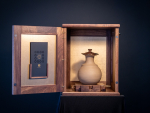
Naki unveils the world’s most expensive manuka honey
Naki Honey, a New Zealand manuka apiary company, has crafted what is believed to be the world's most expensive honey.
 increase font size
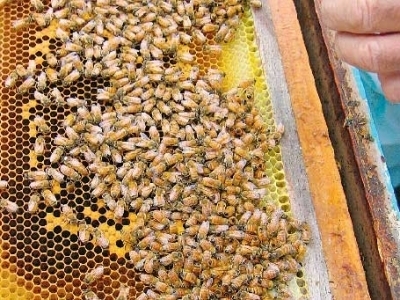 A steadily increasing number of students of all ages in Northland are training in apiculture.
There's a dawning realisation that unused blocks of manuka covered land could be an untapped source of sustainable income.
And it's attracting a steadily increasing number of students of all ages in Northland to train in apiculture.
Manuka honey, or liquid gold as it's fast becoming known, is a growing industry, with enrolments in the Kaitaia based Lincoln University Certificate in Apiculture up from eight students in 2015 to 22 in 2016.
The course has support from local iwi, and is run in partnership with Te Runanga o Te Rarawa School of Honey Gatherers.
Te Rarawa Anga Mua Chairman, Abraham Witana, says the partnership has supported the growth of qualified apiarists in Te Rarawa, the far north, the region and across the country.
"Kai Ora Honey Ltd and Tai Tokerau Honey are leading examples who are already marketing their brand internationally," he says.
"The initiative is aligned to two long term goals of Te Rarawa - that Te Rarawa people are educated and trained to achieve their potential and support the development of the iwi, and to grow a sustainable economic base that will support Te Rarawa whānau, hapū, and iwi aspirations."
Last year's students are a word of mouth success story making others take notice of the opportunities beekeeping offers. A work experience stint with a local avocado company led Jodie Posinkovich into full time employment as a beekeeper for the company, which has since sold the avocado business and entered the lucrative commercial apiculture arena. The majority of the students have bought their own hives are busy increasing their numbers. An individual beekeeper can manage up to 500 hives, enough for a good income, and some are lucky enough to be located on family land.
Lincoln staff member Paula Stapleton says the market value of manuka honey, the prospect of a steady income, and the vast amount of land available in Northland make apiculture an attractive option, but emphasises that hard work and a genuine love of nature are behind those who succeed in the industry.
The majority of honey produced in the area is sold for export. Processing takes place at an extraction plant in Kaitaia owned by a former student. There is also money to be made in related products such as honeycomb, propolis and pollen, and making queen bees, hives, "splits" (nucleus hives) and hive ware for sale. Graduates exit the course highly skilled and employable in the primary sector.
Naki Honey, a New Zealand manuka apiary company, has crafted what is believed to be the world's most expensive honey.
Thousands of honey retailers and professionals worldwide are getting a taste of the remarkable properties of New Zealand mānuka honey.
After three years of record performance, mānuka honey exporter and retailer Comvita has reported an annual net loss of $77 million.
Bee awareness month - September - ended on a high for the struggling apiculture sector.
While confident that the apiculture sector can meet its target of doubling honey exports by 2030, chair of ApicultureNZ, Nathan Guy, says it will be challenging.



Testing confirms H5 bird flu in a single northern giant petrel, found dead on a remote Cape Palliser beach in the Wairarapa, says Dr Mary van Andel, the Ministry for Primary Industries' (MPI) Chief Veterinary Officer.

"What's for dinner?" may sound like a simple question, but for many Kiwi parents, answering it has become a job in itself.
Fifty Eight years ago, on the 16th of August 1968, August Claas, the founder of the harvesting company and father of Helmut Claas, personally presented a Claas Senator combine harvester to Scottish farmer John Steven.
New Zealand consumers are paying more for beef mince than ever before, with the average retail price now sitting above $24 per kilogram, according to Rabobank.
State farmer Pamu has delivered its strongest operating result on record.
Four years since it was first detected in New Zealand, researchers and growers now know much more about management of maize pest fall armyworm (FAW).