
NZ Rural Contractors Push for Urgent VDAM Rule Reform
While the Government has moved quickly to make commercial hauliers' lot easier during the current fuel crisis, they appear to be stuck in the creep box when it comes to the agricultural industry.
 increase font size
 RCNZ chief executive Andrew Olsen.
Rural contractors want the Government to include a national standard for air plans as part of its Resource Management Act reforms.
Rural Contractors New Zealand (RCNZ) says several regions have outdated air plans and some are waiting to see the scope of the ongoing coalition Government reforms.
RCNZ chief executive Andrew Olsen says amid much focus on developing standards for infrastructure, biodiversity and freshwater, there's been no comment about standardising air and aquatic agrichemical application standards and the qualification of companies and operators.
"The RMA reforms should be contemplating this in the absence of councils doing so," he says.
"We also think it's time councils came to grips with ensuring the applicaotrs they award contracts to hold the appropriate qualifications.
"I have had members tell me they've helped councils fine tune air plan policy and best practice in for example aquatic spray environmental. Our qualified members are a vast source of information and councils should be tapping into that, not rewarding non-qualified companies with contracts."
Those comments are endorsed by Matt Strahan, Nufarm's national product manager.
"Agri-chemical contractors are a key player in the environmental stewardshi we support in providing effective crop protection solutions through safe spray application. The industry is under increasing scrutiny in application, storage and health and safety and a national standard makes sense," says Strahan.
He says that should mean only those contractors with Registered Chemical Applicator training or working towards that qualification should be able to apply agrichemicals.
The Environmental Protection Authority requires agrichemical applicators using airblast or boom sprayers to hold qualifications when applying highly ecotoxic products as do some regional plans, though there is variation in these by region.
Jane Lamb, general manager of the New Zealand Agrichemical Education Trust which runs Growsafe, says using NZ Standard 9409:2021 on the management of agrichemicals would be a great place to start if looking at a national policy statement.
The document sets out good practice for safe, responsible agrichemical use. It was jointly developed by a committee compromising representatives from government agencies such as WorkSafe, EPA and MPI, regional councils and industry groups including Fonterra, Zespri and RCNZ.
Better Policing
Any new national standard should also require anyone spraying agri-chemicals to be a Registered Chemical Applicator (RCA).
The RCA scheme, started by Rural Contractors NZ but now overseen by Growsafe, is the highest standard of certification. It requires renewal every five years through training, theory, and practical assessments, often including on-site visits.
Many regional councils and suppliers to some food producers are not supposed to give work to contractors who don't hold an RCA but Rangitikei agri-chemical sprayer Graham Greer doubts that this is happening across the board.
"It doesn't seem to be policed. I think there needs to be a lot more awareness about the need to be a Registered Chemical Applicator."
He's had decades in the business and says it takes at least three years to become compliant with all that is required for safe appliaction of agrichemicals.
"You get guys who just come in and cut the costs."
He backs a national standard for air plans and its enforcement, including having properly qualified spray operators.
"We need some consistency right across the country rather than different plans here, there and everywhere."
While the Government has moved quickly to make commercial hauliers' lot easier during the current fuel crisis, they appear to be stuck in the creep box when it comes to the agricultural industry.

Ensure your insurance is fully comprehensive and up to date because as a rural contractor you don’t know what’s around the corner.
Farmers are unhappy with the Government's replacement legislation for the Resource Management Act (RMA).
OPINION: The release of the Natural Environment Bill and Planning Bill to replace the Resource Management Act is a red-letter day for the agricultural sector, kicking to touch the single biggest handbrake on agricultural productivity and rural economies – the much-hated RMA.
OPINION: Metaphorically, the funeral arrangements are being put in place to bury one of the largest and most complex pieces of legislation – the 34-year-old Resource Management Act (RMA).



A major move is about to get underway to improve the quality and viability of dairy beef and cattle in NZ.
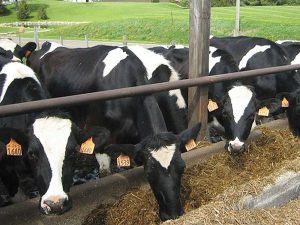
Veterinarians say changes to the code of welfare for dairy cattle provides a positive foundation for improved cattle welfare across the country.
Today, 15 October, is the International Day of Rural Women, which recognises rural women’s contribution to farming, communities and the environment.
Global dairy giant Lactalis has integrated its Australian operations with the Mainland Dairy consumer business it acquired from Fonterra earlier this year.
After almost two decades of sharemilking, saving and building equity, Aaron and Marcia Flay this year realised their long-held dream of settling on their first dairy farm.
Good medium to long term prospects for NZ beef, especially in the US, has heighted the focus on various initiatives to capitalise on this situation.