Cameron Henderson Reappointed Unopposed as DairyNZ Deputy Chair
DairyNZ deputy chair Cameron Henderson has been re-appointed unopposed for another term.
 increase font size
 DairyNZ head of economics, Mark Storey.
The outlook for dairy farmers this season has improved, especially when compared to forecasts only six months ago, according to DairyNZ.
Revenue projections have improved largely due to better results at the Global Dairy Trade (GDT) auctions, along with Fonterra’s adjusted projected payout for the season, which stands at a mid-point of $7.80/kgMS.
At the same time, there have been significant price decreases for feed and fertiliser, bringing these more in line with historical averages, reducing on-farm costs. However, things could tighten in the coming season, DairyNZ cautions.
It’s latest forecast data on the Econ Tracker shows the national breakeven forecast currently sits at $7.75 kg/MS.
DairyNZ head of economics, Mark Storey says while this is positive, they are seeing interest costs becoming one of the most significant costs for farmers this season.
“The Reserve Bank signalled slowed reductions to the official cash rate, meaning interest rates are now likely to reduce more slowly and later than previously expected, which is a concern.”
When considering these changes, the national breakeven forecast currently sits at $7.75 kg/MS. This is below DairyNZ’s forecast average payout received of $8.12 kg/MS, which is based on the estimated milk receipts for the 2023/24 season and dairy company dividends.
“A positive difference between these numbers is good news and will likely bring further relief to many farms, especially when compared to forecasts mid to late last year which showed a negative situation for dairy farmers,” says Storey.
“Looking ahead to next season, we see a marginal tightening of dairy farmer’s financial position, with less revenue forecast. We are not expecting feed and fertiliser costs to drop much further than they have already done and while debt servicing may ease, it will likely remain at very high levels,” he explains.
“We are encouraging farmers to continue managing their budgets and costs, as they will likely experience limited operating profits, and many will likely still find it tight across many parts of the country.
“However, we know that dairy operates in a fluctuating economic environment, and therefore, the farm revenue and costs captured in the 2024-25 season forecast are subject to considerable uncertainty and can change quickly.”
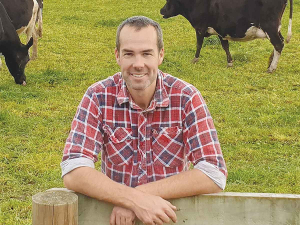
DairyNZ deputy chair Cameron Henderson has been re-appointed unopposed for another term.
Farms across the upper North Island are trialling different pasture mixes as part of a research programme that aims to build greater resilience into farming systems.
Election years are always a concerning time for farmers, according to DairyNZ chair Tracy Brown.
Most dairy regions around the country have had a pretty good season so far says Tracy Brown.



Now in its fourth year, the 2026 Fencing Industry Awards, formed part of the proceedings of the FCANZ Conference, held in Nelson during August.
DairyNZ deputy chair Cameron Henderson has been re-appointed unopposed for another term.
OPINION: The stats speak for themselves.
Farms across the upper North Island are trialling different pasture mixes as part of a research programme that aims to build greater resilience into farming systems.
Election years are always a concerning time for farmers, according to DairyNZ chair Tracy Brown.
The Ballance Farm Environment Awards are coming to the West Coast of the South Island.