Boots Off, Brains Unplugged
OPINION: Across the country, farmers are juggling stock, pasture, animal health, fertiliser, contractors, staff, weather, cash flow and an endless list of jobs that cannot wait.
 increase font size
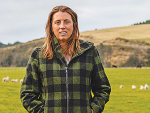
 Aimee Robinson (pictured) is exactly where she wants to be.
Growing up in urban South Auckland seems a world apart from working with South Island farmers.
But for Ballance Agri-Nutrients' Aimee Robinson she's exactly where she wants to be.
Aimee is the upper South Island representative for Ballance's Science Extension Team, working with farmers from Canterbury, Marlborough and the West Coast. She advises them in ways to achieve increased on-farm productivity, through more efficient and effective nutrient management. For Rolleston-based Aimee, the role is a perfect fit.
"Everything on earth relies on soil, it's the basis for agriculture and human society", she says, "so it's incredibly rewarding to work closely with farmers, who are so knowledgeable already, to continually improve the way we use the soil."
A graduate of Lincoln University, Aimee has a Masters in Soil Science and a Bachelors degree in Environmental Science. Despite not coming from a farming background, Aimee loves working in the agricultural industry and has found the farming community to be very welcoming.
"They are very accepting and welcoming as an industry and community. Farmers love sharing, you learn so much by asking them", Aimee says.
Besides some good natured ribbing from farmers regarding her Auckland origins, Aimee finds that her educational background, industry experience and genuine interest in the community has helped to establish a great rapport.
"If you're honest and willing to put in the time to understand their particular situations, goals and challenges, then they respect you for that. If they trust you, they'll trust your advice."
Besides working with individual farmers, she also runs educational workshops. Not just for those in the agricultural industry but also workshops aimed at school aged children and people in urban areas. She notes how important it is to present an accurate view of the agricultural industry and especially to reverse the misconception that farmers don't care about the land and environment.
"When you talk to farmers, it's immediately clear that looking after the environment is important to them" she says.
"By working together we are able to change on-farm systems for the better, using the latest developments to maximise production and create more efficient product use.
In the end, this is better for the environment and better for the soil."
OPINION: Across the country, farmers are juggling stock, pasture, animal health, fertiliser, contractors, staff, weather, cash flow and an endless list of jobs that cannot wait.
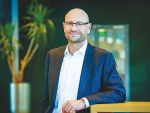
Farmer-owned fertiliser company, Ballance Agri Nutrients is welcoming National’s plan to negotiate security agreements with key supplier countries to protect New Zealand-bound products from export restrictions and greater supply chain certainty.
Ballance Agri-Nutrients has released its latest fertiliser outlook, detailing some of the current global trends influencing fertiliser supply. Ballance head of procurement Shane Crean takes part in a Q&A in the report:
Ballance Agrinutrients chief executive Kelvin Wickham says despite a tough year, he is pleased the business has returned to profit.
A new digital assistant is now helping Ballance Agri-Nutrients farmers speed up nutrient information and ordering.


During the nesting season, from September to December, industrious starlings can quickly build nests in the darker areas behind tractor and vehicle, usually close to hot engines, typically resulting in localised damage or in some cases complete write-offs.
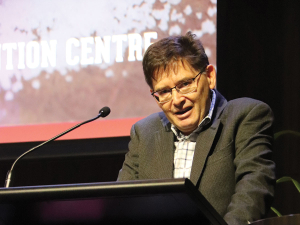
The meat processing industry is much more collegial than it was in the past and is now more focused on common goals.
With the last couple of months having seen some potential tractor purchases put on hold with the impending election and continued input cost rises, year-to-date figures, ending September, has seen deliveries up around 5% over the same period in 2025, with a total of 2026 units.
Beef+Lamb New Zealand is calling for nominations for director roles in the Northern South Island and Northern North Island electoral districts.
Fonterra chief executive, Richard Allen says being resilient has helped the dairy industry overcome extreme volatility in recent years.
The head of the Ministry for Primary Industries (MPI) trade and international relations group says New Zealand is well-positioned to secure trade access and compete internationally as the world becomes more complicated, demanding and uncertain.