
NZ Red Meat Exports Hit $867m in August, Up 23%
Meat Industry Association data, released alongside the Red Meat Sector conference in Wellington, shows export value climbing across the US, China, UK and Canada.
 increase font size
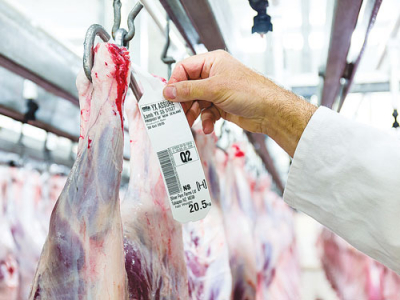 Rabobank says the ease in which global markets have absorbed extra meat volumes shows demand remains strong.
The apparent ease with which the global lamb markets have been able to absorb extra volumes from New Zealand and Australia indicates demand remains very strong, a Rabobank report says.
The bank latest Agribusiness Monthly says strong global demand, together with local procurement competition for declining supplies, ensured schedule prices kept lifting throughout June.
As of the start of July, the slaughter price in the North Island averaged $7.85/kg cwt (4% higher month on month), while South Island lamb averaged $7.70/kg cwt (5% higher month on month).
NZ exported 35,620 tonnes of lamb in May, up 21% on volumes exported in May 2016, says Rabobank animal proteins analyst Blake Holgate.
Despite the increased volume, average export values surged to $10,199/t (up 8% on May 2016).
“China continues to lead market demand, taking about 40% of NZ’s May exports. The US is another market providing strong returns for NZ exporters, with US lamb export receipts surpassing NZ$40m for the first time,” says Holgate.
“Australian exports have also lifted sharply over this period, with ongoing drought forcing many farmers to destock, leading to record kill numbers. The apparent ease with which the global lamb markets have been able to absorb this extra volume from NZ and Australia indicates global demand for lamb remains very strong.”
Holgate says NZ’s domestic lamb supplies will remain tight through the remainder of the 2017-18 season ending September 30.
“Rabobank expects competition for the remaining lamb supply to continue to put some upward pressure on prices, although further upside will be limited by the processors’ ability to extract further value the market.”
Holgate says the lower NZD/USD, and the seasonal decline in cattle supplies, will put some upward pressure on beef prices also. However, over the next month, he expects this to be limited by softening US imported beef prices.
Rabobank says continued depreciation of the NZD/USD, combined with the seasonal reduction in cattle kill numbers, led to a marginal increase in schedule prices during June.
As at the start of July, the North Island bull price is 1% higher month on month, averaging $5.30/kg cwt, with the South Island bull price up 3% month on month, averaging $5.05/kg cwt.
The NZD/USD has fallen 3.5% since the start of June, dropping below 0.68 for the first time since June 2016.
“This currency movement has helped to offset weakening US imported beef prices, which are starting to trend downwards as supplies of US domestic beef production increase.
“While the end of NZ’s cow kill season traditionally provides some lift in US imported beef prices, as available import supplies tighten, any jump in prices this season is likely to be limited by the increased supply out of Australia, as drought in their key cattle producing regions forces them to increase their cow slaughter rates.”
Holgate says with the peak of the season’s kill now done, NZ’s total production for the 2017-18 season is on track for the first season-on-season increase since 2014-15, with the total beef kill now 7% ahead of where it was at this stage last season.
Rabobank believes available supplies of cattle for slaughter will now drop off through to the season end at the end of September with prime cattle making up the bulk of the remaining kill.
Meat Industry Association data, released alongside the Red Meat Sector conference in Wellington, shows export value climbing across the US, China, UK and Canada.

A 'tsunami' of milk from key exporting countries is winding down and this may be good news for New Zealand dairy farmers.
Chinese beef trade quotas and a looming suspension of Brazilian beef imports into the European Union are expected to reshape global beef trade flows over the remainder of 2026, with implications for New Zealand exporters, according to Rabobank's Q3 Global Beef Quarterly report.
New Zealand consumers are paying more for beef mince than ever before, with the average retail price now sitting above $24 per kilogram, according to Rabobank.
After delivering a strong financial year, rural trader PGG Wrightson says the coming months will depend on customer confidence and weather.


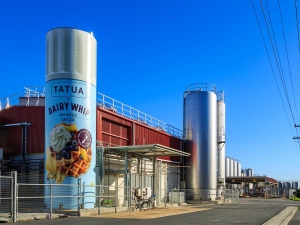
Waikato milk processor Tatua has again declared a record milk payout to farmer shareholders, leaving other processors in the dust.

A Labour-led Government won’t be bringing back the controversial freshwater rules of 2020.
National’s much-touted free trade deal with India featured in the Rural Issues Debate at Mystery Creek, Hamilton on Wednesday night.
New Zealand's 2026-27 freshwater fishing season has opened, with anglers encouraged to head to rivers and lakes over the coming days as conditions look favourable across much of the country.
Central Otago District Council (CODC) has voted against a plan to spread treated sewage sludge from Cromwell and Alexandra on farmland near Lauder, a decision Federated Farmers says reflects strong opposition from rural residents.
Pāmu has released its FY26 Integrated Annual Report, reporting a Net Operating Profit of $113 million, more than double the $49 million recorded in FY25.