Biosecurity Ranked Top Priority In KPMG Agribusiness Agenda 2026
According to new research, industry leaders have ranked world-class biodiversity as the number one priority for the 16th year in a row.
 increase font size
 KPMG’s Ian Proudfoot is predicting no significant rise in dairy prices this year and only as light improvement next.
No significant rise in dairy prices next year.
That's the prediction of Ian Proudfoot, KPMG's global head of agribusiness. He told Rural News he sees himself as a realist and says at the moment there is no indication that milk supply from any region will reduce dramatically in the next year.
As a consequence we can expect the supply position to continue and he doesn't see prices recovering significantly, although he believes they will go up.
"The event which would cause any rebalancing upwards quickly would be a drought or a biosecurity event in one of the major dairy production regions around the world. You'd have to say we haven't had an event of any magnitude for a couple of years," he says.
"Agriculture is cyclical and an event will happen at some point but whether it happens this year, the year after or the year after that we don't know."
Proudfoot believes farmers in the US are not experiencing the same economic pain as farmers in New Zealand and Europe because the price of corn – the main feed for dairy cows in the US – is low.
He adds that there are downsides to European farmers being encouraged to reduce production to help them deal with the crisis.
"While it's costing them money to produce, it would be more expensive not to produce given that they have invested a lot of money in new processing equipment," Proudfoot explains. "Therefore they need the volume to cover the marginal costs of operating that plant so it makes sense to carry on producing milk, which of course has price implications."
He says the fundamentals of the future of dairying haven't changed and long term forecasts suggest that demand will steadily rise. But Proudfoot says there will need to be a rebalancing of the market and it's important for the NZ dairy industry to focus on lowering production costs and increasing the volume of value add consumer products.
"The more we can do to break that link to commodities and the cyclical nature of commodity prices, and the more we can put into consumer products, the better. We all know the price of dairy products at supermarkets hasn't really come down, therefore the more you have in consumer products the better the protection."
In the next year, Proudfoot is predicting the farmgate milk price will reach the mid $4 mark, which he says will mean more farmers will be able to break even or not suffer the losses they are currently experiencing.
He says while the present crisis is painful, long term the sector will benefit as farmers focus on running their businesses more profitability.
According to new research, industry leaders have ranked world-class biodiversity as the number one priority for the 16th year in a row.

Biosecurity remains the top priority for agribusiness leaders, according to KPMG’s 2025 Agribusiness Agenda released last week.
Biosecurity remains the top priority for agribusiness leaders, according to KPMG's 2025 Agribusiness Agenda released last week.
OPINION: In the same way that even a stopped clock is right twice a day, economists sometimes get it right.
OPINION: Noted economist and self-promoter Cameron Bagrie took one look at KPMG's recently released Financial Institutions Performance Survey on banks and zeroes in one key number that suggests banks are so risk averse in this country that they are probably stifling growth and innovation.



Now in its fourth year, the 2026 Fencing Industry Awards, formed part of the proceedings of the FCANZ Conference, held in Nelson during August.
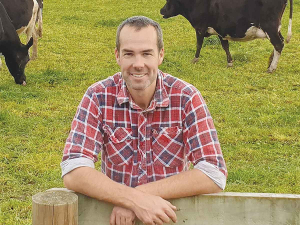
DairyNZ deputy chair Cameron Henderson has been re-appointed unopposed for another term.
OPINION: The stats speak for themselves.
Farms across the upper North Island are trialling different pasture mixes as part of a research programme that aims to build greater resilience into farming systems.
Election years are always a concerning time for farmers, according to DairyNZ chair Tracy Brown.
The Ballance Farm Environment Awards are coming to the West Coast of the South Island.