OSPRI Reduces TB Testing and Lifts Movement Controls in Key Regions
Ospri is reducing TB testing frequencies and movement control measures as the disease risk subsidies in parts of the country.
 increase font size
 B+LNZ economic service chief economist Andrew Burtt.
The latest on-farm inflation rate has hit 10.2%, the highest it’s been since 1985-86 according to a recent report from Beef + Lamb NZ (B+LNZ).
The Sheep and Beef On-Farm Inflation 2021-22 report measures the annual changes in farm input prices.
The overall on-farm inflation rate is determined by weighting the changes in prices for individual input categories by their proportion of total farm expenditure.
While on-farm inflation had been comparable with the CPI in recent years, the 2021-22 report shows farmers are now facing significant price increases in all but one of 16 input categories.
“Sheep and beef farm input prices increased by 10.2 percent in the year to March 2022, and when interest rates are excluded, input prices were up by 10.7 percent,” says B+LNZ Economic Service Chief Economist Andrew Burtt.
He says that with a tight labour market and increased import shipping costs, farmers have seen increased prices for contractors, tradespeople, machinery and parts for operating farm infrastructure and vehicles.
“Fuel prices have continued to rise since March 2022, and fertiliser prices are expected to rise this month, too.”
He says the increase in farm input prices is largely due to the rise in cost of three core areas of expenditure: fertiliser, lime and seed (up 23%), interest (up 5.9%) and repairs, maintenance and vehicles (up 10.4%).
“Fertiliser, lime and seed prices are significant for sheep and beef farmers because this area of expenditure comprises 17.5% of total farm expenditure. The prices of almost one third of categories of farm expenditure increased by 10% or more.”
With added financial pressures, which are expected to increase, B+LNZ says it is concerned that increasing regulatory requirements from the Government, such as freshwater and biodiversity rules, will stretch farmers even further.
“There’s a lot of costly regulation coming at farmers at present,” says B+LNZ chief executive Sam McIvor.
“Given the importance of agriculture in driving our economy’s recovery, it’s critical that the Government get its policy settings right,” he says.
McIvor says many of the increased costs caused by inflation are outside of the Government’s control, but they can ensure policy changes are needed, workable and cost-effective for farmers.
“Farmers are absolutely committed to the protection of the environment, including biodiversity. They actively manage 1.4 million hectares of native vegetation on thousands of farms across the country, so it’s critical that policies are enabling and supportive, rather than simply putting costly barriers in the way.”
Ospri is reducing TB testing frequencies and movement control measures as the disease risk subsidies in parts of the country.

Southland farmer and director Tony Cleland has been named OSPRI New Zealand’s new chair.
Nick Beeby has been appointed as the new chief executive of the New Zealand Meat Board (NZMB).
Animal disease management agency OSPRI has announced sweeping governance changes as it seeks to recover from the expensive failure of a major software project.
TB differential slaughter levy rates are changing with dairy animals paying $12.25/head, an increase of 75c from next month.


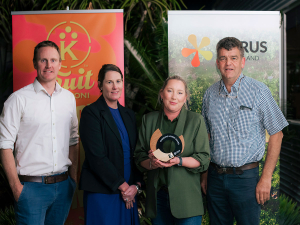
New Zealand's citrus growers were challenged to build their future on the value embedded in their fruit rather than the volume they produce, at Citrus New Zealand's annual gathering in Gisborne on 17 September.
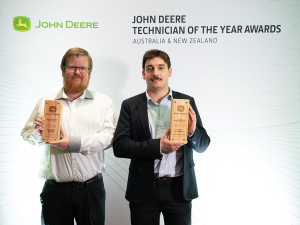
Leading John Deere technicians and apprentices from New Zealand and Australians were recognised at the recent sixth annual JD Technician of the Year Awards, held in Brisbane.
In Dacre, near Invercargill in New Zealand’s South Island, Bruce Dinnington is running a dairy operation unlike any other.
A free online platform aggregating governance vacancies across rural and regional New Zealand has been launched.
Environment Minister Nicola Grigg has announced details of a new rural plastics recycling scheme.
Agricultural drone operators say that a government decision to allow lower-risk drone work without certification won’t lower standards but drive innovation and efficiency.