Ravensdown Elects Montgomery, Acland to Board
Ravensdown shareholders have elected Jane Montgomery and Kate Acland to the Ravensdown Board for three-year terms, following a closely contested director election.
 increase font size
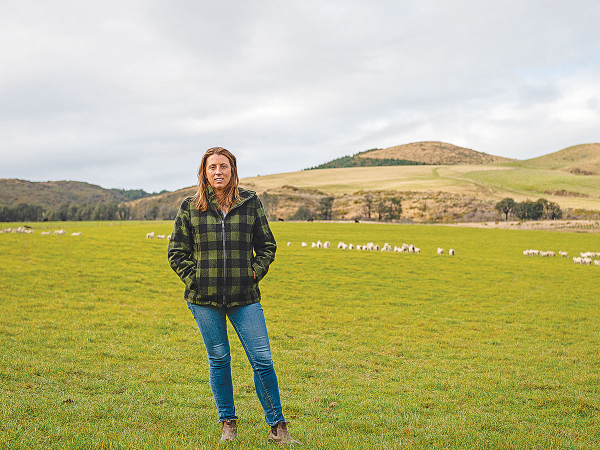 B+LNZ chair Kate Acland. Photo Credit: Clare Toia-Bayley.
Beef + Lamb NZ is outlining a more streamlined and focused strategy for the next three years, saying it has probably tried to do too much in the past.
A series of roadshows throughout the country is aimed at presenting the new strategy while seeking farmer feedback on it.
Speaking to a small gathering at Oxford in North Canterbury recently, B+LNZ chair Kate Acland said a lot had changed for farmers in the last three or four years but B+LNZ's strategy was not necessarily giving farmers what they needed.
"Particularly, we were trying to do too much. We were trying to do everything for everyone."
The new strategy for 2024 to 2027 was around three main priorities: championing farm excellence, which was about extension and science; advocacy, both domestic and on trade policy; and energising the sector, which Acland said was about building trust and social license.
Under championing farm excellence, Acland said there would be a much stronger focus on behind the farm gate extension.
B+LNZ would set up Hub Farms, which Acland said were a bit like a Model Farm but less prescriptive.
"It's going to be really up to the community and up to the farmers themselves, to decide what sort of project and what sort of support they want to wrap around that hub farm."
They were also supporting focus groups, where a group of farms in a region could get together around a common challenge.
A good example was the Southland farmers who got together to tackle a common problem of hogget lambing performance, set their target and supported each other to achieve it.
B+LNZ was increasing investment into research and innovation, an example being the big facial eczema project - which Acland said was probably not so topical for her Oxford audience but was a big issue around the country that costs New Zealand tens of millions every year.
"Internal parasite is another one where we've got a new piece of work kicking off."
However, B+LNZ would be doing less on greenhouse gas mitigation, because there are other people doing that work.
"A good part of having a look at the strategy is, what if Beef+Lamb best placed to do?
"In terms of that methane mitigation research, there is a lot of work going on in that space by other people, so we don't need to be doing that."
The organisation would also look at revising and repackaging some of the research and tools that may have been established in the past but possibly forgotten.
"Particularly the pastoral research, it's here, it's been done, but sometimes some of these tools just will get quietly forgotten about.
"So, what will it mean, particularly in the genetic space, there'll be more tools. better tools, better databases."
Advocacy is another area where B+LNZ would be picking its fights.
Acland said B+LNZ would remain a strong voice for sheep and beef farmers, but organisations like Federated Farmers do a really great job on certain issues
"We're quite clear that what we get involved in, are the things that affect our sheep and beef bottom line, essentially our farm productivity and our profitability."
B+LNZ would also be changing how it engages with farmers to gauge their concerns.
"You'll see more opportunities for workshops, there'll be more surveys going up.
"There'll be a lot more opportunities for you to feed in. But I guess we want to know, what's the best way to do that."
On energising the sector, Acland said a key change was around the Taste Pure Nature country-of-origin brand which B+LNZ established five years ago. Although successful, B+LNZ believed it was more appropriate for the Meat Industry Association, as the people in the market, to take it over.
"There was obviously quite a bit of back and forward in that space, but we landed in a real good space where we're partnering with the Meat Industry Association. They're putting in fifty percent of funding and their marketing teams are leading the development and the rollout of the programme going forward."
Ravensdown shareholders have elected Jane Montgomery and Kate Acland to the Ravensdown Board for three-year terms, following a closely contested director election.
Beef + Lamb New Zealand (B+LNZ) says it welcomes the passage of the Natural Environment Bill and Planning Bill, calling the bills a positive step for sheep and beef farmers.
Farmgate lamb prices are down by 8%, beef cattle by 4.5% and farm expenditure up by 4.2%.
Red meat farmers are welcoming Labour’s plan to review the Emissions Trading Scheme and not to campaign on pricing agricultural emissions.
New Zealand's Emissions Trading Scheme (NZ ETS) encourages afforestation while not achieving climate goals, says a new report released by the Parliamentary Commissioner for the Environment, Simon Upton.


Mark Hooper has been appointed the new chair of NZPork, the industry organisation representing New Zealand pig farmers.
As the India-New Zealand free trade agreement enters into force, New Zealand’s apple industry has reaffirmed its commitment to the long-term development of India’s apple sector.
Fonterra shareholders can begin voting on Tuesday 20 October in the 2026 Board of Directors’ election, a Co-operative Council election in one Ward, and seven Annual Meeting resolutions.
National’s pledge to introduce 19 new national standards shows the party is serious about getting Wellington out of farming, Federated Farmers says.
The National Party’s policies to make it easier to grow fresh vegetables, secure reliable water and energy and simplify farm planning are practical changes that will give growers the confidence to invest, according to Horticulture New Zealand (HortNZ).
Fonterra Co-operative Group chief financial officer Andrew Murray has resigned to take up a role outside the dairy giant.