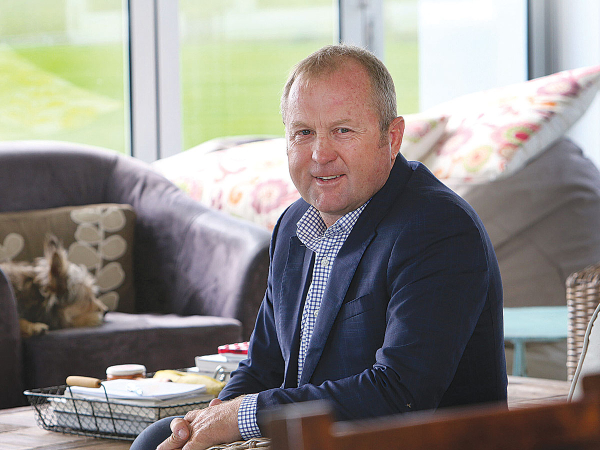
Former special agricultural trade envoy Mike Petersen says meat exporters are going to have to be nimble and agile to take advantage of any opportunities that may arise in the chaos of the tariff crisis.
He says for NZ farmers the improved global prices for sheep, beef and dairy products are still looking firm. He says the agri-sector is booming now and is holding the NZ economy together.
"But there is no doubt there is huge uncertainty now that wasn't there twelve months ago," he told Rural News.
Petersen has a personal interest in horticulture as the chair of Scales Corporation. He says none of the turmoil caused by the tariff crisis is good for anyone, but horticulture is somewhat insulated because most of its exports are to markets in the Asia Pacfici region, the Middle East and Europe. But he says there are still concerns on the geopolitical front.
To the question 'what can NZ do about the 15% tariff rate?', the answer seems to be 'not much but get on and do the best we can'.
Petersen says NZ's experience as an exporter and an international trader puts us at an advantage over other countries, noting that most of our competitors' primary production is consumed domestically, whereas 90% of ours is exported. He says we are good at exporting, are nimble, and know how to shift product around and maximise any opportunities that arise.
"In the world of trade, NZ is looked upon as one of the pioneers. People come to us to understand about trade agreements and market access and systems verifications, so we have huge respect in the world of trade. When it comes to geopolitics, we are minnows, but in the world of trade, NZ punches well above its weight," he says.
Read More:
In terms of what we could do, Petersen says buying aircraft from Boeing and increasing our defence spending may help.
"Who knows, maybe that's what Donald Trump is looking for," he says.
Petersen says the NZ approach of treating Trump respectfully and carefully is the right approach and taking an aggressive stance would not work.
"The last thing we want is to be sitting in the Oval Office while he rants and raves about the things he doesn't like about us, which he has done to others," he says.
Labour's Damien O'Connor questions whether the present government strategy of keeping its head down was the right one. However, he agrees that no one knows what sort of options for change there will be in the future.
News that MFAT officials and Trade Minister Todd McClay will travel to Washington to get more details about the 15% tariff comes as no surprise.
But former Trade Minister Tim Grosser says all they are doing is trying to get more details - not trying to negotiate. He says the talks will not produce an immediate change to what has happened.
"And frankly I don't think if Todd McClay had camped on the lawns of the White House in the last month it would not have made any difference to what we know now," he says.