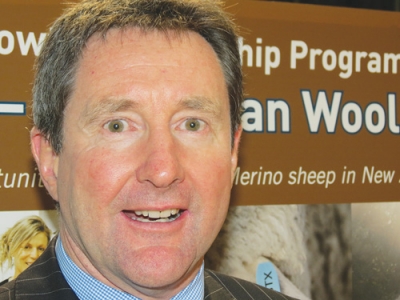
The New Zealand Merino Company's (NZM) strong performance this year showed that its approach of value creation, as opposed to volume play, was a winning one, says NZM chief executive John Brakenridge.
NZM booked a $2.3 million net profit for the 2014-15 year, a 21% increase on the previous year. Shareholders, including 536 wool growers, will receive a total dividend of $1.15 million, up 23% on 2013-14.
"Two decades ago fine wool was being dumped on the commodity market and sold at a discount to Australia. The growers knew they had a product that was undervalued and unrecognised," says Brakenridge.
"So NZM was set up to maximise profitability and sustainability across the value chains from market to grower. Key to this has been confronting volatility head-on and establishing multi-year forward contracts that guarantee more stable prices for brands and growers alike."
By removing the boom-and-bust of commodity price cycles, NZM had generated at least $30 million in extra income for growers, in wool and meat programmes in the past three years, compared to returns via traditional commodity systems, says Brakenridge.
This year NZM established new contracts with luxury and active apparel brands such as Loro Piana and Reda in Italy, NZ brand Icebreaker and SmartWool, Colorado.
"We've also extended our offering into strong wool, where we see excellent potential across the board through innovation. There's great complementarity between strong wool and our fine wool business. It's no good sitting back and waiting for the market to come to you. We want to shape it and secure exclusive deals with the world's leading brands."
In April, NZM won a two-year contract with Danish footwear firm Glerups to exclusively supply wool for its indoor shoe range. In August, Swanndri signed up to use NZM fine Merino, and mid-micron and strong wool for its entire clothing and accessories range.
NZM's Feetfirst project, part of a Primary Growth Partnership between NZM and the Ministry for Primary Industries, and supported by Merino Inc, has brought the fine wool industry a step closer to eradicating footrot using genetic testing. This would save millions of dollars by reducing lost productivity annually in the sheep industry.
The Feetfirst partnership was an example of how increased collaboration could benefit NZ agriculture, says Brakenridge.
"That's the sweet spot. With more collaboration, NZ's primary sector could do a lot more to redefine its offering and take an active role in global markets."