
Massey VC Says University Best Placed to Support Dairy
Massey University is best placed to solve the “problems” facing the dairy industry, says vice chancellor, Pierre Venter.
 increase font size
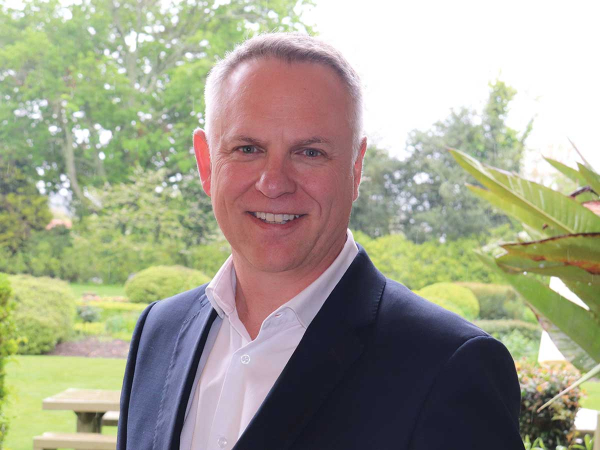 Vice Chancellor Pierre Venter.
Massey University vice chancellor Pierre Venter says his institute is moving from a period of austerity into a growth phase, based on their new strategy.
Next year, Massey will celebrate its centenary, and Venter says over those 100 years it has made a massive contribution to the NZ primary sector by way of the people it has educated, the research it has undertaken and partnerships made within the sector. In future, he says the university will position itself to become the country’s most applied and connected tertiary institute.
This will be done by re-energising the three Massey campuses, improving the learning journey for students and being up to date with emerging technologies to keep pace with the changing environment. The goal of all of this is to support the primary industry with a focus on value creation.
“Our role is to provide the right capability, capacity and innovation at the right time that enables the development of solutions for the challenges that we face in our communities, our industries and services and society,” he told Rural News.
To effectively support the primary sector, Venter says Massey must partner and be well connected with the primary sector. He says it must understand its problems and help solve them as they have done for 100 years. It must have the ability to support the whole value chain in a NZ context, including the differentiation of our products on the global market.
“I am a firm believer that a good university partner should be able to support all of the value chain and not just a part of it, because everything in the value chain is interconnected. Massey is well placed to be the university partner for the primary sector,” he says.
Venter says some people talk about the supply chain, but he says the term value chain is more appropriate. He says there’s been talk that NZ primary exporters should look at the concept of fork to farm – meaning our exporters should focus on the ever-changing demands of the consumers. But he says the better alternative is the farm to fork concept which is market led.
“Market led is trend based and an example of this is high-quality protein. Consumption globally for this is a market trend, not a fad. Consumer led preferences change very quickly, so today something that is sweet is popular, but tomorrow it could be something without sugar. It’s very hard to set up primary industries to be led by consumers, hence NZ’s primary industries are set up to be market led,” he says.
Venter says Massey University is an iconic institute in that the people that graduate from it are involved in virtually every aspect of the primary industries value chain.
He says if you look at that value chain, it’s hard to find a place or a leader that doesn’t have a connection with Massey.
He says, at the farm level, Massey delivers heavily in terms of training and research, soils, pasture and animals, and points out that it’s rated globally for both agriculture and horticulture. Venter says once the basic products have been produced on the farm, orchard or land, Massey plays a big part in converting these into a multitude of high-quality consumer products.
He says these can range from high-quality food or fibre products to solutions in the post-harvest area.
“Look at all the meat and dairy processing plants we have scattered throughout the country. We contribute substantially to the design of those plants because they are quite specific to NZ and you can’t just copy and paste from somewhere else in the world because our products are different. That is a very specialist area and there is only one university that really supports the food technology and the people run them,” he says.
Venter also says Massey hosts the Riddet Institute, recognised globally in the field of food science. The other school at Massey that plays a vital role in the NZ value chain is the Vet Schools. He says that without vets there would be no meat or dairy exports.
Venter is also quick to identify another dimension of the value chain to which Massey contributes. It has an aviation school and many of the pilots that fly our exports to market have been trained at the school.
To develop a value chain, Venter emphasises the importance of having the right business models to navigate the different markets. He says that is where the university’s business school, based at the Albany campus in Auckland, plays an important role – especially with its Business MBA.
The final link in the chain is where Massey’s College of Creative Arts kicks in, producing graduates in the area of industrial design who go on to develop a range of in-market promotional material.
Venter says while Massey University offers a wide range of technical courses, in the end these need to be backed up by what are often termed ‘soft skills’ such as communication.
He says the industry wants graduates who can work in multi-disciplinary, multicultural, multi-agency teams across the world and within NZ.
“Generally, the people in these teams have good technical knowledge, but what they find hard is developing the communication skills which are critical to problem solving,” he says.
Venter says it comes down to people and this is where Massey comes in strongly – looking after people and giving them the skills to understand themselves and others and to realise their potential.
Massey University is best placed to solve the “problems” facing the dairy industry, says vice chancellor, Pierre Venter.

Vetekina Pau'u is the first Tongan to win the William Gearish Memorial prize and sadly she will also be the last recipient.
Researchers at Massey University are using a special piece of scientific equipment to improve the measurement of greenhouse gas emissions from pasture soils.
Interest in agritech and production animal systems has prompted Massey University's School of Agriculture and the Environment to new majors to its popular animal science degree.
The industry is crying out for graduates with agricultural related degrees.

Massey University vice chancellor Pierre Venter says his institute is moving from a period of austerity into a growth phase, based on their new strategy.
With the red meat sector going through a boom time with high prices, the time is right for the industry to step up its investment into developing new food products.
Meat Industry Association chief executive Nick Beeby says there’s now much closer cooperation between meat processing companies than there was many years ago.
A new fruit quality research laboratory has been opened in Auckland by agritech company Hectre to develop pioneering hyperspectral technology.
Farmer lobby Groundswell believes that farmers are worried about the implications of a potential centre-left government.
With less than a week to go before voters choose the next government, Federated Farmers has a simple message to its members - get out and vote.