Massey Adds New Majors in Agritech, Animal Science
Interest in agritech and production animal systems has prompted Massey University's School of Agriculture and the Environment to new majors to its popular animal science degree.
 increase font size
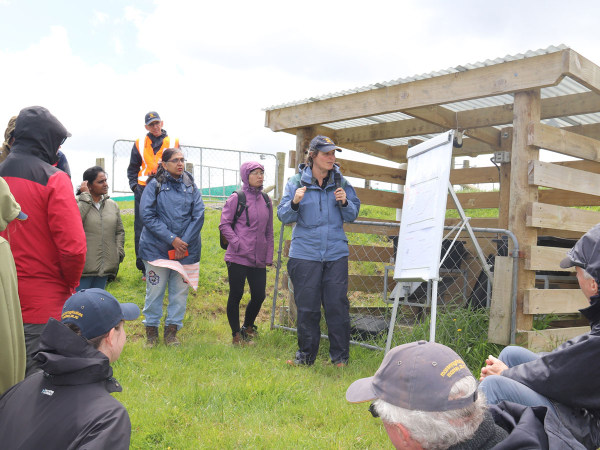 Visitors to the open day looking at a system to measure nitrogen leaching at the sheep farm.
More than 200 people turned out on Thursday, November 21 to see what progress has been made on one of NZ's biggest and most comprehensive agriculture research programmes on regenerative agriculture.
Whenua Haumanu is led by Massey University and funded by the Ministry for Primary Industries though the sustainable farming fund and is now in year three of a seven-year programme.
The purpose of Whenua Haumanu is to measure multiple aspects throughout the farm system, exploring how different pasture mixes and management practices impact on such things as soil biology, diversity and structure. It is also looking at pasture growth, quality and persistence, nutrient leaching, methane and nitrous oxide emissions, animal production, health and welfare and the quality of milk, meat and wool products.
As part of this they are trialling contemporary and regenerative farming practices across both standard and diverse pastures on several research sites at Massey University.
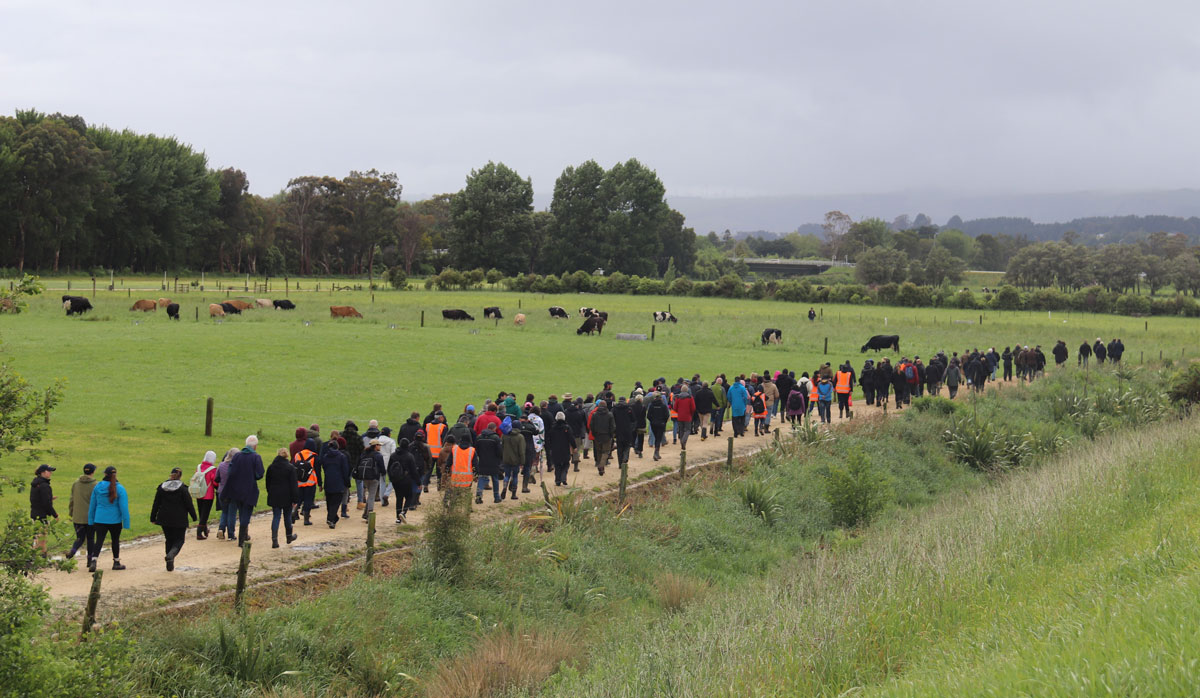
Professor Danny Donaghy of Massey is heading the project and says he was delighted at the huge turnout for the field day which included scientists and students from Australia, South America and Asia. It also attracted huge interest from industry groups and rural professionals as well as farmers. It was a busy day for those attending the field day and buses were laid on to take people in the morning to the dairy farm where trials are taking place and after lunch to sheep plots.
Professor Donaghy says the constant question that he and his keep asking is ‘so what‘, meaning that they need to keep the focus of their research on gathering data that will ultimately benefit farmers.
 |
|---|
|
Visitors to the Whenua Haumanu open day walking to the dairy farm. |
Interest in agritech and production animal systems has prompted Massey University's School of Agriculture and the Environment to new majors to its popular animal science degree.
The industry is crying out for graduates with agricultural related degrees.
A four year trial has reaffirmed that mixing plantain into dairy pastures can help reduce nitrogen losses to freshwater while maintaining milk production and profitability, say researchers.
Special courses for secondary school teachers to help excite kids about agriculture and horticulture are now being run at Massey University.
Tayla Steele is in her fourth year of a Bachelor of Veterinary Science at Massey University in Palmerston North.

OPINION: David Seymour and James Meager's plan to make it easier for farmers and orchardists to operate drones can best be described a 'courageous' move.

New Zealand wool is reaching new heights as air filtration companies move away from synthetic products to biodegradable alternatives.
Opuha Dam's ability to protect South Canterbury communities from major flooding has taken a significant step forward, with Opuha Water Limited (OWL) successfully commissioning a new outlet valve capable of releasing record volumes of water from the dam ahead of a weather event.
There's been widespread support from the primary sector for the Government's announcement on changes to freshwater farm plans that come under the Natural Environment Bill, which is now set to replace the existing RMA.
A partnership between state-owned enterprise Pāmu (Landcorp Farming Limited) and charity Meet the Need is putting more than quality New Zealand beef into food bank parcels this year.
The Opportunity Party has faced criticism during the election campaign that its policies are too urban-focused and offer little for rural communities.