Esther Guy-Meakin Appointed Chief Executive of the NZ Meat Board
Esther Guy-Meakin has been announced as the new chief executive of the New Zealand Meat Board (NZMB).
 increase font size
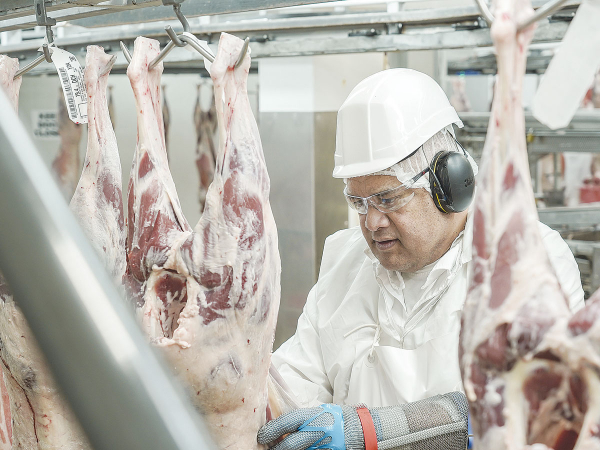 Meat processors wants the Government to mandate vaccinations for its workforce both for staff safety and to ensure continued market access for its products.
Meat companies support Government plans for a clear and simplified risk assessment process to make Covid-19 vaccinations mandatory at their plants.
The Meat Industry Association (MIA) chief executive Sirma Karapeeva says currently, companies can make Covid-19 vaccination a health and safety requirement at plants.
However, this is a difficult and complex process and required companies to do an assessment of the different risks of vaccinated versus unvaccinated people.
"It is critical that all workers are vaccinated to provide a shield against Covid-19, especially for meat processing where workers are working close together for long shifts. We applaud the Government for taking this step," she told Rural News.
Karapeeva says any sort of additional tools that meat companies can use to protect their workers are worthwhile. She says international experience shows meat companies tend to be quite a high risk environment for the spread of Covid and that is why the industry has worked hard to put in place the safety protocols to keep the virus out of the workforce.
"We know that China and other countries are looking to protect their own people very robustly and we need to respect that because we are doing the same," she adds. "While the vaccination mandate is not the silver bullet, it is another layer of protection that we can use to put around our workforce."
Karapeeva notes that Maori and Pasifika people make up a significant portion of the meat industry workforce and these groups are lagging behind in getting vaccinated. She says processing plants in individual regions are doing a lot of work to facilitate the uptake of the vaccination by working with local health providers, iwi and Maori health providers to try and overcome that information gap and educate people to help them get vaccinated.
Karapeeva says MIA welcomes the Government's recognition that having a fully vaccinated workforce will support continued access to NZ's global markets and it looks forward to the details on how this will be applied.
Esther Guy-Meakin has been announced as the new chief executive of the New Zealand Meat Board (NZMB).

As expected, the US has launched a safeguard investigation into lamb imports, a move that could impact New Zealand sheepmeat returns.
New Zealand's red meat sector says it welcomes the Government's focus on trade ahead of the general election in November.
New Zealand red meat exports are booming but a pending decision in the White House, Washington D.C., could dent sheepmeat earnings.
Prime Minister Christopher Luxon says the red meat sector is doing an excellent job promoting our pasture-fed system around the globe.



Now in its fourth year, the 2026 Fencing Industry Awards, formed part of the proceedings of the FCANZ Conference, held in Nelson during August.
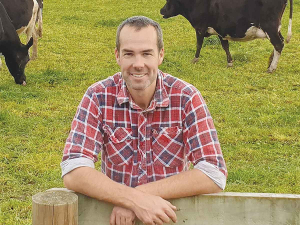
DairyNZ deputy chair Cameron Henderson has been re-appointed unopposed for another term.
OPINION: The stats speak for themselves.
Farms across the upper North Island are trialling different pasture mixes as part of a research programme that aims to build greater resilience into farming systems.
Election years are always a concerning time for farmers, according to DairyNZ chair Tracy Brown.
The Ballance Farm Environment Awards are coming to the West Coast of the South Island.