What Would Synlait Be Worth to Fonterra or a2 Milk?
Speculation of a possible joint move by Fonterra and a2 Milk to buy Synlait raises a much bigger strategic question, says agribusiness expert Dr Nic Lees.
 increase font size
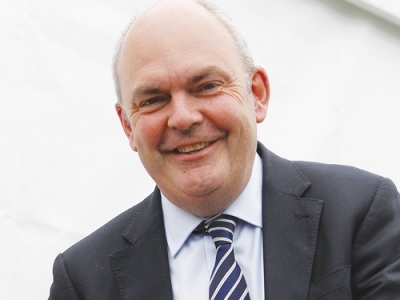 Science and Innovation Minister Steven Joyce.
Lincoln University has been named by Science and Innovation Minister Steven Joyce as one of three successful applicants to host a NZ-China Research Collaboration Centre.
Lincoln will receive a total of $1.25 million worth of funding over three years.
The New Zealand-China Water Research Centre will be based at the Lincoln Hub, with partners AgResearch, Landcare Research, Plant & Food Research, Lincoln Agritech Ltd, and University of Otago.
The Water Research Centre will coordinate and facilitate long-term collaborations between New Zealand and Chinese scientists to develop research strategies relevant to both countries around water quality and quantity. Issues such as ground and surface water contamination by agrichemicals and poor water use efficiency of irrigation are common in China and New Zealand.
A multidisciplinary team with an outstanding track record both in the scientific disciplines of water research and in collaborating with China has been assembled. Their expertise spans groundwater hydrology, solute and water transport, irrigation management, nutrient losses to waterways, waste management, microbial ecology, water foot-printing and bioinformatics.
The team will be led by Lincoln University Soil and Environmental Science Professor Hong Di. Professor Di has had extensive collaborations with a number of Chinese Institutions. He said that the establishment of the New Zealand-China Water Research Centre is a fantastic opportunity and will provide a huge boost for developing better coordinated and targeted collaborations between New Zealand and Chinese scientists.
The New Zealand-China Water Research Centre will be an important platform for the creation of novel skills and knowledge on water quality and quantity research, the establishment of enduring partnerships, the development of advanced mitigation strategies to reduce water contamination by agrichemicals, increased cultural understanding, enhanced Māori engagement with China, and increased awareness of New Zealand as a centre of excellence in research and development in the areas of water quality and quantity for high quality food production.
The other successful applicants, Massey University and University of Otago, will host a Food Protection Network and a Non-Communicable Diseases Collaboration Centre respectively. Minister Joyce said in a statement that the centres were chosen for their strong and inclusive networks across New Zealand. They will be supported through New Zealand's Catalyst Fund for international science collaboration.
Speculation of a possible joint move by Fonterra and a2 Milk to buy Synlait raises a much bigger strategic question, says agribusiness expert Dr Nic Lees.

Lynnette Hudson's 30-year obsession with Pinot Noir was sparked working vintage in Burgundy, seeing how subtle changes in terroir were expressed in the glass. It was, she says, "an elightening moment in every way".
A four year trial has reaffirmed that mixing plantain into dairy pastures can help reduce nitrogen losses to freshwater while maintaining milk production and profitability, say researchers.
Twenty five secondary school students from around New Zealand recently completed a three day residential programme designed to explore career opportunities across the food and fibre production supply chain.
A Lincoln University student is set to become the first person to contest both the Young Viticulturist and the Young Winemaker national titles in one year.


Decades piloting planes has ensured vet and farmer David Hayes is focused on safety. So, after a serious accident while welding on farm, he is sharing his experience so others can learn from it.
Canterbury milk processor, Synlait Milk has confirmed Leon Fung as its chief executive officer.
OPINION: Making it easier to collect rainwater and use it to grow crops and livestock is a no brainer.
As part of its Election 2026 coverage, Rural News asked political parties how they would help pull the arable sector out of the doldrums. Here's what they said:
Farmers are being encouraged to rethink how they manage waste on farm with the launch of ruralwastesorted.co.nz, a new website bringing together practical tips, real farmer experiences and resources.
New Zealand Winegrowers (NZW) is celebrating the India-New Zealand Free Trade Agreement (FTA) coming into force today, bringing New Zealand wine improved access to one of the world’s fastest-growing economies.