Once-a-Day Calf Feeding: How Probiotics Boost Heifer Growth
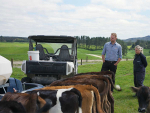
Matt Collier, Probiotic Revolution, says calves will drink a lot of milk once-a-day with their probiotic Calf Xtreme.
 increase font size

On a farm just out of Te Awamutu, there is an immense rivalry going on. The purpose of the rivalry is to be identified as the best Holstein Friesian 2-year-old in a group of heifers that have been genomically identified as genetically superior.
A team of 34 in-milk two-year-old Holstein Friesian heifers, from around New Zealand, were identified last year as having very good or very interesting genetics to join the 2011-12 Discovery Project, a Holstein Friesian New Zealand initiative and sponsored by LIC. The heifers were genomically screened by LIC as yearlings and genomic breeding values were added to their information as part of the selection process.
Wendy Harker, chairperson of Discovery Project, says this was the first time females were genomically screened outside of normal information gathering for breeding companies.
"It was a great opportunity to have the heifers screened," she said, "Genomics made it easier to identify the top genetics in the group of animals on offer."
The heifers are being milked on the farm of Robin & Pixie Moss, managed by Douwe & Yvette Ykema, in a herd of 600 cows. They were brought onto the property in June and, since calving, have been regularly tested for weight and condition score, herd tested as well as inspected for type and conformation.
"This is a great opportunity for breeders to compare their heifers against the best," Harker says. With one of her own heifers in the Discovery Project team, Harker appreciates the profile that has been raised for her Te Awamutu dairying operation through the programme. Her heifer, Westell Lebon Gypsy GP84, is having a good season and it looks like she will be near the top of the group.
Other top heifers include Barlee Decee Paul-ET S3F GP84, bred by Brian Hughes of Hawera, Taranaki; Estee Rene Flute-OC S2F GP81, bred by Tony & Sarah Brock of Kaitangata, Southland; and Broomfield F Rose-ET S1F GP83, bred by the Aitken Family of Outram, Otago.
Now dairy farmers and all interested parties are invited to see the heifers and hear how they have proceeded through the season on Wednesday, March 21 on the farm. At the Discovery Project Open Day there will be a range of speakers as well as the opportunity to view the heifers.
The Open Day, Wednesday, March 21 , starts at 10am at 1265 Arapuni Rd. Lunch is provided.
About Discovery Project
Discovery Project measures heifers entering their first lactation based on their milk production, through eight herd tests, being regularly weighed and condition scored throughout the season and assessed on type and conformation.
The heifers are run in a herd and at no time are they given any preferential treatment to the other cows in the herd. During the year, some heifers (identified as a bull dam by LIC or an owner taking advantage of the service) are flushed to produce embryos to produce bulls or to breed the cow family further. Animal Breeding Services (ABS) of Rukuhia provides the service.
Matt Collier, Probiotic Revolution, says calves will drink a lot of milk once-a-day with their probiotic Calf Xtreme.
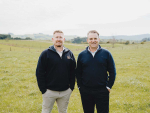
After a winter of frozen pipework and refrigeration call-outs, Terravest chief executive Kip Bodle and chief operating officer Luke Walker explain why this El Niño summer calls for a different kind of preparation, before the first heatwave finds the weak points for you.
Farmers can spend less time on paperwork, thanks to a new data sharing agreement between DairyNZ’s DairyBase and LIC’s MINDA software.
After delivering a strong financial year, rural trader PGG Wrightson says the coming months will depend on customer confidence and weather.
For Taupiri dairy farmers Logan and Sian Dawson, their involvement in the NZ Dairy Industry Awards has been a key catalyst in the growth of their business - the experience helping shape how they approach the farm ownership pathway they are pursuing today.


An Auckland gelato shop and an established New Zealand ice cream maker have both been named Supreme Champions at the NZ Ice Cream & Gelato Awards 2026.

As the cost-of-living crisis continues to put pressure on household grocery budgets, new figures show pork remains one of the most affordable fresh meat options for New Zealand families.
OPINION: In politics, credibility is and should be big. It must surely rank higher than charisma, which is quite trite and superficial. Yet, voters nowadays are often wooed and influenced by how someone looks or talks at a superficial level. TV plays a huge role in this.
Farmers can spend less time on paperwork, thanks to a new data sharing agreement between DairyNZ’s DairyBase and LIC’s MINDA software.
Kaikōura families affected by July's severe storm have found a practical solution to a problem that's kept some children away from regular schooling for weeks: a washed-out section of Inland Kaikōura Road, which has stopped the local school bus from running its usual route.
Rural New Zealand is welcoming the Government’s recent package of rural healthcare initiatives.