Cost of Living Crisis 'Cost Government Votes'
Outgoing ACT MP and dairy farmer Mark Cameron says Saturday’s election result reflects voters deeply impacted by the cost of living.
 increase font size
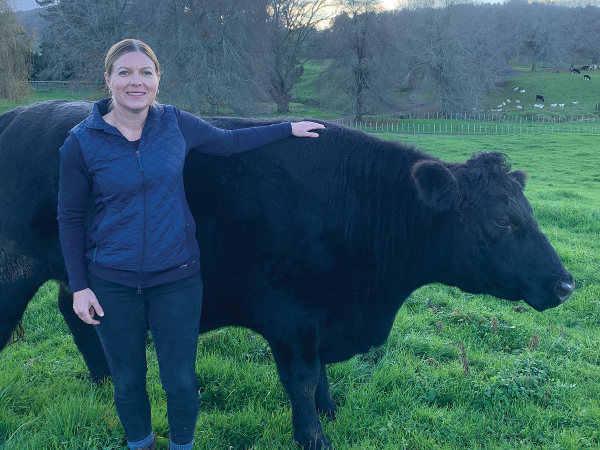 Helen Mandeno.
Centre right parties are backing policy positions pushed by three farmer lobby groups ahead of the general election.
The three farmer groups - Groundswell, NZ Farming, and Methane Science Accord - wrote to political parties two months ago seeking their positions on issues such as the Paris Agreement, the Zero Carbon Act, the Emissions Trading Scheme (ETS), and agricultural emissions pricing.
Most centre-right and smaller rural-focused parties expressed strong criticism of the policies.
ACT expressed greater support for biotechnology and regulatory reform, while NZ First, the Conservative Party, and NZ Outdoors & Freedom all voiced strong caution or opposition toward GMO liberalisation.
Three political parties - National, the Māori Party and the Green Party - didn't respond.
A spokesperson for the three farming lobby groups, Helen Mandeno, told Rural News that National's lack of engagement "speaks volumes".
There was also broad skepticism among the centre-right parties about taxpayer-funded methane mitigation research and the expansion of gene technology without stronger safeguards or public consent.
By contrast, Labour provided a more cautious and procedural response, saying many positions "remain under development" ahead of the election and referring largely to existing parliamentary material rather than making firm commitments.
A key difference between parties emerged around the degree of climate policy opposition, and attitudes toward gene technology.
Mandeno says their intention has never been to tell New Zealanders how to vote.
"Rather, we want to put direct and specific questions to political parties on issues we believe are fundamentally important to rural New Zealanders and grassroots farmers.
"We deliberately framed our questions to encourage clear and definitive answers. However, as readers will note, some parties still attempted to sidestep direct responses.
"Despite this, we believe voters will still gain valuable insight into how the various political parties view these important issues."
Mandeno says voters can see there is a range of political views on the different rural issues.
"We understand that rural voters prioritise different issues. However, we hope this exercise provides clearer insight into where political parties stand on matters affecting rural New Zealand and the future of farming."
The three farming groups boast their own set of supporters - Groundswell with 90,000 supporters on their email list, NZ Farming has 275,000 followers on their Facebook page, and MSA has 3,100 followers on their Facebook page.
Outgoing ACT MP and dairy farmer Mark Cameron says Saturday’s election result reflects voters deeply impacted by the cost of living.

Another former Federated Farmers national president is heading to Parliament.
An independent importer says National’s fertiliser security policy will only work if protects all players.
OPINION: Farmers have felt increasingly disempowered and disregarded of recent decades. Larger farms and fewer owners have reduced the rural population.
OPINION: As election day looms, rural NZ seems to have pressed the pause button – held somewhat in limbo on an orange light.

Farmers have until the end of this week to help shape DairyNZ’s future focus.
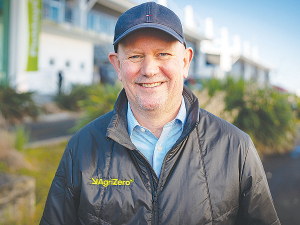
Wayne McNee, chief executive of AgriZeroNZ, has resigned and will leave the organisation on 15 January 2027.
The New Zealand dairy sector set a record in the 2025/26 season, producing more than two billion kilograms of milksolids for the first time.
Milk powder prices are continuing their merry run, firming up a potential $10/kgMS farmgate price this season.
Teachers are welcoming the outgoing Government’s U-turn allowing agriculture and horticultural science to remain a standalone Year 11 subject.
Outgoing ACT MP and dairy farmer Mark Cameron says Saturday’s election result reflects voters deeply impacted by the cost of living.