Pāmu and Meet the Need Launch Mince Recipe Cards for Food Banks
A partnership between state-owned enterprise Pāmu (Landcorp Farming Limited) and charity Meet the Need is putting more than quality New Zealand beef into food bank parcels this year.
 increase font size
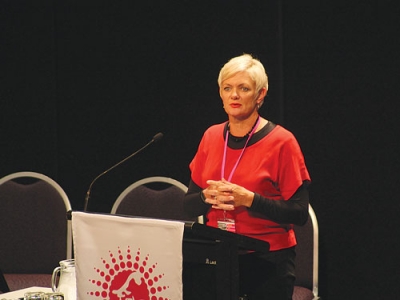 Anna Cassel-Brown at the recent DWN conference.
Agriculture will remain under increasing scrutiny from regulators and consumers and it is up to the industry to educate them, says Landcorp's general manager of people and capabilities, Anna Cassel-Brown.
"We are the subject of semi-informed commentary by a semi-informed public and semi-informed media. The only people who can make them better informed is us," Cassel-Brown told the Dairy Women's Network conference in Invercargill last month.
But she also says agriculture can be "bloody defensive" and the time for that is over.
Cassel-Brown, an expert in leadership culture development who has also worked for Fonterra and Air New Zealand, made it clear her views in the DWN panel discussion were her own and not the official position of Landcorp.
"We will be under increasing scrutiny, whether large or small, from regulators and consumers who want assurance about animal welfare, environmental standards, whether we have produced things ethically and that the food is safe," she says.
Many of Worksafe NZ's 175 inspectors are not familiar with agriculture and Landcorp is trying to work with them to help them understand the industry. Currently an item of equipment found on most farms has been put under prohibition on those farms where an accident has involved that item.
"We have a view that it is an everyday piece of equipment [but] a WorkSafe NZ inspector comes in and sees it and to them it is intrinsically dangerous. And we are right and they are right and that tension is just going to grow." Landcorp is working with them so that each gains better understanding of the other's position.
Farms will also be under increasing scrutiny from the media. Everyone has an opinion on the farming business, but many are not well informed. "Our ability to shape the expectations of those who are demanding things of us is going to be critical."
One response from Landcorp is to strive for excellence. "We are not going to sit and wait for the regulator to tell us how high a bar we have to jump over in our environmental performance or how well we look after our people or what protections we have to put in place. We figure it out for ourselves and we are doing it."
Landcorp is also opening up to scrutiny. "We are opening our farms and saying 'we are not perfect; come and have a look and if you've got a better idea about how we can improve things, we want to hear from you so you can help us'."
Cassel-Brown, who now owns a small Northland farm, says agriculture is not in her professional background.
"My observer's view of agriculture before joining it is 'it's bloody defensive'. Someone says 'you're doing this' and you say 'no we're not'.
"I think the time for that is over. We need to say, 'interesting you see it that way; help me understand what you see and help me do it better'.
"So Landcorp is opening itself up to scrutiny; one of our values is complete openness." The company is also actively engaging with communities and requires its farm managers to participate.
You’ll need more skills
The skills of farm owners and managers will be an aspect that defines agriculture in the future, says Cassel-Brown.
For its 140 farm managers it was no longer good enough to be good at growing grass and animals and getting milk out of cows.
“You have to be a people leader. You’ve got to have the skills of an HR manager. You’ve got to be able to interpret legislation so you’ve got to have the skills of a solicitor, you’ve got to develop strategic and business plans so you have to have the skills of a commercial manager. You’ve got to be a safety advisor, you’ve got to be an environmental technician – the skills requirement is going to be far greater and the pressure is only going to grow.”
Women are the changing face of Landcorp itself and of agriculture in New Zealand. She says they often have a good capacity to think about the whole system and they can multi-task.
A partnership between state-owned enterprise Pāmu (Landcorp Farming Limited) and charity Meet the Need is putting more than quality New Zealand beef into food bank parcels this year.

State farmer Pamu has delivered its strongest operating result on record.
State farmer Pāmu (Landcorp) has announced it will pay a $10 million special dividend to the Crown off the back of a strong outlook for the business and a capital repayment of $9.5 million following Fonterra's consumer business sale.
The Government has appointed three new members to the board of state farmer Landcorp Farming Ltd, trading as Pāmu.
The Government’s directive for state farmer Landcorp Farming (trading as Pamu) to lifts its performance is yielding results.


Federated Farmers says it welcomes Labour's commitment to reviewing the Sharemilking Agreements Act, calling on other major parties to do the same.
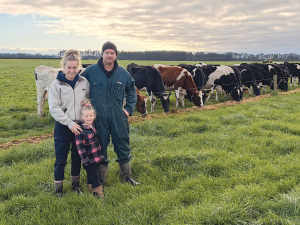
For Canterbury dairy farmers Sian Meijer and Rick Wobben, wearable technology has become one of their most valuable on-farm tools - helping manage 1850 cows across an expansive, high-performing dairy operation while improving efficiency, mating outcomes and day-to-day decision making.
Fonterra has unveiled its annual results for the 2026 financial year, posting $27 billion in revenue and close to $20 billion returned to New Zealand farmer owners and unit holders.
The first major update to the Dairy Cattle Code of Welfare in more than a decade has been released, marking what DairyNZ describes as an important step in ensuring animal welfare standards continue to evolve alongside scientific evidence and on-farm realities.
Ravensdown shareholders have elected Jane Montgomery and Kate Acland to the Ravensdown Board for three-year terms, following a closely contested director election.
Federated Farmers says new legislation replacing the Resource Management Act will cut red tape, unlock investment and help grow New Zealand's export-led economy, after the Planning Bill and Natural Environment Bill passed their third reading in Parliament yesterday.