Esther Guy-Meakin Appointed Chief Executive of the NZ Meat Board
Esther Guy-Meakin has been announced as the new chief executive of the New Zealand Meat Board (NZMB).
 increase font size
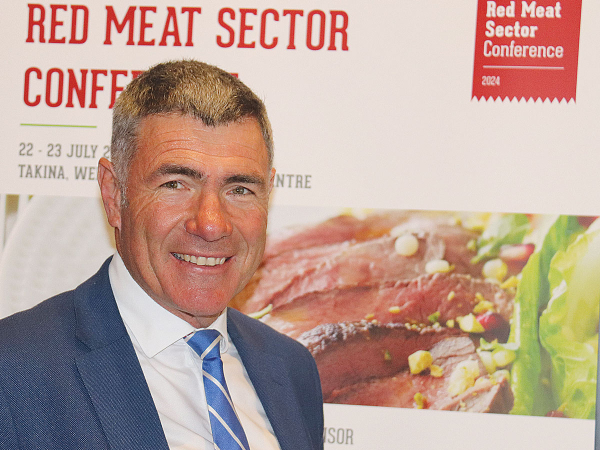 Meat Industry Association chair Nathan Guy.
The meat industry is launching a campaign in China to make consumers aware of the unique health attributes of New Zealand's grass-fed animal meat.
Meat Industry Association (MIA) chair Nathan Guy says, while NZ has an FTA with China, 40 other countries also have access to that market and the time has come to make a big push to tell consumers that our products are better than our competitors.
"A problem we have in China is that consumers look at the supermarket shelf and they see grain-fed beef which they consider superior. It's higher priced and gets a premium, while our lean beef tends to be seen as something of a commodity, and we must change that and other misconceptions," he says.
To do this, MIA, meat processing companies and Beef + Lamb NZ are jointly developing a new supercharged and refocused version of the Taste Pure Nature awareness programme.
The new campaign will be industry-led and funded, hopefully with government help, MIA and B+LNZ have agreed to put in $2 million each over three years and they hope the government will make a similar contribution.
According to Guy, it will be up to the marketing managers of the processing companies to devise the programme.
"We are going to call it 'country of origin' and it will be around our natural attributes: animals, outdoors, health and nutrition - all the great attributes that are currently lost in translation in the market. Our competitors are making similar claims, so we can't afford to sleepwalk given that competition is so rife in China. Doing nothing is now not an option," he says.
Guy says they plan to launch the campaign at a huge food expo in Shanghai in November.
Esther Guy-Meakin has been announced as the new chief executive of the New Zealand Meat Board (NZMB).

As expected, the US has launched a safeguard investigation into lamb imports, a move that could impact New Zealand sheepmeat returns.
New Zealand's red meat sector says it welcomes the Government's focus on trade ahead of the general election in November.
New Zealand red meat exports are booming but a pending decision in the White House, Washington D.C., could dent sheepmeat earnings.
Politicians calling for New Zealand to withdraw from the Paris Agreement on climate risk damaging two of our gold-plated free trade deals.


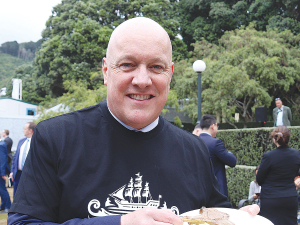
OPINION: In politics, credibility is and should be big. It must surely rank higher than charisma, which is quite trite and superficial. Yet, voters nowadays are often wooed and influenced by how someone looks or talks at a superficial level. TV plays a huge role in this.
Farmers can spend less time on paperwork, thanks to a new data sharing agreement between DairyNZ’s DairyBase and LIC’s MINDA software.
Kaikōura families affected by July's severe storm have found a practical solution to a problem that's kept some children away from regular schooling for weeks: a washed-out section of Inland Kaikōura Road, which has stopped the local school bus from running its usual route.
Rural New Zealand is welcoming the Government’s recent package of rural healthcare initiatives.
Interest in agritech and production animal systems has prompted Massey University's School of Agriculture and the Environment to new majors to its popular animal science degree.
Ballance Agrinutrients chief executive Kelvin Wickham says despite a tough year, he is pleased the business has returned to profit.