Beef + Lamb NZ's Lambing Kit Checklist for a Tough Season
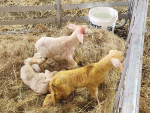
With lambing underway in many regions, Beef + Lamb New Zealand is encouraging farmers to put together a wellequipped lambing kit to help minimise lamb losses, particularly in bad weather.
 increase font size
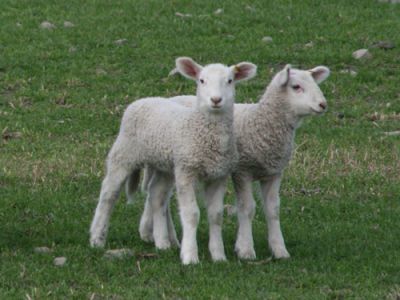 Field studies are currently underway to find out if there’s a relationship between drenching pregnant sheep with long-acting drenches and lamb mortality.
Field studies are currently underway to find out if there’s a relationship between drenching pregnant sheep with long-acting drenches and lamb mortality.
The study involves trials with mixed age ewes as well as hoggets. The three-year project carried out by farmers and AgResearch, supported by the Sustainable Farming Fund, aims to provide farmers and industry with more information and confidence around parasite management practices for sheep.
Treatments were given to pregnant ewes on four South Island sheep farms at the end of August with lambing due early September.
For the hoggets involved in the trial, one flock had treatments administered mid-August and the other which is lambing later was treated in mid-September.
The two hogget trials are located in the North Island. This project arises from two studies which collectively have raised questions around the common practice of drenching adult sheep with long-acting macrocyclic lactone products for parasite management around lambing, says Agri-gate, the Ministry for Primary Industry’s newsletter.
Previous studies investigated the production benefits from drenching ewes around lambing on a collection of farms in the Wairarapa over two years. Unexpectedly, the results of those studies indicated that ewes treated with long-acting products tended to wean fewer lambs than untreated ewes.
Other research has shown that when ewes are treated with long-acting macrocyclic lactone drenches, a proportion of the drug is transferred across to their lamb.
Because these drenches are known to be toxic in young animals, this raises the possibility that lower lamb survival could be an outcome of using these products.
This Sustainable Farming Fund project will be carried out over the next three years and the results will be shared across the industry.
The project is also supported by Beef and Lamb New Zealand, AGMARDT, ANZCO Foods, Massey University, AgResearch, Landcorp, South Rangitikei Veterinary Trust Company and PGGWrightson.
With lambing underway in many regions, Beef + Lamb New Zealand is encouraging farmers to put together a wellequipped lambing kit to help minimise lamb losses, particularly in bad weather.
Will a stronger, more coordinated voice help rebuild confidence and improve returns in the wool sector?
It’s official, lamb will take centre stage on Kiwi Christmas tables this year.
The vineyards at Pyramid Farm in Marlborough’s Avon Valley have never been run of the mill, with plantings that follow the natural contours of the land, 250 metres above sea level.
Alliance Group has secured greater access for chilled beef exports to China, following approval for two of its processing plants to supply the market.


Now in its fourth year, the 2026 Fencing Industry Awards, formed part of the proceedings of the FCANZ Conference, held in Nelson during August.
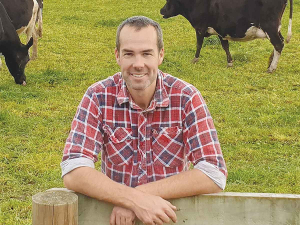
DairyNZ deputy chair Cameron Henderson has been re-appointed unopposed for another term.
OPINION: The stats speak for themselves.
Farms across the upper North Island are trialling different pasture mixes as part of a research programme that aims to build greater resilience into farming systems.
Election years are always a concerning time for farmers, according to DairyNZ chair Tracy Brown.
The Ballance Farm Environment Awards are coming to the West Coast of the South Island.