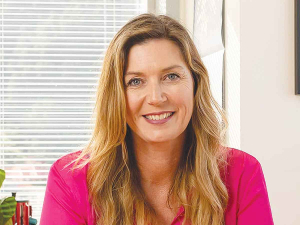
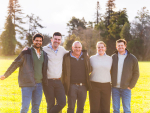
He still farms there today, with his son doing much of the on-farm work, while he focuses on his numerous other roles.
After completing a Bachelor of Ag Economics, Bailey left the family farm and took a job in the economics section of the Reserve Bank. One of his roles was to crunch some of the balance of payments numbers. It was here that he experienced the power of one Robert D. Muldoon, a man whose interventionist policies were eventually one of the reasons the young Malcolm Bailey went back to the family farm.
“As far as I was concerned, he was a lying crook who took the NZ economy in completely the wrong direction,” Bailey told Rural News. “The Reserve Bank could do nothing, despite a lot of the officials hating what was going on, but they couldn’t speak out publicly.”
Back in the provinces and on the farm, Bailey ventured into farmer politics, which eventually led to him becoming president of Federated Farmers between 1996 and 1999. Immediately after that he was appointed NZ’s Special Agricultural Trade Envoy and took part in what turned out to be the abortive WTO Doha trade round in 2001.
When Fonterra was founded in 2001, it saw the creation of the Shareholders Council and Bailey was elected to that.
Three years later he was elected to the Fonterra board. It was this that led to his appointment 15 years ago as the chair of DCANZ. In between, he also spent time on the board of the Westpac bank.
A feature of his time at DCANZ was working closely with other primary sector advocacy groups such as the Meat Industry Association (MIA) where the two organisations worked on the M. bovis outbreak, animal welfare and other biosecurity issues and the recent NZ/ EU FTA negotiations.
Bailey has been a cheerleader for greater international trade liberalisation and a strong opponent of countries which employ protectionist policies – such as the EU. He still fails to accept the arguments it (the EU) put up in the recent NZ/EU FTA negotiations.
“I can’t understand how the EU can argue the sensitivity in the dairy sector when they are the world’s largest dairy exporter,” he told Rural News. “For them to say they can’t liberalise their market beyond the tiny amount they have given us doesn’t add up at all.”