Farmers Warned Over Track Dangers After Wairarapa Floods
The terrible floods that hit the Wairarapa may have subsided, but the danger to farmers still exists, according to local Federated Farmers president Rob Hickson.
 increase font size
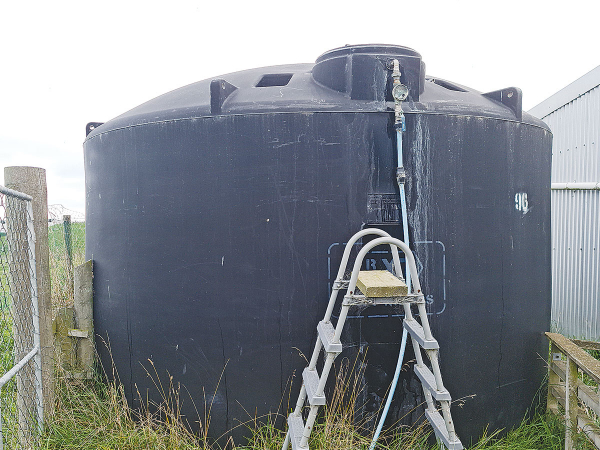 Federated Farmers says it is against the nationalisation of water assets currently held by local entities.
Federated Farmers has called for the controversial Three Waters Reform to be stopped before the legislation bill reaches its second reading.
In a submission to a parliamentary select committee, Federated Farmers expressed concerns about the Water Services Entities (WSE) Bill. If passed, the bill would establish four water services entities in place of more than 70 local authorities that manage the country’s water supplies, storm and waste water management systems.
Federated Farmers argues that the bill should not proceed to a second reading in Parliament.
“Many farmers are either self-suppliers or their water is supplied by private water schemes, meaning they should not be directly affected by the move to WSEs,” it says.
The farmer lobby argues that numerous community ‘mixed use’ rural water supplies – such as human drinking water and water for livestock or irrigation, supplying water to farmhouses and lifestyle blocks – are owned or operated by local authorities.
“The Government did not seem to have thought deeply about implications for these rural water suppliers, until last December when it belatedly set up a Rural Water Supplies Working Group.”
In June, that working group - the Rural Supplies Technical Working Group - made 30 recommendations in a report to the Department of Internal Affairs.
Among those recommendations was that New Zealand’s 100 or so council- owned rural water supply schemes be transferred to the four new cogoverned water entities. However it also added that there needed to be a pathway for some council- owned, rural water supplies to revert to ownership by their users.
Federated Farmers say it agrees with the working group’s recommendations if the WSE bill is to proceed.
Earlier this month, Federated Farmers national board member and local government spokesperson Sandra Faulkner told the select committee the farmer lobby is against the nationalisation of previously local entities.
“We believe strongly in keeping the local in local government and we are strongly opposed to a centralisation agenda which seems to be driving so much policy, not just in water services, but also in RMA reform, health sector reform, polytechnics… the list goes on,” Faulkner told the committee.
“Will the likes of roading, waste management and building consents be next for centralisation away from local councils?” she asked.
“Many farmers, as significant ratepayers and strongly rooted in their local communities, still care deeply about our councils and what they see as an attack on local democracy.”
Faulkner argues that the rural voice would be diluted if services farmers rely on, like water supplies, are centralised while local councils would be “hollowed out”.
“There seem to be a lot more bureaucracy and cost associated with the four entities’ multi-tiered governance arrangements and the various advisory groups and forums that will be set up to try and replicate what we already have – local voice and accountability.”
The terrible floods that hit the Wairarapa may have subsided, but the danger to farmers still exists, according to local Federated Farmers president Rob Hickson.

Will a stronger, more coordinated voice help rebuild confidence and improve returns in the wool sector?
New Zealand's pest problem has reached crisis point, according to Federated Farmers' second National Pests Survey, which shows farmers are spending more money and effort on control — yet pest numbers keep climbing faster than they were two years ago.
Despite political shenanigans in Wellington, farmers are confident that Resource Management Act (RMA) reforms will get over the line in this term of Parliament.
The Government has announced it will pause key parts of Waikato Plan Change 1 (PC1) in a decision that is set to give Waikato farmers a reprieve from new consenting and farm-planning requirements while the wider resource management system is overhauled.



Alliance Group's $16 million programme to install innovative heat pump systems at its Otago and Southland processing plants wins a New Zealand Energy Excellence Award after cutting annual emissions by more than 24,000 tonnes of CO₂e.
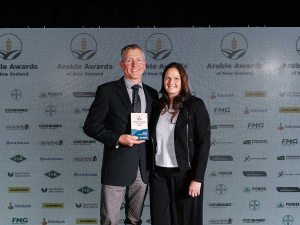
The arable sector losing good people and land is a major concern for the 2026 Arable Farmers of the Year, Mid Canterbury seed growers John and Mel McCaw.
The terrible floods that hit the Wairarapa may have subsided, but the danger to farmers still exists, according to local Federated Farmers president Rob Hickson.
New Zealand's Emissions Trading Scheme (NZ ETS) encourages afforestation while not achieving climate goals, says a new report released by the Parliamentary Commissioner for the Environment, Simon Upton.
Are you ready for El Nino? That’s the question asked by Beef+Lamb NZ’s Ian Tarbotton who leads B+LNZ’s farm extension service.
Bigger, bolder salads packed with colour, crunch and flavour are making headlines overseas — and the arrival of fresh spring vegetables means New Zealanders can now get chopping too, creating their own Great Kiwi Spring Salad.