Beef + Lamb NZ's Lambing Kit Checklist for a Tough Season
With lambing underway in many regions, Beef + Lamb New Zealand is encouraging farmers to put together a wellequipped lambing kit to help minimise lamb losses, particularly in bad weather.
 increase font size
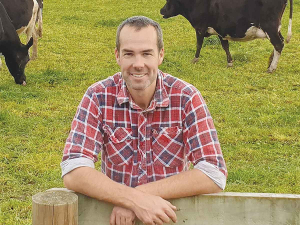
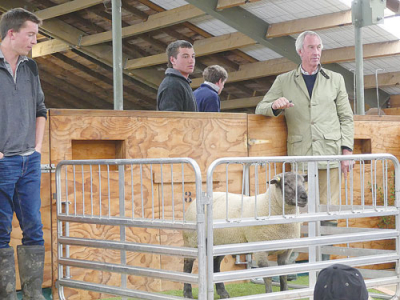 Is that a hint of a smile? Blair Gallagher and his son Hamish (far left) look on as the bidding for Lot 19 heads to $15,000, thought to be a NZ record for a crossbred ram lamb.
The introduction of the Beltex breed to the New Zealand sheep industry is off to a flying start: the breed’s inaugural sale drew a price believed to be a New Zealand record for any crossbred ram lamb.
The sale of ram lambs, both purebred and cross, was held at Blair Gallagher’s Rangiatea farm, near Mount Somers, Mid-Canterbury, on March 23. The top price of $15,000 and the second-to-top price of $12,500 were both paid for Beltex-Suffolk crosses.
Beltex, or Belgian Texel, is known for its characteristically heavy hindquarters and outstanding kill weights.
The breed has been brought to NZ by a partnership formed by Gallagher, former Invermay head Dr Jock Allison and farm advisor John Tavendale and their families. They imported purebred Beltex in the form of frozen embryos from the UK, as well as semen put into Gallagher’s Suffolk, Poll Dorset and Perendale flocks.
At least 300 people attended the sale, with buyers hailing from as far afield as Northland and Southland.
The sale saw offerings of 16 purebred Beltex, 18 Beltex X Suffolk, 22 Beltex X Poll Dorset and 10 Beltex X Perendale ram lambs.
Of the purebred Beltexes, the top price of $12,000 went to a late replacement. This was an animal Gallagher was intending to keep, but it was included in the sale after a withdrawal of another ram forced by injury. The other purebreds went for $2500 to $8000.
The top price for the Poll Dorset crosses was $2800 and top price for the Perendale crosses was $2000.
The buyers of the thought-to-be record-setting $15,000 lamb are a loose syndicate of Guy Martin, from Lincoln; Grant Black, Timaru; and George Williams of Grassendale Genetics, Tinui.
Martin said he and Black had been swapping genetics for 10 years. They had stabilised a SufTex (Suffolk-Texel) line, which he says is why a pure Beltex would not add a lot, but the ram they bought “fits straight into our programme”.
“We’re producing meaty rams,” Martin told Rural News. “We’ve got good structure, good feet and good muscle already, so if these [Beltex] can add to that we’ll definitely use them.
“They’ve got a tremendous hind-quarter,” said Black. “We just want to see new blood and new genetics.”
Allison said the lowish price for the purebreds was “a bit of a surprise” but the Suffolk-cross prices were way ahead of expectations.
“That would be the most expensive crossbred sheep ever sold in NZ, I would think. I would be surprised if it wasn’t. And the next one was probably the second best. Overall it was a very good sale.”
Gallagher called the high price “pretty amazing”.
“We had expectated the pures would be higher than they were; that’s where we invested our money. But the potential to breed is in the crosses so that’s obviously played out in the pricing.”
Gallagher said the importation would continue this year, with more purebred embryos coming in from the UK, from four different studs and six different sires.
With lambing underway in many regions, Beef + Lamb New Zealand is encouraging farmers to put together a wellequipped lambing kit to help minimise lamb losses, particularly in bad weather.
Will a stronger, more coordinated voice help rebuild confidence and improve returns in the wool sector?
It’s official, lamb will take centre stage on Kiwi Christmas tables this year.
The vineyards at Pyramid Farm in Marlborough’s Avon Valley have never been run of the mill, with plantings that follow the natural contours of the land, 250 metres above sea level.
Alliance Group has secured greater access for chilled beef exports to China, following approval for two of its processing plants to supply the market.

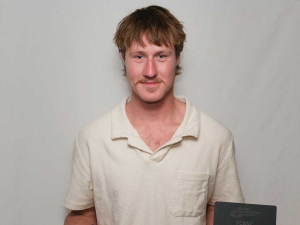
Now in its fourth year, the 2026 Fencing Industry Awards, formed part of the proceedings of the FCANZ Conference, held in Nelson during August.
DairyNZ deputy chair Cameron Henderson has been re-appointed unopposed for another term.
OPINION: The stats speak for themselves.
Farms across the upper North Island are trialling different pasture mixes as part of a research programme that aims to build greater resilience into farming systems.
Election years are always a concerning time for farmers, according to DairyNZ chair Tracy Brown.
The Ballance Farm Environment Awards are coming to the West Coast of the South Island.