George Dodson on Efficiency and Low-Cost Dairy Farming
Efficiency is the big one because it tracks back into what is done on farm.
 increase font size
 Animal and Plant Health New Zealand chief executive Dr Liz Shackleton
With an amendment to the Medicines Act proposing human medicines could be approved in 30 days if the product has approval from two recognised overseas jurisdictions, there’s a call for a similar approach where possible to be applied to some animal medicines.
Animal and Plant Health New Zealand (APHANZ) chief executive Dr Liz Shackleton said that healthy animals benefit communities in many ways and being able to treat them with the best and latest medication matters.
Currently, animal medicines must be approved for use in New Zealand by the Agricultural Compounds and Veterinary Medicines Group within New Zealand Food Safety, and in some instances the Environmental Protection Authority as well.
Under the proposed amendment to the Medicines Act 1981, if a medicine has passed judicial overview and received full approval in two recognised jurisdictions (like Australia, UK, the US) and would not see any unique challenges in the New Zealand environment then approval could be fast tracked in no more than 30 days.
The amendment has passed its first reading in Parliament and, if accepted, would come into effect in mid-2026.
The recent Ministry of Regulation Agricultural and Horticultural Products Regulatory Review recommends increasing the use of assessments by international regulators and supporting harmonisation of requirements.
This would help address regulator resource and prioritisation challenges highlighted in the review report.
Shackleton says that APHANZ members fully support the ‘rule of two’ approach currently being considered for human medicines being applied to some animal medicines.
“This is also an immediate, tangible way for regulators to harmonise and ease workload.
“Our members are unclear why this opportunity has not already been seized.
“We have already provided regulators with options including this one for immediate steps to improve access to veterinary medicines by harmonising New Zealand’s approach where appropriate with trusted international regulators and best practice conventions.
“We look forward to seeing greater harmonisation as part of government agencies’ urgent implementation of the recommendations of the regulatory review.”
In a further statement to Rural News, Shackleton said that striking the right balance between risk and reward was essential as New Zealand regulators do not have the same resourcing levels of larger, trusted overseas regulators.
“We support the need for products for use in New Zealand to be rigorously tested through a trusted process that aligns with international approaches and balances our resourcing practicalities as a small country.
“Many companies are currently deciding their futures here.
“We know of one who has already pulled their investment from New Zealand and others are saying their futures here are untenable without regulatory change. A growing risk we face is not having access to these products at all.
“The Ministry for Regulation review report has reinforced those improvements to the regulatory process is critical and our call for greater harmonisation is a positive step towards this end.
“It is not a free pass as we acknowledge there is no such thing as zero risk, only degrees of risk to be managed.”
Efficiency is the big one because it tracks back into what is done on farm.

Animal and Plant Health New Zealand (APHANZ) says the approval of a new fungicide seed treatment is a positive, however growers will be hoping the final approval is completed ahead of the spring season.
A move is underway to make the Wellington bureaucracy speed up the approval process for certain agrichemicals that farmers and growers are desperate to get their hands on.
The Environmental Protection Authority (EPA) is bolstering its frontline applications teams in a bid to reduce the timeframe for new product applications, but agri chemical producers say that it isn't good enough.
Animal and Plant Health Association NZ says it welcomes a review of regulations "hampering NZ agriculture's ability to keep pace with the rest of the world".



Alliance Group's $16 million programme to install innovative heat pump systems at its Otago and Southland processing plants wins a New Zealand Energy Excellence Award after cutting annual emissions by more than 24,000 tonnes of CO₂e.
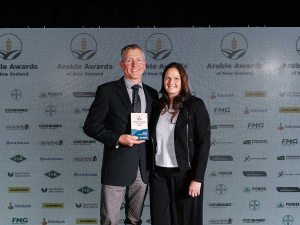
The arable sector losing good people and land is a major concern for the 2026 Arable Farmers of the Year, Mid Canterbury seed growers John and Mel McCaw.
The terrible floods that hit the Wairarapa may have subsided, but the danger to farmers still exists, according to local Federated Farmers president Rob Hickson.
New Zealand's Emissions Trading Scheme (NZ ETS) encourages afforestation while not achieving climate goals, says a new report released by the Parliamentary Commissioner for the Environment, Simon Upton.
Are you ready for El Nino? That’s the question asked by Beef+Lamb NZ’s Ian Tarbotton who leads B+LNZ’s farm extension service.
Bigger, bolder salads packed with colour, crunch and flavour are making headlines overseas — and the arrival of fresh spring vegetables means New Zealanders can now get chopping too, creating their own Great Kiwi Spring Salad.