Editorial: Drones Are Not Toys
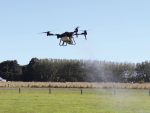
OPINION: David Seymour and James Meager's plan to make it easier for farmers and orchardists to operate drones can best be described a 'courageous' move.
 increase font size
 NZ Agricultural Aviation Association chair and helicopter pilot Tony Michelle.
Despite rising prices, it appears that farmers haven't stopped top dressing.
NZ Agricultural Aviation Association (NZAAA) chair Tony Michelle says the rising fertiliser prices are not having any effect on the use of aircraft to get the fertiliser on their pasture and crops. Michelle is a well-known helicopter pilot and has flown in many parts of the world including the Falkland Islands.
However, he says that farmers seem to be applying smaller dressings of high analysis fertiliser more often, which potentially increases the activity of the aircraft. He says they are also probably seeing a lot more lime going on than in past years.
"I think farmers are just getting smarter about what they do and when they do it and right now they are applying fertiliser more often. We are seeing this coming in the form of smaller and more targeting dressings," he told Rural News.
Michelle says this has been driven by the nitrogen caps and says farmers can no longer just drop 300 kilograms of urea on their farm and walk away.
"They are limited by the amount fertiliser they can apply each time."
He says dealing with climate change and the huge raft of legislation coming into force around it will be a priority in his new role with NZAAA. He says there are changes at the local, regional and national level coming in at different time frames and keeping abreast of such change is important to his members.
Better Work Stories
Tony Michelle says another challenge is ensuring that people in urban areas have all the facts in front of them when it comes to makig comments about ag aviation.
He says, some years ago, Horizons Regional Council produced a display which effectively demonised the ag industry.
"It was going around schools and one of the children of one of our operators came home very upset because they had a picture of an aeroplane flying along putting fertiliser into a stream and abovie is a banner saying - 'bad man'," he told Rural News.
"We had Horizons remove that, but it was the sort of messaging that was going out there in the public arena and if that is what the public sees, that is what they are going to believe."
Michelle says his aim is to see the good news stories out there explaining that the ag aviation industry has systems and technology to ensure that it doesn't put fertiliser and sprays into waterways and it mitigates these risks.
He says another positive contribution the ag aviation industry makes is around pest control.
"If we are to get to 'predator free 2050', the country will be heavily reliant of ag aviation.
"If there is a pest outbreak here in NZ, then it's likely to be the agricultural aviation industry that the regulators turn to for help rectify the problem."
Michelle says the work of the ag aviation sector adds $2 billion in GDP to the primary sector, which he says is quite significant.
OPINION: David Seymour and James Meager's plan to make it easier for farmers and orchardists to operate drones can best be described a 'courageous' move.
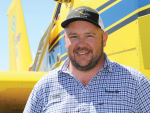
Plan ahead and be patient. That’s the message to farmers and horticulturalists from the chairman of the NZ Agricultural Aviation Association, Kent Weir.
Wet autumn weather is posing challenges for aerial topdressing operators and farmers are being urged not to put pressure on pilots to fly in borderline conditions where safety could be at risk.
The downturn in the farming sector - especially sheep and beef - is having a detrimental impact on the agricultural aviation sector.
Farmers have taken to social media to express outrage at the Government over a new levy.



Three men have been sentenced in District Courts after Ministry for Primary Industries prosecutions over animal welfare, food safety and cattle tracing offences.
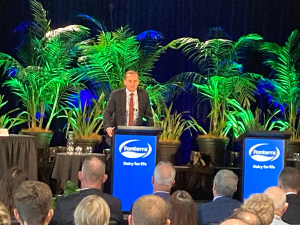
Fonterra’s 2026 financial year was a year of delivery, with record volumes of milk collected, processed and shipped by the co-op.
OPINION: The Government's decision to reinstate agriculture and horticultural science as a standalone subject from Year 11 is the right one.
Dairy farmers, still holding onto their Fonterra shares despite switching milk supply elsewhere or exiting the industry, now face a stricter share sell-down requirement.
Hamilton-based agritech company Aimer Farming has completed a $3 million capital raise to support its next stage of growth, including a beef farming product due to launch in 2027.
When dairy manager Miriam Lauridsen learned the farm, she was joining held weekly health and safety meetings, she initially thought that was “a bit over the top”. Experiencing that culture changed her mind.