Let's take our hats off to dairy farmers!
It’s World Milk Day today (June 1), a time to celebrate the vital role that milk, and dairy products play in our lives and acknowledge the tremendous contributions of the New Zealand dairy sector.
 increase font size
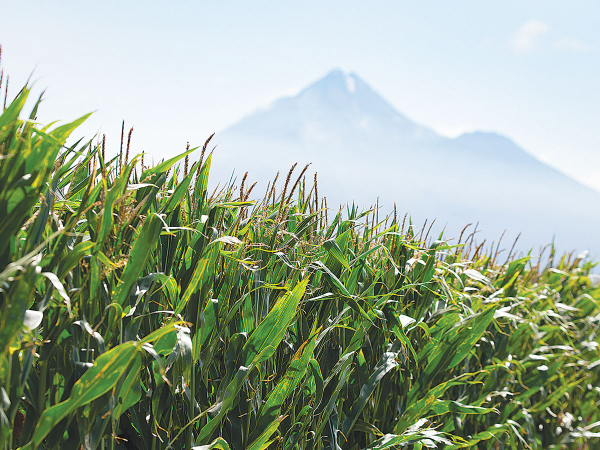 Maize export prices increased in May.
The benchmark for world food commodity prices increased for the third consecutive month in May, as higher prices of cereals and dairy products outweighed decreases in quotations for sugar and vegetable oils, the Food and Agriculture Organization of the United Nations (FAO) reports.
The FAO Food Price Index, which tracks monthly changes in the international prices of a set of globally-traded food commodities, averaged 120.4 points in May, up 0.9% from its revised April level, while it remained 3.4% down from its level a year ago and 24.9% below its March 2022 peak.
The FAO Cereal Price Index rose by 6.3% from April, powered higher by rising global wheat export prices, reflecting growing concerns about unfavourable crop conditions curbing yields for the 2024 harvests in major producing areas including parts of Northern America, Europe and the Black Sea region.
Maize export prices also increased in May, pushed up by production concerns in both Argentina, due to Spiroplasma disease, and Brazil, due to unfavourable weather conditions, as well as spillover effects from the wheat markets and limited selling activities in Ukraine.
The FAO Dairy Price Index increased by 1.8% from April, underpinned by increased demand from the retail and food services sectors ahead of the summer holidays as well as market expectations that milk production in Western Europe may fall below historical levels. Renewed import demand for spot supplies from some countries in the Near East and North Africa also lifted dairy prices.
The FAO Sugar Price Index, meanwhile, decreased by 7.5% from April, mainly driven by pressure from the good start of the new harvest season in Brazil. Lower international crude oil prices also exerted downward pressure on sugar prices, by lowering demand.
The FAO Vegetable Oil Price Index declined by 2.4% from April. Lower palm oil quotations due to seasonal output increases and ongoing weak global demand more than offset higher prices of soy oil, due to increasing demand from the biofuel sector, and firmer prices of rapeseed and sunflower oils due mainly to diminishing export availabilities in the Black Sea region.
The FAO Meat Price Index decreased marginally, by 0.2%, as international prices of poultry and bovine meats fell while those of pig and ovine meats increased.
It’s World Milk Day today (June 1), a time to celebrate the vital role that milk, and dairy products play in our lives and acknowledge the tremendous contributions of the New Zealand dairy sector.

The director-general of the Food and Agriculture Organization of the United Nations (FAO) says the UN has a role to play in leveraging the power of digital technologies.
The Food and Agriculture Organisation of the United Nations (FAO) has welcomed a resolution adopted by the United Nations (UN) General Assembly to declare 2026 International Year of the Woman Farmer.
The benchmark for world food commodity prices fell further in January, led by decreases in the prices for cereal and meat, says the Food and Agriculture Organization of the United Nations (FAO).
The benchmark measure of world food commodity prices ended 2023 approximately 10% lower than its year-earlier level.



LIC shareholders have elected a new North Island representative to the co-operative's Board, along with five representatives to its Shareholder Reference Group (SRG), following the company's Annual Meeting held in Invercargill.
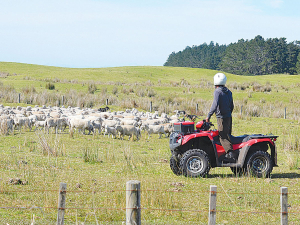
Farmers across parts of Southland and South Otago are continuing to deal with difficult conditions after a prolonged run of wet weather, with pressure building around feed supply, stock management, pasture damage, farm infrastructure and everyday workloads.
Federated Farmers says it welcomes Labour's commitment to reviewing the Sharemilking Agreements Act, calling on other major parties to do the same.
For Canterbury dairy farmers Sian Meijer and Rick Wobben, wearable technology has become one of their most valuable on-farm tools - helping manage 1850 cows across an expansive, high-performing dairy operation while improving efficiency, mating outcomes and day-to-day decision making.
Fonterra has unveiled its annual results for the 2026 financial year, posting $27 billion in revenue and close to $20 billion returned to New Zealand farmer owners and unit holders.
The first major update to the Dairy Cattle Code of Welfare in more than a decade has been released, marking what DairyNZ describes as an important step in ensuring animal welfare standards continue to evolve alongside scientific evidence and on-farm realities.