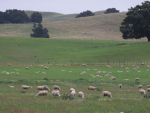
Hawke’s Bay sheep and beef farmers warned to monitor stock water wells
Sheep and beef farmers in Hawke's Bay are being urged to keep a close eye on the wells that supply water to their stock.
 increase font size
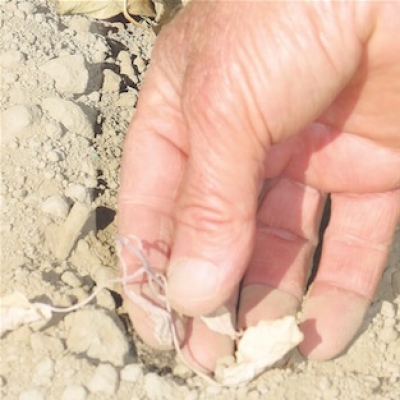
An easterly airflow promised brief respite from the central South Island’s dry late last week but a drought-breaking weather system is desperately needed, farmers’ leaders and industry representatives say.
Without that, winter feed crops will fall woefully short, or fail completely. Already most farms have offloaded store stock and there are reports of dairy grazers being sent home without warning, compounding problems on already struggling dairy farms.
Yet official declaration of the drought as an adverse weather event still seems some way off, judging by comments at a Rural Support Trust meeting to brief and hear from rural professionals in Timaru last week.
“The moment you put the word ‘drought’ in the paper the price of stock goes down and feed goes up,” local farmer and Rural Support Trust member David Williams told the meeting.
Associate Agriculture Minister, and local MP, Jo Goodhew, was present but left the talking to MPI’s South Island research policy manager, Trish Burborough.
“The turnout is an indication of the significance of the situation,” she told the packed venue.
Burborough outlined the measures an official “adverse event” could trigger and said MPI is in weekly contact by cross-industry conference call.
“One of the scary things with this [drought] is what’s going to happen with feed and what options are there. It would be good to get some hard facts and figures from you people because that’s something we could feed through to the Ministers,” she said.
In answer to a later question, an MPI colleague said a “high level” assessment of feedstocks would be undertaken by the ministry.
Primary Industries Minister Nathan Guy last week said Government is keeping a close eye on conditions in the Central South Island and how local communities are coping, noting the forecast for rain.
“I’m getting regular updates from MPI and NIWA on soil moisture levels.”
He also used it as another opportunity to highlight the need for irrigation and water storage projects, and Government’s $120m commitment to irrigation projects in the past two Budgets.
“We don’t have a shortage of rain in New Zealand – it’s just that sometimes it falls in the wrong places at the wrong times.”
Alpine-fed irrigation schemes are so far generally flowing without restriction – the exception is the newly commissioned Rangitata South which needs a flushing flow from the main divide to refill its ponds – but coastal river extraction has, almost without exception, ground to a halt along the east coast.
Even irrigators in the dam-fed Opuha scheme have been on restriction since well before Christmas and will be cut off completely come Feb 20.
“It’s not a case of a few more steps to go: we are staring at the cliff,” Opuha Water chief executive told the Timaru meeting.
Meanwhile the dam has so far maintained a 3.5 cumec environmental flow in the Opihi River at State Highway 1. Without it that stretch of the river would now be dry, McCormick told Rural News.
While it didn’t come out at the Timaru meeting, some in the region are far from happy with the lack of a drought declaration.
“Until we get that official declaration no-one will take it seriously,” dryland cropping farmer Jeremy Talbot says.
Sharemilkers, particularly those on dryland farms or where the irrigation is running out, will be some of the hardest hit with the pincer of feed shortage and poor payout, he says.
But Feds’ regional sharemilkers chair, Ben Jaunay, says while they are finding it tough, so far banks are being “very supportive.”
Key points
Sheep and beef farmers in Hawke's Bay are being urged to keep a close eye on the wells that supply water to their stock.

Fears of a serious early drought in Hawke’s Bay have been allayed – for the moment at least.
OPINION: Farmers along the east coast of both islands are being urged to start planning for drought as recent nor'west winds have left soil moisture levels depleted.
As you approach Hastings from the south along SH2, the colour of the west-facing hills are a good indicator of a drought.
New research could help farmers prepare for a future where summer rainfall is increasingly unpredictable and where drought risk is rising, no matter what.
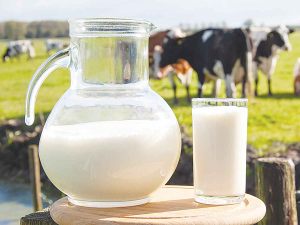
New Zealand dairy farmers are set to be the first in the world to receive access to a new digital physical milk pricing tool that enables them to fix the price for their physical milk.
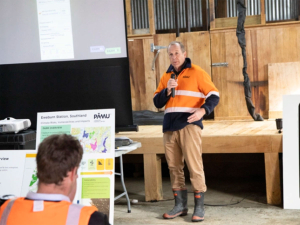
State farmer Pāmu is opening its farm gates this summer in an effort to give the rural sector the opportunity to see how large-scale, multi-system farming is delivering productivity and profitability across New Zealand.
A five-year study has found that the cost of reducing emissions without technology may be significant and unsustainable for Northland dairy farmers.
DairyNZ says Waikato farmers need certainty on Plan Change 1, but they say that certainty must be matched with practical, workable rules and a clear transition that doesn't get ahead of the new resource management system currently under review.
While the Government has moved quickly to make commercial hauliers' lot easier during the current fuel crisis, they appear to be stuck in the creep box when it comes to the agricultural industry.
Waikato farmers have been told that the Government’s new planning system legislation and the region’s Plan Change 1 (PC1) “won’t mesh together very well”.