
M.I.A.
OPINION: The previous government spent too much during the Covid-19 pandemic, despite warnings from officials, according to a briefing released by the Treasury.
 increase font size
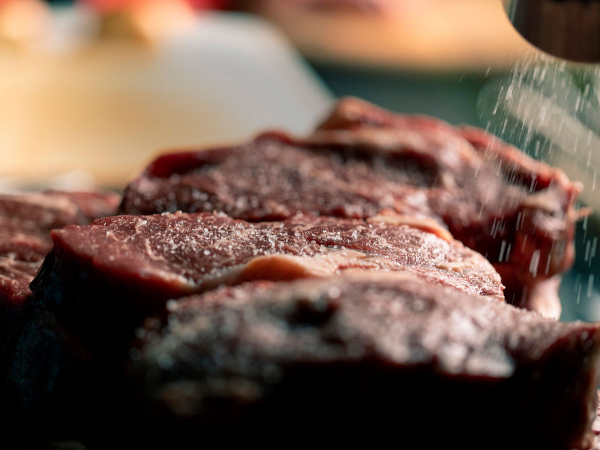 Beef and veal export receipts are forecast to decline by 7% to $3.9 billion.
Global uncertainty caused by Covid and related disruption to supply chains, as well as a global shortage of labour, are cited as contributing factors to a forecast drop in NZ red meat export returns.
That's the crux of Beef+Lamb NZ's (B+LNZ) new season outlook report, which was published last week.
Chief economist Andrew Burtt says receipts from red meat exports will be about $8 billion, slightly down on 2020-21.
While lamb export receipts are forecast to increase by 2.2% to $3.6 billion on 2020-21, beef and veal export receipts are forecast to decline by 7% to $3.9 billion, driven by a decline in production and the adverse impact of the high NZ dollar on export values.
However, Burtt says the overall outlook is positive, with the fundamentals in key markets seen as solid. He says there is strong demand and tight supply, meaning prices in export markets are forecast to lift for both sheepmeat and beef.
On farm, the lamb crop this season is expected to be 22.8 million - up point 9% on last year, reflecting an increase in ewe and hogget lambing percentages. On the beef side, export production is forecast to be down by 5%.
According to the report, farmer confidence is mixed. While on-farm profitability is positive, resilience is being tested by the volatility of adverse weather events and the extent of environmental regulation.
OPINION: The previous government spent too much during the Covid-19 pandemic, despite warnings from officials, according to a briefing released by the Treasury.
OPINION: Labour leader Chris 'Chippy' Hipkins is carrying on the world-class gaslighting of the nation that he and his cohorts started after their disastrous Covid response; now trying to undermine the Covid inquiry to protect his own backside.
OPINION: Did former PM Jacinda Ardern get fawning reviews for her book?
Beef + Lamb New Zealand (B+LNZ) is having another crack at increasing the fees of its chair and board members.
OPINION: Welcome to the second annual NZ Dairy Expo at Matamata – an event created to bring together the best of the New Zealand dairy industry in a focused, grassroots environment where dairy farmers and rural professionals can meet, talk, compare products, and make smart decisions for their farms.


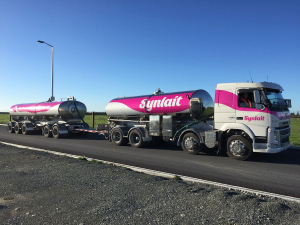
Synlait has swung to second-half profit as operations stabilise, but the dairy processor still posted a $75.4m annual loss.

LIC shareholders have elected a new North Island representative to the co-operative's Board, along with five representatives to its Shareholder Reference Group (SRG), following the company's Annual Meeting held in Invercargill.
Farmers across parts of Southland and South Otago are continuing to deal with difficult conditions after a prolonged run of wet weather, with pressure building around feed supply, stock management, pasture damage, farm infrastructure and everyday workloads.
Federated Farmers says it welcomes Labour's commitment to reviewing the Sharemilking Agreements Act, calling on other major parties to do the same.
For Canterbury dairy farmers Sian Meijer and Rick Wobben, wearable technology has become one of their most valuable on-farm tools - helping manage 1850 cows across an expansive, high-performing dairy operation while improving efficiency, mating outcomes and day-to-day decision making.
Fonterra has unveiled its annual results for the 2026 financial year, posting $27 billion in revenue and close to $20 billion returned to New Zealand farmer owners and unit holders.